Over the years, large numbers of people have visited the Western Isles in a motorhome or campervan. Their presence does not elicit universal approbation, and feelings against them run very high in the district of Ness at the moment. Cafe Sonas in Port of Ness has had to close this week, after visiting motorhomes used their public toilets to empty their chemical toilets into. The restaurant's toilets are blocked and the place cannot open as a result. Also, the motorhome drivers have (ab)used the powerpoints in the toilets to charge up their batteries.
There are designated places in Lewis and Harris for motorhomes to hook up and service the vehicle (like for the toilets). It would appear to me that information about these facilities is being disseminated insufficiently, and there should be proper signage along the road. Also, all motorhome drivers entering the islands should be issued with an information pack as to where services for them are, and also where they can and cannot park for the night. A public carpark is not really appropriate, as it blocks up several spaces for, yes, cars.
I feel that anyone wishing to visit these islands in a motorhome is most welcome to do so. But let's make it a positive experience for all - I've given a few ideas how to make that happen.
Wednesday, 28 September 2016


Blogoversary
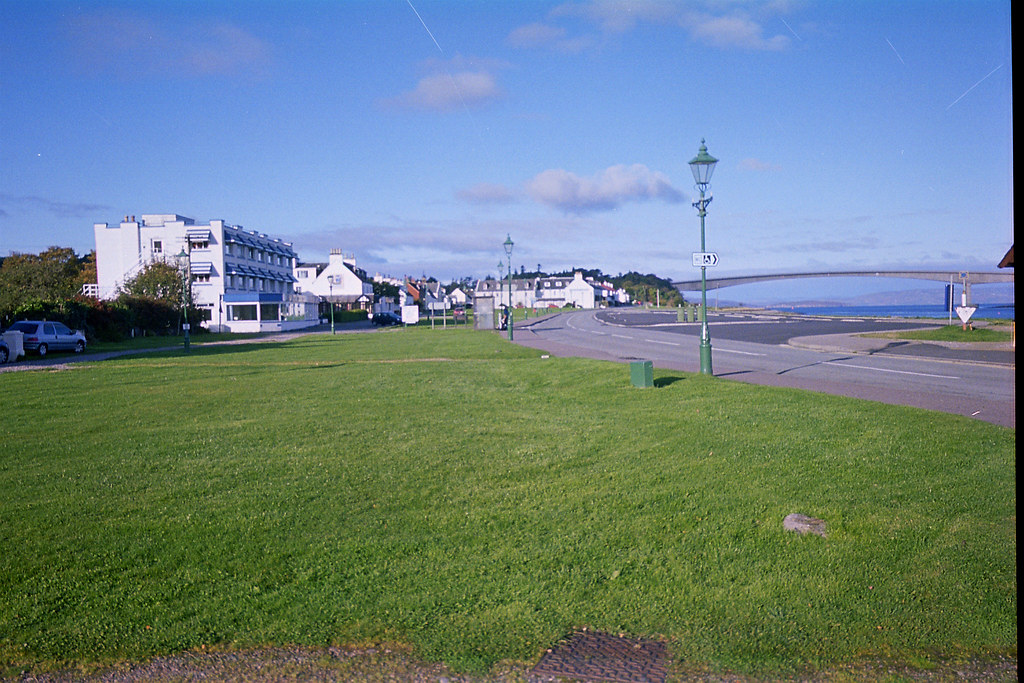
Today in 2004, I set up a journal with AOL, and called it Northern Trip. It was to become a diary of my exploits in Northern Scotland, which continue to date. I started blogging properly about 11 days later, on 8 October - read that first entry about my exploits in Skye, from the big white building in the left of below picture.
This blog, Atlantic Lines, was set up as its successor 4 years later, upon the withdrawal of AOL's blogging service. Nowadays, I use Facebook, and I use Atlantic Lines primarily for writing down my views on various matters, near and far.
In the years I have been blogging, I have met many dozens of people on-line, but only a few of those I have met face-to-face. Many I count as friends, with all the ups and downs that that entails.
Here is to another year of blog - whether here, or elsewhere.
This blog, Atlantic Lines, was set up as its successor 4 years later, upon the withdrawal of AOL's blogging service. Nowadays, I use Facebook, and I use Atlantic Lines primarily for writing down my views on various matters, near and far.
In the years I have been blogging, I have met many dozens of people on-line, but only a few of those I have met face-to-face. Many I count as friends, with all the ups and downs that that entails.
Here is to another year of blog - whether here, or elsewhere.
Tuesday, 20 September 2016
A barrel of tears
The Syrian civil war took another turn for the worse this morning, when an aid convoy was allegedly barrel bombed near Aleppo. More than half the trucks in the 31-vehicle convoy were destroyed.
This conflict has been dragging on for the last 5 years, and has been demonstrably exacerbated by outside influences (most notably the USA and Russia, in no particular order). Both powers are using the civil war as a means to promulgate their geopolitical aims. Russia's aims, with increasing clarity and with cynical disregard to human life, are to maintain their sole ally in the region, as spearheaded by Bashar al-Assad. Using the presence of the steadily degrading Islamic State group as a pretext, any attempt to break anti-Assad opposition will be used by Russian forces.
Do not forget that the emergence of Da'esh (so called Islamic State) is a direct consequence of American interference in Iraq in 2003. Do not forget that the network of factions in Syria is too complex for this situation to be resolved quickly. Experts name a term of at least a decade. And as long as the likes of Putin and Obama (to be succeeded by Trump or Clinton) continue to meddle, we'll see the people of Syria taking the blows.
Be warned.
This conflict has all the potential for this conflict by proxy to turn into a direct confrontation between the US and Russia. I am deeply alarmed at the anti-Western sentiments that reach even me from Russia.
This conflict has been dragging on for the last 5 years, and has been demonstrably exacerbated by outside influences (most notably the USA and Russia, in no particular order). Both powers are using the civil war as a means to promulgate their geopolitical aims. Russia's aims, with increasing clarity and with cynical disregard to human life, are to maintain their sole ally in the region, as spearheaded by Bashar al-Assad. Using the presence of the steadily degrading Islamic State group as a pretext, any attempt to break anti-Assad opposition will be used by Russian forces.
Do not forget that the emergence of Da'esh (so called Islamic State) is a direct consequence of American interference in Iraq in 2003. Do not forget that the network of factions in Syria is too complex for this situation to be resolved quickly. Experts name a term of at least a decade. And as long as the likes of Putin and Obama (to be succeeded by Trump or Clinton) continue to meddle, we'll see the people of Syria taking the blows.
Be warned.
This conflict has all the potential for this conflict by proxy to turn into a direct confrontation between the US and Russia. I am deeply alarmed at the anti-Western sentiments that reach even me from Russia.
Sunday, 11 September 2016
9/11 - 15 years on

This tribute is published on the 15th anniversary of the terrorist attacks on New York, Washington and Pennsylvania on 11 September 2001, under the auspices of Project 2996.
Jeffrey Dwayne Collman
Image: Family photograph, via http://guy-at-judson.blogspot.com.
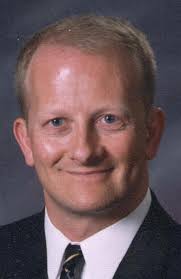
Source: Aurora Beacon News, Aurora IL 9-23-2001
Jeffrey Dwayne Collman, age 41, of Novato, California, formerly of Yorkville, IL, a flight attendant for American Airlines, died in the terrorist attack on the World Trade Center in New York City at 8:45a.m. on Tuesday, September 11, 2001.
Jeffrey was a 1977 graduate of Yorkville High School in Yorkville, IL. Jeff was formerly employed, for over 10 years, at All-Steel in Montgomery, IL. He had then worked, for a brief time, at Cedar Sinai Hospital in Los Angeles, California before attaining his dream of being a flight attendant with American Airlines. Jeffrey loved his job and traveling to other countries around the world. He also loved to play and watch tennis. Jeff was a true people person who enjoyed visiting with and getting to know others. He became a flight attendant in 1997. Two years later, Jeff received the American Professional Flight Attendant Award and was considered a spirited and dedicated flight attendant. He liked to entertain children on his flights, and he was fond of playing tennis and traveling, friends said.
He is survived by his parents, Dwayne and Kay Collman of Yorkville, IL and Beverly Sutton of North Aurora, IL; his close companion, Keith Bradkowski of Novato, Ca; his brothers, Charles Collman of Fort Meyers, FL and Brian Collman of Las Vegas, NV; his sister, Brenda Sorenson of Aurora, IL; his step-brothers, Steve (Linda) Gengler of Yorkville, IL and Chuck (Lakshmi) Gengler of South Orange, NJ; his step-sister, Susan Bohan of California; a god-child, Marlene Wakelin; his half-sisters, Laura Kries of Brooklyn Park, MN, Caroline Sutton of Joliet, IL and Vickie Michel of Aurora, IL; several nieces and nephews, many loving aunts, uncles, cousins and friends. Jeffrey will also be missed by 100 other flight attendants.
He is preceded in death by his grandparents and his brother, Mark Allen Collman.
A memorial service was held on Monday, October 1, 2001 at the Immanuel Lutheran Church in Yorkville, IL with Pastor John Leaf officiating.
Father’s thoughts
Dwayne Collman's imagination gets the best of him when he thinks about the final minutes of his son's life on American Airlines Flight 11. He's filled with horror thinking about what the 41-year-old flight attendant from Yorkville went through as terrorists with knives steered the plane into the first World Trade Center tower. Collman knows his son received safety training in flight school, but he doubts it ever could have prepared him for the challenges he would face on the morning of Sept. 11. The grieving father is sure of one thing about his son, though, even if the details about his death are not certain:
"He would have fought like hell."
Jeffrey Collman, an American Airlines flight attendant for five years who grew up in Yorkville, died Tuesday morning when his hijacked plane, destined for Los Angeles, crashed into New York's famous landmark at 8:45 a.m. Though his body has not been recovered, his parents knew he was gone when he didn't call within a few hours after the tragedy. He had sent his stepmother, Kay, an e-mail the night before, telling her he would be flying from Boston to Los Angeles the next morning.
"I knew he was in that accident because every time there was something going on with airplanes, he would call and say, 'Hey, I'm all right,' " said Kay Collman. "So I knew that, when he didn't call, he was on that plane."
His parents [...] say Jeffrey Collman wanted to be a flight attendant because he loved to travel and meet people around the world. After working for years at Allsteel in Montgomery, he moved to California about five years ago to pursue that dream. Lifelong friend Dolores Humphrey, who went to school with Jeffrey Collman at all grade levels in Yorkville, said she feared he was killed when she heard the news because he often flew early-week flights from Boston to Los Angeles.
She said Collman never lost contact with his friends, even though his job took him around the world.
"Every time he got into town, he would call anyone he knew to meet for breakfast," said Humphrey, who last talked to Collman [5 days before 9/11]. "He would talk for a couple hours, then have to go fly somewhere else."
His stepmother said Jeffrey was the type of person who could "sit down next to someone on a plane and walk away knowing their life story." His father said Jeffrey loved tennis and flew around the world to watch professionals play. Kay Collman says her stepson never went anywhere meekly, and he loved his job so much that she's sure he didn't back down in the face of terror. "He took it seriously," she said, "and he would not have let anyone walk on him."
Humphrey said Jeffrey talked of flying even when he was a child, and his dream came true when American Airlines gave him a job. He was never afraid to fly, she said, always asserting that he was safer in the air than anyone on the ground. Collman's parents have begun to realize how their son died, and that he will always be remembered as a victim on one of the saddest days ever in the United States.
"It's completely different than just someone dying," Kay Collman said. "We'll have the pictures forever. We'll always see where he died. It's part of history."
Seattle Times, 17 September 2001
His partner, Keith Bradkowski, said Collman was courageous and safety-conscious. "He was so focused on safety," Bradkowski said. "If there was a threat, he would have done anything in his power to prevent it." He didn't normally work the Boston-to-Los Angeles route but made an exception to get vacation time at the end of the month. Collman grew up in Yorkville, Ill., and besides Bradkowski left behind four brothers and a sister. (Seattle Times)
Further information: the fate of Flight 11.
Postscript
Blogger Nathanael V. found out 5 years after 9/11, that Jeffrey Collman was a neighbour's grandson.
Sources
http://www.afacwa.org/memoriam/jeffreycollman.htm
http://www.historycommons.org/entity.jsp?entity=jeffrey_collman_1
http://www.findagrave.com/cgi-bin/fg.cgi?page=gr&GRid=5767989
and as attributed above.
9/11 - 15 years on
When this post is published, it will be exactly sixteen years to the minute that the first aircraft hit the World Trade Center in New York. The events of what is now referred to as 9/11 are only too well known.
My thoughts are with all victims, whether identified afterwards, or not. In New York, Washington and Pennsylvania.
My thoughts are with the passengers and crew on the four flights destroyed. My thoughts are with the victims killed in the World Trade Center. My thoughts are with those emergency workers who lost their lives trying to save others'.
My thoughts today are with the families of those who perpetrated these atrocities, for they lost too.
But first and foremost, my thoughts are with Norberto Hernandez, whose tribute I first filed on Northern Trip, the predecessor to Atlantic Lines, in 2006. The searches for Norberto on Google are contaminated with references to the Falling Man, who was in fact another victim, Jonathan Briley. This confusion has led to much anger and anguish, something the families of both men could do well without.
Norberto, rest in peace.
This entry, as stated above is dedicated to the memory of


Norberto was a pastry chef from Elmhurst, working in the restaurant Windows on the World on the 106th and 107th floor of the North Tower of the World Trade Center in New York. After the attacks, he was reported missing for a week until parts of a torso and an arm were found in a collapsed stairwell. DNA testing and finger printing reveiled that these were the remains of Norberto. It also invalidated claims that the image of the Falling Man was that of Norberto; this was another victim of 9/11 who will be the subject of a different tribute.

At the time of the attacks on the WTC, Norberto was aged 42 and had been married for 25 years. He was the fourth of ten children by his parents’ marriage, and also had six half-siblings through his father. His parents separated when he was young. Norberto himself had three daughters, three grandchildren and 37 nephews. He was a man of Puerto Rican origins, and had hoped to spend his final days there. Instead, after 9/11, a funeral service was held and his remains cremated in Puerto Rico.
His sister Luz described Norberto. “He was quiet, kind”, she said. “He was a handsome man. Everybody loved him, you know. Everybody.” Norberto’s nickname was Bible, as he was very dependable. Together Forever was his motto.
Norberto started work in Windows on the World at the age of 17, washing dishes. He was interested in cooking, so a manager paid for his tuition at cooking school. Norberto became pastry chef and worked up to 10 hours a day. His sister Luz said that he made cakes, desserts, cookies and bread. His cakes were fabulous.
Outside work, Norberto loved sports, and was a fan of a Puerto Rican boxer, Felix Trinidad Jr. Four days before the attacks, he rang his mother and asked her to play “I would cry but I have no more tears” four times.
In the immediate aftermath of the plane striking the North Tower, Norberto called his sister Luz. “He said: ‘Yeah, don’t worry, I’m OK”.They were disconnected, and when Luz tried to call back she could not get through. Other accounts from Windows on the World tell that smoke and dust filled the restaurant after the strike, and that people lay on the floor to escape the worst of it. Air was beginning to run out at the time of the last contact.
These are the facts that I have managed to pull together from the Internet.
From the little that I have learned of Norberto, he came through as a gentle giant. Although 6’2” (1.84m) tall, he was always listening, and talked later. His family suffered a double loss, as Claribel Hernandez (his sister-in-law), a secretary working elsewhere in the North Tower, was also killed in the attacks. Norberto was close in the family and responsible, which earned him the nickname Bible. He loved his work, and by the look of one of the images, loved to impart that knowledge to others around him.
September 11th, 2001, dawned as a brilliantly sunny morning in New York. Two planes were flown into the two towers of the World Trade Center, leading to their collapse within 2 hours. The destruction of so many lives was brought about by mindless hatred and madness, fuelled by religious zealotry which was not based on any writing in any scriptures in any religion.
Norberto may have heard of that on news reports, but it was probably quite far from him. He was a man that lived for his family, always there for them. A diligent worker, putting in up to 10 hours a day, loving his creations from the oven. Travelling to the WTC on the Subway every morning, his thoughts were probably far from what was to happen not that much later on that fateful Tuesday.
Two thousand nine hundred and ninety-six are known to have died that day, or in its immediate aftermath. Norberto’s ashes were scattered in his homeland of Puerto Rico. His memory lives on in his family, and in the memory of those that read this. He is deeply missed by those close to him.
To Norberto Hernandez
Rest In Peace
Links
http://www.jrn.columbia.edu/studentwork/terror/sep19/three_lives.asp
This link is no longer operational
I have attempted to contact the University of Columbia to use the material in this link, but have not received a reply. As it is central to the tribute, I have used it, and acknowledge the writer, Sarah Clemence.
http://www.poetrykit.org/pkl/tw6/pg05.htm
This is a poem by Barbara Phillips, from which I have used some factual references to Norberto. It refers to him being the Falling Man though.
http://www.unitedinmemory.net/QuiltH/QuiltH.html
I have been granted permission by UIM to reproduce the commemorative quilt for Norberto.

http://www.queenspress.com/archives/coverstories/2001/issue38/coverstory.htm
Link no longer operational
The poster, pictured above, proclaiming Norberto as missing after the attacks, hung on a walkway of Manhattan for more than a week

Friday, 2 September 2016
Indyref #2
The Scottish National Party announced on 19 September 2014 that the outcome of the Scottish independence referendum, held the previous day, would last for a generation. The outcome was no to independence.
They have gone back on their word. Once more, Scotland is being canvassed on how it would like to inspect the inside of a voting booth again. Most can probably draw it from memory. Including how they voted on 18.09.2014. The case for independence has become weaker, on account of the crash in oil revenue and the brexit referendum vote (to leave the EU). Do the people and the economy of Scotland want and need more uncertainty? Brexit will bring enough uncertainty in the next few years. And please do not be deluded by the Nationalists' claim that independence will return Scotland to the EU fold. It will not - Spain (mindful of its restive Catalonian separatism) will block that with 100% certainty, never mind how many countries the First Minister visits. Foreign affairs, by the way, are not a matter devolved to the Scottish Government, and therefore none of the FM's business.
Over the 9 years that the SNP have been in power in Scotland, their gambles have backfired on them without fail. It is my rule of thumb with them, and it works well. Scotland's oil? Revenue of 1.8bn has fallen 97% to 0.06bn since 2014. The Arc of Prosperity, Iceland, Scotland and Ireland? Iceland's banks have crashed, and so has Ireland's economy. The banking crisis of 2008 needed a £32bn bail-out by the government in London, which would have blown a substantial hole in the Scottish GDP, which stood at around £175bn.
The current canvassing will show how eager the Scots are for yet another plebiscite on independence. The result will, whatever the outcome, be that they want it.
Sunday, 28 August 2016
9/11 commemoration 2016
At 1.46pm BST on 11 September, this blog will publish two tributes to victims of 9/11. These are for Norberto Hernandez (a pastry chef in the Windows on the World restaurant) and Dwayne Collman, a flight attendant on flight 11, which crashed in Pennsylvania.
Much has changed in the world in these 15 years. Unfortunately, mindless violence has not yet left us.
Much has changed in the world in these 15 years. Unfortunately, mindless violence has not yet left us.
Saturday, 27 August 2016
Transocean Winner removed
On Monday evening (August 22nd), at 10.05pm, the Transocean Winner rig was successfully removed from the rocks at Dalmore. The structure was taken to Broad Bay, in a tow that took nearly 48 hours. There, it will be assessed for damage and a decision is to be taken at a later date as to how it will be taken to a facility for demolition. Although the local council have offered the services of the Arnish Fabrication Yard, the rig's owners (Transocean) have said that there is insufficient depth of water in the channel to the Yard to take the rig.
I went to Dalmore on Monday evening by bus, firstly by service bus to the end of the road leading into the village itself. The last half mile was covered in a convoy. People had parked their vehicles in the verge of the road. From the road end, a dedicated shuttle bus was ferrying spectators back and forth to the village, where a viewing area had been marked out. In the end, I estimate that about 200 people were watching. I found myself close to someone with a radio receiver, and I could hear the communications between the tugs, the crew on the rig and the salvage master, Sylvia Tervoort.
When high tide approached, the tugs were told to gradually increase the force applied to the tow wires, until, at 10.05pm, 120 tons on the wire (and 75% of power) dragged the Transocean Winner off the rocks. The next discussion was about the course to take, and Ms Tervoort told the captain of one of the tugs that this had been outlined in an email. The captain blustered (in Dutch) that he didn't have time to have his head stuck in front of a computer all blinking day - he had not read the email and was embarrassed to be found in ignorance.
By half past ten, the tow was well underway and I made my way back to the road. A fleet of emergency vehicles were leaving, and I found myself in the back of an ambulance. Other people, who were walking up the road, were also picked up. My taxi came at 11pm, as arranged (although the police had to render some assistance) and under a rising moon, I returned to Stornoway at 11.30pm.
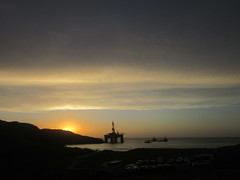
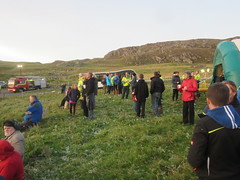
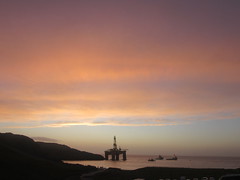
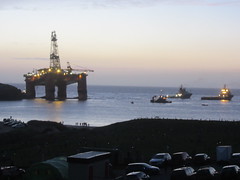
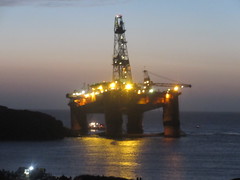
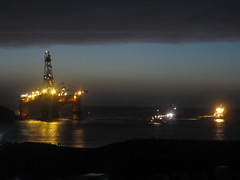
I went to Dalmore on Monday evening by bus, firstly by service bus to the end of the road leading into the village itself. The last half mile was covered in a convoy. People had parked their vehicles in the verge of the road. From the road end, a dedicated shuttle bus was ferrying spectators back and forth to the village, where a viewing area had been marked out. In the end, I estimate that about 200 people were watching. I found myself close to someone with a radio receiver, and I could hear the communications between the tugs, the crew on the rig and the salvage master, Sylvia Tervoort.
When high tide approached, the tugs were told to gradually increase the force applied to the tow wires, until, at 10.05pm, 120 tons on the wire (and 75% of power) dragged the Transocean Winner off the rocks. The next discussion was about the course to take, and Ms Tervoort told the captain of one of the tugs that this had been outlined in an email. The captain blustered (in Dutch) that he didn't have time to have his head stuck in front of a computer all blinking day - he had not read the email and was embarrassed to be found in ignorance.
By half past ten, the tow was well underway and I made my way back to the road. A fleet of emergency vehicles were leaving, and I found myself in the back of an ambulance. Other people, who were walking up the road, were also picked up. My taxi came at 11pm, as arranged (although the police had to render some assistance) and under a rising moon, I returned to Stornoway at 11.30pm.
Sunday, 21 August 2016
Transocean Winner
Although I dub the hapless oilrig "Transocean Loser", it's not her fault that she ended up as an unwanted and unusual piece of flotsam, washed up at Dalmore. Two public meetings have come and gone, the late August springtide will be ebbing in the next few days, and it will be at least another fortnight before the Transocean Winner can be towed away from the West Side of Lewis.
I ask the question why the tow got underway, in spite of a gale in its path being forecast five days before it occurred.
I concur with Capt Maurice Macleod who asked Transocean why their rig wasn't ballasted down in the face of a rising gale.
I ask the Maritime and Coastguard Agency MCA whether they were monitoring this tow, and were advising the skipper of the tug Alp Forward to divert, either down the Minch or further out into the Atlantic.
I am displeased with the spineless attitude of our local authority who will not express an opinion on the necessity of an emergency towing vessel until the investigation by the Marine Accident Investigation Branch is complete. This could take at least a year. I call it spineless, because the SNP group on said council have set up a petition to return an ETV to Stornoway, which flies in the face of the procrastination as endorsed by the full council.
I fully support the council, coastguard and police in enforcing the road closure of the Dalmore village road, between the A858 Carloway to Shawbost road, and the cemetery; a temporary opening on Monday 9th resulted in traffic chaos which took a long time to clear. I support the same agencies in warning people to stay away from the coastline between Gearrannan and Dalbeg (including Dalmore); this coastline is fronted by tall cliffs topped by grassy slopes which are slippery, certainly in the wet conditions that prevailed in the days following the grounding of the Transocean Winner.
I am not pleased with the attitude from Transocean and certain local agencies who ignored an invitation from the local community association to give information last Monday (15th), yet organised their own meeting three days later in the same village hall, something that smacks of a slap across the face. Transocean have apologised, which is the right and proper thing to do.
I anxiously await further developments, but hope that compensation claims from those adversely affected by this grounding (like the surfing company and local fishermen) will be speedily and favourably assessed.
I ask the question why the tow got underway, in spite of a gale in its path being forecast five days before it occurred.
I concur with Capt Maurice Macleod who asked Transocean why their rig wasn't ballasted down in the face of a rising gale.
I ask the Maritime and Coastguard Agency MCA whether they were monitoring this tow, and were advising the skipper of the tug Alp Forward to divert, either down the Minch or further out into the Atlantic.
I am displeased with the spineless attitude of our local authority who will not express an opinion on the necessity of an emergency towing vessel until the investigation by the Marine Accident Investigation Branch is complete. This could take at least a year. I call it spineless, because the SNP group on said council have set up a petition to return an ETV to Stornoway, which flies in the face of the procrastination as endorsed by the full council.
I fully support the council, coastguard and police in enforcing the road closure of the Dalmore village road, between the A858 Carloway to Shawbost road, and the cemetery; a temporary opening on Monday 9th resulted in traffic chaos which took a long time to clear. I support the same agencies in warning people to stay away from the coastline between Gearrannan and Dalbeg (including Dalmore); this coastline is fronted by tall cliffs topped by grassy slopes which are slippery, certainly in the wet conditions that prevailed in the days following the grounding of the Transocean Winner.
I am not pleased with the attitude from Transocean and certain local agencies who ignored an invitation from the local community association to give information last Monday (15th), yet organised their own meeting three days later in the same village hall, something that smacks of a slap across the face. Transocean have apologised, which is the right and proper thing to do.
I anxiously await further developments, but hope that compensation claims from those adversely affected by this grounding (like the surfing company and local fishermen) will be speedily and favourably assessed.
Wednesday, 10 August 2016
Dalmore
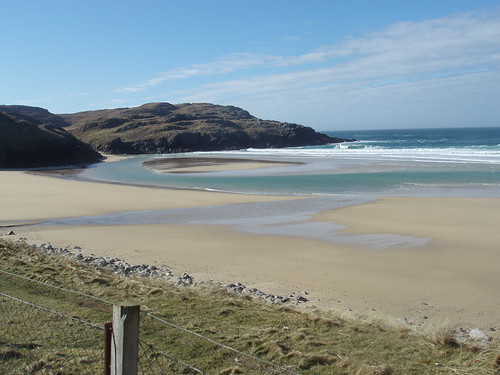
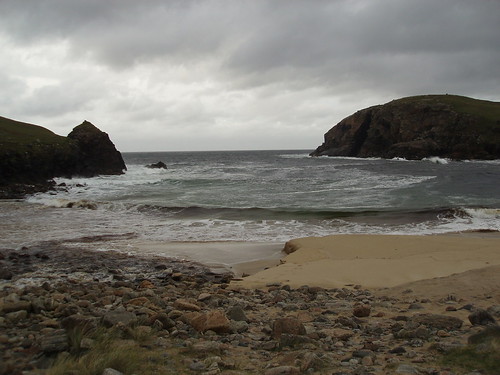
The picture currently fronting this blog shows Dalmore beach, without an oilrig, as it was on 23 March 2011. The Transocean Winner ran aground at Dalmore in the early hours of 8 August 2016 and is likely to stay there for several weeks before it can be removed. The front picture will remain up until the rig is gone.
Tuesday, 9 August 2016
The Turk and the Czar
You'll remember that Turkish president Recep Tayyip Erdoğan survived a military coup recently. Who was the first to ring him up afterwards? Vladimir Putin.
Turkey is a member of NATO. Its president, the aforementioned Mr Erdoğan, is looked at by the Americans askance. However, he is a key ally in the fight against Da'esh (you know, so-called Islamic State) and buffer against the horrors that lurk within the Middle East. Really and truly, the Americans should have been in there first to congratulate Erdoğan on his survival.
Same applies to the Europeans. For decades, they have rejected Turkish aspirations to the join the European Union. However, they needed Turkey to stop the flow of migrants and refugees and should have been a little more amicable to their eastern neighbour when he emerged from dire straits.
At the end of the day, Erdoğan is not a pleasant fellow, from our perspective. He is an autocrat, suppresses dissent and has for years sought to draw power onto himself. From his perspective however, he feels let down by his friends. The Europeans have been ungrateful for his acquiescence in the matter of the refugees, and so have the Americans. Putin spotted and immediately seized the opportunity, realising that Erdoğan was not flavour of the month in either Brussels or Washington. And he would love nothing less than to take Turkey out of European (and better still NATO) spheres and into his.
Erdoğan and Putin had a major falling out last year, when the Turks downed a Russian fighter jet over the Syrian border. But now it's kiss and make up time.
I don't think either Brussels or Washington have been canny in their dealings with the Turkish president. Whilst disliking him, and I totally understand why, they could have exercised some political expediency to keep him on board.
I do not expect Erdoğan to fall for Putin any time soon. But this is a strong warning, an amber signal, to the Americans and Europeans.
Beware.
Turkey is a member of NATO. Its president, the aforementioned Mr Erdoğan, is looked at by the Americans askance. However, he is a key ally in the fight against Da'esh (you know, so-called Islamic State) and buffer against the horrors that lurk within the Middle East. Really and truly, the Americans should have been in there first to congratulate Erdoğan on his survival.
Same applies to the Europeans. For decades, they have rejected Turkish aspirations to the join the European Union. However, they needed Turkey to stop the flow of migrants and refugees and should have been a little more amicable to their eastern neighbour when he emerged from dire straits.
At the end of the day, Erdoğan is not a pleasant fellow, from our perspective. He is an autocrat, suppresses dissent and has for years sought to draw power onto himself. From his perspective however, he feels let down by his friends. The Europeans have been ungrateful for his acquiescence in the matter of the refugees, and so have the Americans. Putin spotted and immediately seized the opportunity, realising that Erdoğan was not flavour of the month in either Brussels or Washington. And he would love nothing less than to take Turkey out of European (and better still NATO) spheres and into his.
Erdoğan and Putin had a major falling out last year, when the Turks downed a Russian fighter jet over the Syrian border. But now it's kiss and make up time.
I don't think either Brussels or Washington have been canny in their dealings with the Turkish president. Whilst disliking him, and I totally understand why, they could have exercised some political expediency to keep him on board.
I do not expect Erdoğan to fall for Putin any time soon. But this is a strong warning, an amber signal, to the Americans and Europeans.
Beware.
Transocean Winner
That is the name of the semi-submersible oil rig that became stuck fast on rocks off Dalmore beach in the early hours of Monday 8 August. The structure, which weighs in at 17,000 tonnes, was being towed from Norway to Malta, and on to Turkey, broke loose from its tug and was blown ashore in galeforce winds. The tug, Alp Forward, had been experiencing problems controlling its tow for some hours beforehand.
The rig has nearly 300 tons of diesel on board, but no crew. Nobody got hurt. A debate has flared up about having an emergency tug stationed at Stornoway (ours got withdrawn 4 years ago). Meanwhile, the Coastguard have cordoned off Dalmore - its single-track access road is closed to all traffic, and appealed Nosey Nick (Johnny Public in other words) not to venture out onto the cliffs to get a sneaky peek.
The plan is to haul the Transocean Loser (as I call it) off the rocks at the next springtide, which will occur late next week. Let's hope it's a success. I hate to see lovely Dalmore defiled like this.
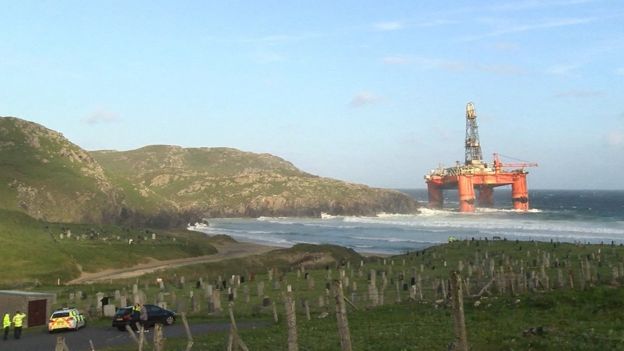
Image courtesy BBC
The rig has nearly 300 tons of diesel on board, but no crew. Nobody got hurt. A debate has flared up about having an emergency tug stationed at Stornoway (ours got withdrawn 4 years ago). Meanwhile, the Coastguard have cordoned off Dalmore - its single-track access road is closed to all traffic, and appealed Nosey Nick (Johnny Public in other words) not to venture out onto the cliffs to get a sneaky peek.
The plan is to haul the Transocean Loser (as I call it) off the rocks at the next springtide, which will occur late next week. Let's hope it's a success. I hate to see lovely Dalmore defiled like this.
Image courtesy BBC
Thursday, 4 August 2016
Gale
It's August, so we can expect a gale. Force 9 over the Uists, force 8 here in Lewis. Big deal. There have been bitter complaints about this summer's weather, but when I look back over my notes from years gone by, I don't see the problem. This is the Outer Hebrides, latitude 58 north, and wind, rain and chilly weather are part of the deal. Today's temperature is 18C / 64F, which is perfectly acceptable. It is a sunny and breezy day, one to be treasured. The last nice day was July 19th, so we may yet get another one before August is out.
Sunday, 31 July 2016
Metagama in reverse
In May 1919, a young woman called Mary got married in Glasgow to an American by the name of George. He had served in the Canadian Forces during the war, and was a chauffeur. Four months later, they went to Canada, to cross the border into George's home city of Detroit. For a while, they lived there, but it would appear that Mary had soon contracted tuberculosis - if not already back in Glasgow.
In June 1922, Mary filled out a passport application to return to Scotland to visit her parents. The application stated that she was to return within two years. As was the case in those years, her husband was also named, although he did not travel with her. Mary was booked on SS Metagama to sail from Montreal to Scotland. In May 1923, Mary sadly died in the home where she was born some 27 years before, of tuberculosis. Seven months later, her sibling Margaret also died of TB. The story goes that they shared the same room for a year, slowly succumbing to their illness.
I have seen a portrait photograph of Mary, looking gaunt, ill and obviously suffering from consumption. I have looked into George's life after his wife departed for Scotland, and it does not present a handsome picture. At all.
You may ask the relevance of this story in relation to the SS Metagama.
Well, in April 1923, 260 islanders departed Stornoway for a new life in America on board this ship. Circumstances in the island were depressed, following the heavy loss of life in the sinking of HMY Iolaire (where over 180 islanders drowned upon returning from the war) and the lack of employment. They were so excited at the prospect of a new life out west.
A year before, a young woman had embarked SS Metagama to return from her new life in America, which, by all appearances, had not been what she might have expected it to be. She came to die in the bosom of her family.
In June 1922, Mary filled out a passport application to return to Scotland to visit her parents. The application stated that she was to return within two years. As was the case in those years, her husband was also named, although he did not travel with her. Mary was booked on SS Metagama to sail from Montreal to Scotland. In May 1923, Mary sadly died in the home where she was born some 27 years before, of tuberculosis. Seven months later, her sibling Margaret also died of TB. The story goes that they shared the same room for a year, slowly succumbing to their illness.
I have seen a portrait photograph of Mary, looking gaunt, ill and obviously suffering from consumption. I have looked into George's life after his wife departed for Scotland, and it does not present a handsome picture. At all.
You may ask the relevance of this story in relation to the SS Metagama.
Well, in April 1923, 260 islanders departed Stornoway for a new life in America on board this ship. Circumstances in the island were depressed, following the heavy loss of life in the sinking of HMY Iolaire (where over 180 islanders drowned upon returning from the war) and the lack of employment. They were so excited at the prospect of a new life out west.
A year before, a young woman had embarked SS Metagama to return from her new life in America, which, by all appearances, had not been what she might have expected it to be. She came to die in the bosom of her family.
Thursday, 21 July 2016
Europe
Things are beginning to look very frightening in Europe all of a sudden.
France's president Francois Hollande wants quick Brexit talks now that the UK has voted to leave the EU, meaning there are divisions in Europe. Divisions and instability, caused by the massive influx of migrants from the east and south, leaving right-wing political parties in charge across the continent. Scotland, if it is granted another independence referendum, will break away from the UK.
Following the battering that American forces have experienced in Iraq and Afghanistan over the past 15 years, there is little appetite in the States to get embroiled in any further foreign adventures. The anti-Islam and anti-Latino hype will reach a crescendo if Trump gets elected, and the USA will turn its back on the rest of the world. Forgetting that the world will come to it, even if it doesn't want it anymore. If Trump gets in, he'll let the rest of the NATO alliance go to hell. That will have consequences in Europe, which relies on the American forces to really keep them safe.
Putin, already champing at the bit, will have no hesitation to reclaim the Baltic States, and experience little if any resistance in doing so. Neither will there be any resistance to his plans to expand westwards into Europe, if he so wishes.
Donald Trump is an idiot, but a dangerous one. He is a salesman, not a politician. He has picked up a few ideas that he finds to appeal to people, and is very good at flogging them. Appealing to base sentiments of fear of strangers, anger against one particular group (Muslims), who are being held up as being to blame for all ills - where did we hear this all before? Cast your mind back 80 years, and you have your answer.
France's president Francois Hollande wants quick Brexit talks now that the UK has voted to leave the EU, meaning there are divisions in Europe. Divisions and instability, caused by the massive influx of migrants from the east and south, leaving right-wing political parties in charge across the continent. Scotland, if it is granted another independence referendum, will break away from the UK.
Following the battering that American forces have experienced in Iraq and Afghanistan over the past 15 years, there is little appetite in the States to get embroiled in any further foreign adventures. The anti-Islam and anti-Latino hype will reach a crescendo if Trump gets elected, and the USA will turn its back on the rest of the world. Forgetting that the world will come to it, even if it doesn't want it anymore. If Trump gets in, he'll let the rest of the NATO alliance go to hell. That will have consequences in Europe, which relies on the American forces to really keep them safe.
Putin, already champing at the bit, will have no hesitation to reclaim the Baltic States, and experience little if any resistance in doing so. Neither will there be any resistance to his plans to expand westwards into Europe, if he so wishes.
Donald Trump is an idiot, but a dangerous one. He is a salesman, not a politician. He has picked up a few ideas that he finds to appeal to people, and is very good at flogging them. Appealing to base sentiments of fear of strangers, anger against one particular group (Muslims), who are being held up as being to blame for all ills - where did we hear this all before? Cast your mind back 80 years, and you have your answer.
Tuesday, 19 July 2016
Lews Castle
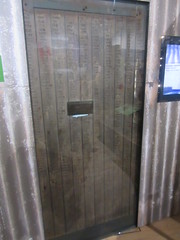
Last Thursday, 14 July, I visited Lews Castle which has been opened to the public for the first time in many years. Since the 1980s, the Castle had lain empty and unused, and was slowly falling into disrepair. A few years ago, a £19 million refurbishment programme was started and after many delays, the Castle was opened today.
Lews Castle, the country mansion of erstwhile landowner Sir James Matheson, was built in the middle of the 19th century for £60,000, which equates to £7 million in today's money. His fortunes came from the opium trade with China, something that even sparked a war between China and Great Britain. Sir James is credited with spending £329,000 (about £40m now) on the island of Lewis, with a road building programme and 'improvement'. Sir James's memory is tarnished by assisting 1,771 islanders to leave for Canada, America and Australia. They were removed as unable to pay the rent. The 1851 diary of his chamberlain (we'd call John Munro Mackenzie a manager today) shows cold contempt for the crofters, cottars and others who were unable to keep up payments. Rather than improve their lot on the ground, they had to emigrate. And when things did not go according to plan, it all became rather a nuisance.
Lews Castle today is resplendent in its former glory, but the contrast with the lot of Matheson's tenantry in the 19th century is excruciatingly jarring. One islander whom I accompanied on this visit was moved to tears. The rooms I visited were mostly completely empty, with the exception of the Ball Room, where dining tables were set out. The Castle also has a cafe and a small shop.
In a separate, newly built wing, the Western Isles Museum is housed. It has most of the exhibits on show that were featured in the old premises on Francis Street, but has moved in the 21st century with audio-visual and interactive displays. Full marks for that.
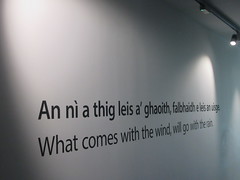
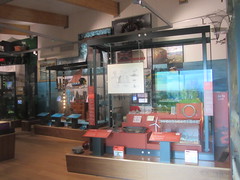
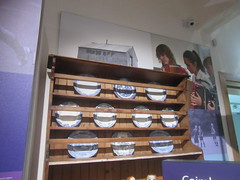
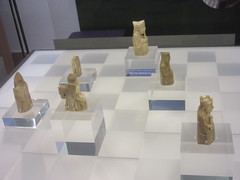
Six Lewis Chessmen are on permanent loan from the British Museum
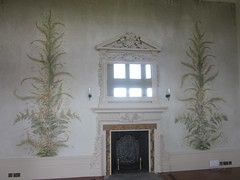 Morning Room
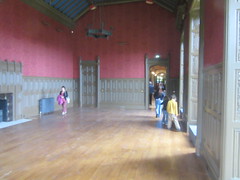 Dining Room
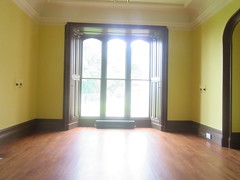 Library

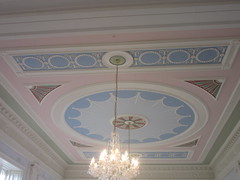
Ball Room
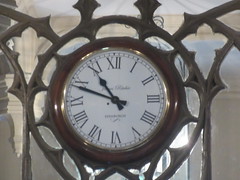
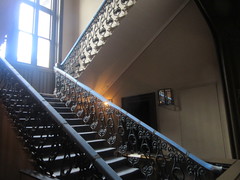
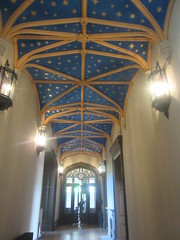 Entrance Hall
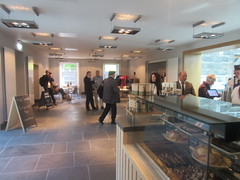 Store Room Cafe
Further pictures here
Lews Castle, the country mansion of erstwhile landowner Sir James Matheson, was built in the middle of the 19th century for £60,000, which equates to £7 million in today's money. His fortunes came from the opium trade with China, something that even sparked a war between China and Great Britain. Sir James is credited with spending £329,000 (about £40m now) on the island of Lewis, with a road building programme and 'improvement'. Sir James's memory is tarnished by assisting 1,771 islanders to leave for Canada, America and Australia. They were removed as unable to pay the rent. The 1851 diary of his chamberlain (we'd call John Munro Mackenzie a manager today) shows cold contempt for the crofters, cottars and others who were unable to keep up payments. Rather than improve their lot on the ground, they had to emigrate. And when things did not go according to plan, it all became rather a nuisance.
Lews Castle today is resplendent in its former glory, but the contrast with the lot of Matheson's tenantry in the 19th century is excruciatingly jarring. One islander whom I accompanied on this visit was moved to tears. The rooms I visited were mostly completely empty, with the exception of the Ball Room, where dining tables were set out. The Castle also has a cafe and a small shop.
In a separate, newly built wing, the Western Isles Museum is housed. It has most of the exhibits on show that were featured in the old premises on Francis Street, but has moved in the 21st century with audio-visual and interactive displays. Full marks for that.
Six Lewis Chessmen are on permanent loan from the British Museum
Morning Room Dining Room Library Ball Room
Entrance Hall Store Room CafeFurther pictures here
Wednesday, 13 July 2016
Cameron, May and Corbyn
David Cameron is about to hand over to Theresa May as prime minister of the United Kingdom. Cameron was in office for just over 6 years, first heading up a Conservative / Liberal Democrate coalition, and since last year a single party, Conservative government. As Tory PMs go, he wasn't too bad. The way he left office was not something that I find very good.
The UK voting to leave the EU was his prompt to leave office. The EU has always been a divisive issue in the Conservative Party, and over the last few years, the Tories were running scared of the Eurosceptic UKIP (United Kingdom Independence Party). That was enough for Cameron to give in to demands for a referendum, something that he was not obliged to organise. He did. Although I was not following the debates, these appear to have been highly polarised. Worse than that, I have been horrified at the levels of racism and xenophobia that seem to be about in the UK. The perceived flood of migrant workers from other EU countries could be to 'blame' for that.
The referendum result has also served to split the Labour party. Although current leader Jeremy Corbyn faces a challenge to his leadership, I expect him to be returned as leader. He is held to be on the left flank of the party, and with Cameron's successor Theresa May positioned towards the right of the Conservative Party, politics in the UK appear to be back where they were some 25-30 years ago. Highly polarised.
The UK voting to leave the EU was his prompt to leave office. The EU has always been a divisive issue in the Conservative Party, and over the last few years, the Tories were running scared of the Eurosceptic UKIP (United Kingdom Independence Party). That was enough for Cameron to give in to demands for a referendum, something that he was not obliged to organise. He did. Although I was not following the debates, these appear to have been highly polarised. Worse than that, I have been horrified at the levels of racism and xenophobia that seem to be about in the UK. The perceived flood of migrant workers from other EU countries could be to 'blame' for that.
The referendum result has also served to split the Labour party. Although current leader Jeremy Corbyn faces a challenge to his leadership, I expect him to be returned as leader. He is held to be on the left flank of the party, and with Cameron's successor Theresa May positioned towards the right of the Conservative Party, politics in the UK appear to be back where they were some 25-30 years ago. Highly polarised.
Friday, 24 June 2016
Brexit a reality
The UK out of the EU. A momentous decision with implications that few of us, certainly not me, can appreciate. I feel it is a wrong decision, made on the flawed premise that certain recent problems would not have occurred if the UK had not been a memberstate of the EU. In a nutshell, I feel that Europe has made a step backward by 80 years. We are headed back into the bad old days of nationalism from the early 20th century. Nicola Sturgeon in Scotland has as good as announced another independence referendum. Geert Wilders in Holland wants a referendum there to quit the EU. Current polls suggest he could be heading up a government after next March's general elections there. Martin Maguinness wants a referendum on the unification of the island of Ireland. Has he forgotten the Troubles? No, he can't have done, he was a bomber back then.
The far right is in the ascendancy across Europe. Why? A flood of migrants. How come? Wars, poverty. Who brings those people to Europe's shore? No answer. Nobody knows, nobody does anything about it. Certainly David Cameron did nothing. The Europe of 2020 could well see an independent Scotland, a much diminished UK, and the EU in meltdown following exit-referendums across several of its memberstates. That is precisely what our friend in the Kremlin, Vladimir Vladimirovich, wants. Be afraid. Be very afraid. For who will say that it is not at his behest that the civil war in Syria is being propagated and the people smugglers of the Mediterranean encouraged. It is the flood of migrants (not just from Syria, by the way) that has prompted this looming crisis in the European Union. The Union of the 27 now face a real and existential threat. Look east and you'll see from who.
Thursday, 9 June 2016
Brexit
Even here in Holland, the Brexit Referendum is making the news. It could cost the Dutch economy 500 million euros (roughly £400m) with increased costs for trade etcetera if the UK were to leave the EU. Britain is Holland's third largest trading partner. Upon an actual Brexit, the UK could become part of the European Economic Area, of which Norway is one member. More info on the EEA on their website http://www.efta.int/eea. Thinking that being a member of the EEA is the same as being a member of the EU with all the perks but none of the obligations is factually erroneous.
The EU is a flawed organisation, which is best improved from within. If the UK were to leave, it would have a hard time renegotiating a deal with the EU, if only on past form. For a long time, the UK has been regarded as an awkward customer, particularly since Margaret Thatcher. Many in the EU will regard a Brexit as good riddance.
I think it would be a thoroughly bad choice, bad for Britain, bad for Europe and bad for the rest of the world. We'd be going back to the bad old days of a divided, nationalistic (in the nasty sense of the word) Europe. Do not forget that the European Union was initially set up as a trading block, to facilitate trade, enhance international cooperation in Europe. A Brexit would set us all back. Reform, change and improve the European Union. Cut back on its massive, inflated, hyperbolic bureaucracy. Cut down on some of the silly regulations. But, UK, help by being a constituent part of the Union. You cannot help to change a club by leaving it.
The EU is a flawed organisation, which is best improved from within. If the UK were to leave, it would have a hard time renegotiating a deal with the EU, if only on past form. For a long time, the UK has been regarded as an awkward customer, particularly since Margaret Thatcher. Many in the EU will regard a Brexit as good riddance.
I think it would be a thoroughly bad choice, bad for Britain, bad for Europe and bad for the rest of the world. We'd be going back to the bad old days of a divided, nationalistic (in the nasty sense of the word) Europe. Do not forget that the European Union was initially set up as a trading block, to facilitate trade, enhance international cooperation in Europe. A Brexit would set us all back. Reform, change and improve the European Union. Cut back on its massive, inflated, hyperbolic bureaucracy. Cut down on some of the silly regulations. But, UK, help by being a constituent part of the Union. You cannot help to change a club by leaving it.
Sunday, 15 May 2016
EU referendum
On June 23rd, voters in the UK will go to the polls to decide whether to stay in the EU or not. I am not eligible to vote, but will nonetheless summarise my stance on this important issue.
The European Union was started in 1957 as a trading association between Germany, France, Italy and the Benelux nations (Netherlands, Belgium and Luxembourg) in the aftermath of the Second World War. It has ballooned into a political force, comprising of 28 countries, 17 of whom now have a shared currency, the Euro. There is plenty wrong with it, bureaucracy being the worst aspect of it. Why does it need to have three headquarters, Brussels, Luxembourg and Strasbourg? Each has a full complement of civil servants etcetera. Why does it need to do with regulatory affairs encompassing all member states? Some aspects are best left to individual countries, as nuances may differ across nations.
The UK has always had a fractious relationship with the EU. Although a desire was expressed to join the EEC (the precedessor to the UK) in the 1960s, it was France's General de Gaulle who stymied that desire with his infamous 'non'. The EU has caused severe disruption within the Conservative Party, which has had major fallings-out over the issue. Former Prime Minister Margaret Thatcher lost her position over the EU in November 1990. The UK has negotiated a 'special deal' and a rebate from the EU, although I have never properly understood what made the UK eligible for such a special deal. And all that haranging, with handbags or without, will have decreased the likelihood for other EU leaders to give the UK leeway in any future discussions about its status.
Current PM David Cameron has felt compelled to call a referendum, although he himself is backing the In campaign. Senior government ministers in his cabinet are all for Out. However, I would be for In, if I were able to vote. I have indicated that there is a lot wrong with the EU, and change will need to happen. It is far better to effect change from within. The Out campaign are playing on base fears such as the fear of strangers - immigrants from near and far and base emotions such as sovereignty and national pride. The job of any government is to decide on a way forward which will be the best for its people. Again, in my opinion, it is in the best interests of the UK for it to remain a member of the EU.
The European Union was started in 1957 as a trading association between Germany, France, Italy and the Benelux nations (Netherlands, Belgium and Luxembourg) in the aftermath of the Second World War. It has ballooned into a political force, comprising of 28 countries, 17 of whom now have a shared currency, the Euro. There is plenty wrong with it, bureaucracy being the worst aspect of it. Why does it need to have three headquarters, Brussels, Luxembourg and Strasbourg? Each has a full complement of civil servants etcetera. Why does it need to do with regulatory affairs encompassing all member states? Some aspects are best left to individual countries, as nuances may differ across nations.
The UK has always had a fractious relationship with the EU. Although a desire was expressed to join the EEC (the precedessor to the UK) in the 1960s, it was France's General de Gaulle who stymied that desire with his infamous 'non'. The EU has caused severe disruption within the Conservative Party, which has had major fallings-out over the issue. Former Prime Minister Margaret Thatcher lost her position over the EU in November 1990. The UK has negotiated a 'special deal' and a rebate from the EU, although I have never properly understood what made the UK eligible for such a special deal. And all that haranging, with handbags or without, will have decreased the likelihood for other EU leaders to give the UK leeway in any future discussions about its status.
Current PM David Cameron has felt compelled to call a referendum, although he himself is backing the In campaign. Senior government ministers in his cabinet are all for Out. However, I would be for In, if I were able to vote. I have indicated that there is a lot wrong with the EU, and change will need to happen. It is far better to effect change from within. The Out campaign are playing on base fears such as the fear of strangers - immigrants from near and far and base emotions such as sovereignty and national pride. The job of any government is to decide on a way forward which will be the best for its people. Again, in my opinion, it is in the best interests of the UK for it to remain a member of the EU.
Subscribe to:
Posts (Atom)