Friday, 15 January 2010
Blog reading
I think most of comments in 2010 have been something like "happy new year". My Google Reader section for blogs I read regularly now stands at more than 300 items unread, a sure sign that I need to catch up. There are a handful of you that I do keep up with, whenever you post. Others I should keep up with more diligently, I admit. Anyway, there is a bad forecast for tomorrow, so there's a fair chance you'll see a comment from me.


Community benefit?
Hebrides News has published an article, outlining the benefits to be bestowed on the community of South Lochs through the construction of the Muaitheabhal Project, better known as the Eishken Windfarm. These benefits will leave South Lochs out of pocket to the tune of £6.9m. Let me explain
Initial expenditure
Four turbine sites in the windfarm: £0
Four turbine towers: £18.5m
Contribution to Western Isles Council development fund: £11.5m
Total initial expenditure: £30m
Income
1% of income of main windfarm: £8.75m
Revenue of own turbines: £21.6m
I should clarify that it is unclear whether the above two figures are per annum or over the lifetime of the project
Total income: £30.35m
Contribution
Contribution to Western Isles Council Development Fund: £7.2m (1/3 of revenue, as above)
Net income for Muaitheabhal Community Trust
-£6.9m
Initial expenditure
Four turbine sites in the windfarm: £0
Four turbine towers: £18.5m
Contribution to Western Isles Council development fund: £11.5m
Total initial expenditure: £30m
Income
1% of income of main windfarm: £8.75m
Revenue of own turbines: £21.6m
I should clarify that it is unclear whether the above two figures are per annum or over the lifetime of the project
Total income: £30.35m
Contribution
Contribution to Western Isles Council Development Fund: £7.2m (1/3 of revenue, as above)
Net income for Muaitheabhal Community Trust
-£6.9m
Friday 15 January
A very windy night followed by a day with heavy showers and more strong winds. Our ferry did not sail this morning, due to high winds in the Minch and heavy swells. The afternoon sailings are under review as I type.
Aid is beginning to reach Haiti, but the situation is growing dire. Looting of warehouses containing food has taken place as people are desperate for food. BBC TV showed images of people constructing a shelter using branches and a sheet of fabric material. Haiti is not in its rainy season at the moment, but the tropical sun is beating down. If you wish to donate to assist in the relief effort, please only do so through reputable aid organisations like the Red Cross.
Aid is beginning to reach Haiti, but the situation is growing dire. Looting of warehouses containing food has taken place as people are desperate for food. BBC TV showed images of people constructing a shelter using branches and a sheet of fabric material. Haiti is not in its rainy season at the moment, but the tropical sun is beating down. If you wish to donate to assist in the relief effort, please only do so through reputable aid organisations like the Red Cross.
Thursday, 14 January 2010
Western Isles windfarm approved
The Scottish Government has granted approval for 33 windturbines to be constructed for the Muaitheabhal project. Each turbine will stand 450 feet tall, and their combined output (118 megawatts) is reported sufficient to power 55,000 homes. That is several times the number of homes in the Western Isles.
Objections from the John Muir Trust on account of visual impact of the machines have been sidestepped by reducing the number of turbines from 39 to 33. Reactions on BBC Radio Scotland Highlands and Islands this afternoon varied widely. The Scottish Energy Minister stated that this first major windfarm in the Western Isles would grant the islands their place in the renewable energy sector. Others asserted that the decision made a mockery of the recent Local Public Inquiry.
I have made my position on this issue patently clear, as being opposed. This is founded on the visual impact in combination with the effects on wildlife. It also strikes me that the Scottish Government is prejudiced, bearing in mind that one of its advisors on renewable energy is actually a high-ranking official within one of the power companies that will develop this scheme.
Comhairle nan Eilean Siar has hailed this announcement as a major boost for the Western Isles. In my perspective, they have fallen for the beads and mirrors flashed in front of them by the developers of the Muaitheabhal project. Yes, there will be a few million pounds a year for the Comhairle. But the major winners are the developers and the Eishken landowner.
Anyone who thinks that this will eradicate the islands’ economic woes at a stroke is seriously at variance with reality. Job benefits will only last for the duration of the construction of the windfarm, and I wonder how many islanders will be getting a job out of it. Maintaining the windfarm only requires a handful of people.The islands’ economy could arguably suffer through the windfarm, as it might deter visitors. They come here for an unspoilt wilderness, not to see an industrial estate.
I wonder what the European Union will think of this project, which will have adverse effects on wildlife; on a species of bird that are protected, and any threat to their habitat posed by such a scheme should by default lead to it being turned down. Not so, it would seem.
Once more, big money has spoken. It did so with the Beauly - Denny powerline upgrade, and has done so here. This is not for the benefit of the Western Isles. The Eishken Windfarm is a development to the islands’ detriment.
Objections from the John Muir Trust on account of visual impact of the machines have been sidestepped by reducing the number of turbines from 39 to 33. Reactions on BBC Radio Scotland Highlands and Islands this afternoon varied widely. The Scottish Energy Minister stated that this first major windfarm in the Western Isles would grant the islands their place in the renewable energy sector. Others asserted that the decision made a mockery of the recent Local Public Inquiry.
I have made my position on this issue patently clear, as being opposed. This is founded on the visual impact in combination with the effects on wildlife. It also strikes me that the Scottish Government is prejudiced, bearing in mind that one of its advisors on renewable energy is actually a high-ranking official within one of the power companies that will develop this scheme.
Comhairle nan Eilean Siar has hailed this announcement as a major boost for the Western Isles. In my perspective, they have fallen for the beads and mirrors flashed in front of them by the developers of the Muaitheabhal project. Yes, there will be a few million pounds a year for the Comhairle. But the major winners are the developers and the Eishken landowner.
Anyone who thinks that this will eradicate the islands’ economic woes at a stroke is seriously at variance with reality. Job benefits will only last for the duration of the construction of the windfarm, and I wonder how many islanders will be getting a job out of it. Maintaining the windfarm only requires a handful of people.The islands’ economy could arguably suffer through the windfarm, as it might deter visitors. They come here for an unspoilt wilderness, not to see an industrial estate.
I wonder what the European Union will think of this project, which will have adverse effects on wildlife; on a species of bird that are protected, and any threat to their habitat posed by such a scheme should by default lead to it being turned down. Not so, it would seem.
Once more, big money has spoken. It did so with the Beauly - Denny powerline upgrade, and has done so here. This is not for the benefit of the Western Isles. The Eishken Windfarm is a development to the islands’ detriment.
Thursday 14 January
Thirty-six hours after the Haiti earthquake, stories are coming out that justify the description "unimaginable". I can only refer to news websites like the BBC and others. For once, the Internet does feel quite inadequate for conveying the magnitude of this catastrophe, Haiti's worst earthquake in 150 years. The country, dirt poor at the best of times, is used to being at the receiving end of hurricanes each summer. I can only hope that the aid effort gets its act together in a matter of hours, rather than days. But that's a vain hope, I'm afraid.
More later.
More later.
Wednesday, 13 January 2010
Camera woes
Getting a new digital camera is one of the things on my list. The old one is no longer working, so I was pointed to an auction on eBay. It was for a used camera of the same variety that I've been using for the past four years. I lost it in the last 7 seconds after someone put in a rather higher bid. Never mind, better a new machine than a used one that you don't know anything about. And have no warranty over either. Fortunately, I do have the use of someone else's camera, so I'm not completely stuck.
Wednesday 13 January
Quite a bright day to start with, although the southeasterly breeze detracts a bit. The ice that has been plaguing us for 3 weeks is slowly melting away. Heavy snow is once more causing disruption across parts of England, with airports closed and some motorists finding themselves in their cars overnight. In Yorkshire, gritter lorries are reported as having slid off roads.
Haiti has suffered an earthquake of magnitude 7.3 on the Richter scale, which was centered near the capital Port-au-Prince. It struck at 21.53 GMT last night and the US Geological Survey has reported more than a dozen aftershocks of magnitude 5.0 or higher since. Devastation is reported widespread, and hundreds if not thousands are feared dead, or buried under rubble. Aid agencies are scrambling to get assets to the scene of one of the poorest countries in the world.
When you're on the run from the law, don't go and update your Facebook account, taunting the police. They may come and find you.
Haiti has suffered an earthquake of magnitude 7.3 on the Richter scale, which was centered near the capital Port-au-Prince. It struck at 21.53 GMT last night and the US Geological Survey has reported more than a dozen aftershocks of magnitude 5.0 or higher since. Devastation is reported widespread, and hundreds if not thousands are feared dead, or buried under rubble. Aid agencies are scrambling to get assets to the scene of one of the poorest countries in the world.
When you're on the run from the law, don't go and update your Facebook account, taunting the police. They may come and find you.
Tuesday, 12 January 2010
Tuesday 12 January
Sunny this morning, but with increasing levels of high cloud. In other words, change is in the offing. The ice on the grass in the backyard is slowly melting, and we no longer need to put out old bread for the birds. The birdfeeders are restocked regularly. For those in the UK, the RSPB is holding a Big Garden Birdwatch on January 30th and 31st, more details here. I participated in that a few years ago, but had a spot of bother when I wanted to report a cormorant around the house. They're not garden birds apparently.
The last surviving member of the group who helped to hide Anne Frank in Amsterdam during the Second World War has died at the age of 100 in a nursing home. Miep Gies had supplied the Frank family with food. After their deportation to a death camp in 1944, she had retrieved Anne's diary.
Don't forget it's Holocaust Memorial Day on January 27th.
The last surviving member of the group who helped to hide Anne Frank in Amsterdam during the Second World War has died at the age of 100 in a nursing home. Miep Gies had supplied the Frank family with food. After their deportation to a death camp in 1944, she had retrieved Anne's diary.
Don't forget it's Holocaust Memorial Day on January 27th.
Monday, 11 January 2010
Five years ago today
11 January 2005 is one of those days that everybody who was in the Outer Hebrides at the time will not forget. A deep Atlantic depression moved past our islands, bringing with it winds of force 12 on the Beaufort scale, with gusts in excess of 130 mph. At the time, I was staying in Kershader, 12 miles south of Stornoway as the crow flies - more like 22 miles by road. At 6.22pm, the power went off, not to go back on again for 48 hours. The wind was already howling around the building. Blue flashing lights penetrated the darkness from across Loch Erisort - police cars were stopping traffic on the Stornoway to Tarbert road after a lorry driver reported a sheep flying past his windscreen. The driver of the South Lochs bus that night was mightily relieved to make it home in one piece, he told me later. Trees were downed, roofs taken off, vehicles crushed under trees - and hundreds of them toppled in the Castle Grounds in Stornoway. High tides lapped at the doors of people on Cromwell Street and Bayhead in the town. Boats were torn off their moorings and smashed into the ferry terminal. Slates became like missiles, and pedestrians blown off their feet. Some who sought refuge were denied entry; others were taken inside.
The next morning dawned breezy and bright. Everybody heaved a sigh of relief. That was a bad one, but it's only damage. By 9.20 am however, reports start to emerge from the Southern Isles. Five people are missing in South Uist, after they fled their home the previous evening at around 7pm. Rising tides had started to approach their home, and pebbles were hurled against walls and windows. They enter two cars and drive from their home at Eochdar towards the causeway, linking South Uist and Benbecula. A fatal decision. That road parallels the stretch of sea that separates the two islands. The southeasterly storm, combined with a springtide from the northwest pushed the waters of Loch Bi up; but on account of the floodtide they could not drain into the sea. The loch flooded a small causeway, sweeping the cars into the water. By morning, the five missing people are found dead. They include a mother and father with two young children and a grandfather.
A notice in the Stornoway Gazette of last week commemorated their loss. This entry is in their memory too.
The next morning dawned breezy and bright. Everybody heaved a sigh of relief. That was a bad one, but it's only damage. By 9.20 am however, reports start to emerge from the Southern Isles. Five people are missing in South Uist, after they fled their home the previous evening at around 7pm. Rising tides had started to approach their home, and pebbles were hurled against walls and windows. They enter two cars and drive from their home at Eochdar towards the causeway, linking South Uist and Benbecula. A fatal decision. That road parallels the stretch of sea that separates the two islands. The southeasterly storm, combined with a springtide from the northwest pushed the waters of Loch Bi up; but on account of the floodtide they could not drain into the sea. The loch flooded a small causeway, sweeping the cars into the water. By morning, the five missing people are found dead. They include a mother and father with two young children and a grandfather.
A notice in the Stornoway Gazette of last week commemorated their loss. This entry is in their memory too.
Monday 11 January
As I start this post, the sun is setting. We have now gained half an hour of daylight since the solstice on December 21st. Docked alongside pier no 3 is MV Aasvik, which is delivering more than 4,000 tonnes of roadsalt, to replenish stocks which had run out completely a few days ago. Thaw has arrived in these islands over the weekend, and is likely to persist. Not that the 5C feels very warm at present, with a strong southeasterly breeze. My camera has decided to stop being reliable, and is going on the blink every now and again. Another repair will be required soon, sigh.
Northern Ireland has seen another dose of political turmoil, this time surrounding the province's First Minister. Peter Robinson has announced he is stepping aside for 6 weeks to allow the dust to settle over the rumpus over his wife's affair with a teenager, 40 years younger than herself. She had given him money, but failed to declare it in the register of members' interests - Mrs Robinson is a Member of Parliament at Westminster. Why am I hearing the strains of Simon & Garfunkel's Mrs Robinson in my mind?
Northern Ireland has seen another dose of political turmoil, this time surrounding the province's First Minister. Peter Robinson has announced he is stepping aside for 6 weeks to allow the dust to settle over the rumpus over his wife's affair with a teenager, 40 years younger than herself. She had given him money, but failed to declare it in the register of members' interests - Mrs Robinson is a Member of Parliament at Westminster. Why am I hearing the strains of Simon & Garfunkel's Mrs Robinson in my mind?
Sunday, 10 January 2010
Sunday 10 January
A brilliantly sunny day, which has seen the mercury up to 4C this afternoon. Last night, we had rain and as the night saw a slight frost, this has turned all untreated roadsurfaces into sheet ice. I encountered that problem when I set out to visit the cemetery at Sandwick, about 20 minutes' walk from my position. To cut a long story short, I was unable to access the graveyard. The path that runs in front of it was 5 feet of slippery ice which I was not prepared to negotiate. I had to walk along the beach (not easy with the pebbles there) as the path was impassable. Quite dangerous, really. Nonetheless, I got my breath of fresh air; I'll return to Sandwick when the ice has gone. Even within the graveyard, all the paths had iced up, and I would have been unable to make my way through.
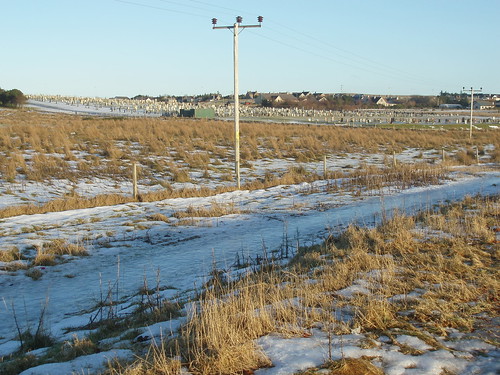
The iced-over path
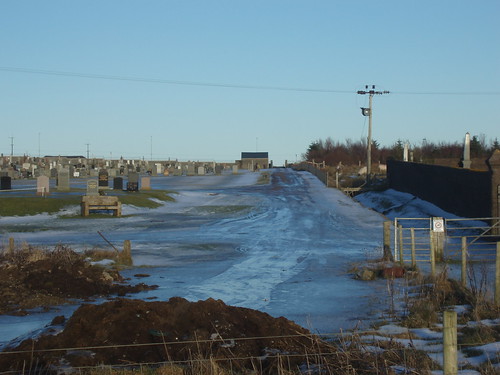
Sandwick Cemetery
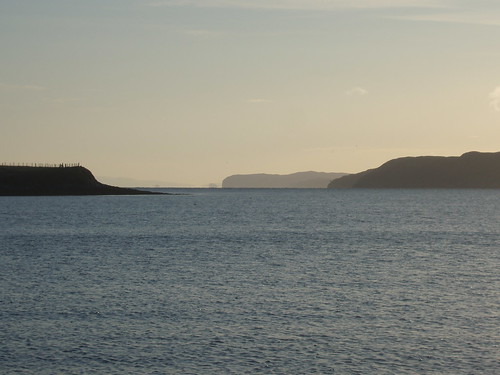
View down the Minch
Saturday, 9 January 2010
Saturday 9 January
A slight change in the weather today, after an evening and night with actual rain. The snow is still on the ground, as temperatures are still only barely above freezing. There are advantages to being close to the Atlantic; the merest westerly winds and temperatures take a lift. Elsewhere in the country, another 7 inches of snow is heading in from across the North Sea. The weather charts show no let up in the current cold spell for at least 5 days.
Locally, a cargo of road salt is currently being loaded by MV Haugesund at Carrickfergus (Northern Ireland) for transportation to these islands. Part of the 4,300 tonnes will be discharged at Lochmaddy in North Uist, for use on the roads of the Uists, the rest will come to Stornoway on Monday. Road conditions continue to be poor, with the Pentland Road (the shortcut between Stornoway and Carloway) effectively off-limits to motorists due to ice. The below image was taken in June 2006 at Achmore, where another branch of the Pentland Road emerges.

Locally, a cargo of road salt is currently being loaded by MV Haugesund at Carrickfergus (Northern Ireland) for transportation to these islands. Part of the 4,300 tonnes will be discharged at Lochmaddy in North Uist, for use on the roads of the Uists, the rest will come to Stornoway on Monday. Road conditions continue to be poor, with the Pentland Road (the shortcut between Stornoway and Carloway) effectively off-limits to motorists due to ice. The below image was taken in June 2006 at Achmore, where another branch of the Pentland Road emerges.
Friday, 8 January 2010
Pictures
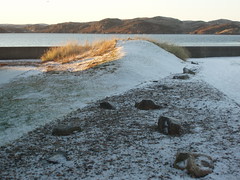
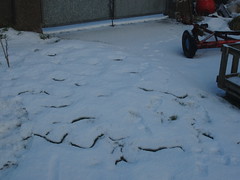
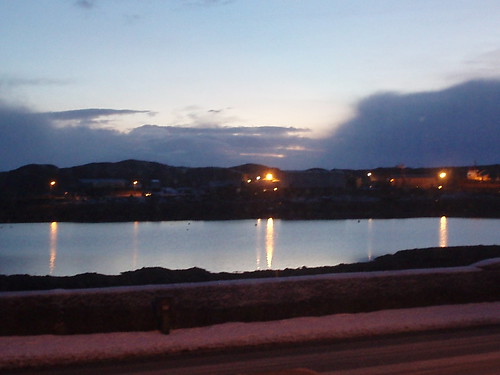
Here is a selection of pictures I took in Stornoway since my return last Tuesday.
Friday


Thursday
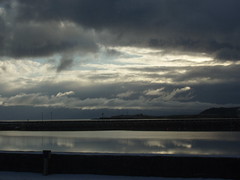
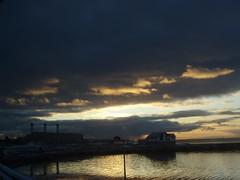
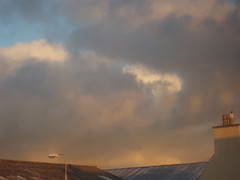
Wednesday
Friday
Thursday
Wednesday
Hurricane update - 8 January
The Southern Hemisphere is in the middle of its tropical cyclone season, although it is pretty quiet. Except for tropical cyclone Edzani (formal designation 07S), which is a category V system in the middle of the southern Indian Ocean. Nearest land is Diego Garcia, 590 miles to its north, and the islands of Mauritius and La Reunion are 1300 miles to its west southwest. None of these places have anything to fear from Edzani. Although it is heading for a point to the southeast of the Mascaregnes, the storm will have weakened considerably by that time and will also be at too high a latitude to be able to regain strength.
Just a gentle reminder that winter will not last forever, and before you know where you are you'll be complaining about that stifling heat.
Just a gentle reminder that winter will not last forever, and before you know where you are you'll be complaining about that stifling heat.
Friday 8 January
A sunny but very cold start to the day here in the Western Isles, after the mercury dipped to -6C overnight. That is not as cold as Altnaharra, over on the Scottish mainland, which reached -22.3C earlier this morning. Problems with snow and ice continue unabated, and there are no signs of improvement in the offing.
The birds have been fed outside, taking care to make it difficult for the seagulls to reach the seeds and bread crumbs. Anything close to treetrunks or under bushes is not easy to get for those scavengers. The starlings, thrushes, sparrows and finches are having a hard time at the moment. By 2pm, they can be spotted puffed up in any ray of sunshine that happens about, soaking up the sun and saving energy.
The birds have been fed outside, taking care to make it difficult for the seagulls to reach the seeds and bread crumbs. Anything close to treetrunks or under bushes is not easy to get for those scavengers. The starlings, thrushes, sparrows and finches are having a hard time at the moment. By 2pm, they can be spotted puffed up in any ray of sunshine that happens about, soaking up the sun and saving energy.
Thursday, 7 January 2010
Thursday 7 January
Good morning from a freezing Stornoway, temperature -2C. There was a nice sunrise at 9 o'clock, but snow showers are building. A seal just popped up in the basin across the road - no he's dived now. Temperatures in the south of England have gone down to -18C / 0F overnight. As high pressure builds over Scotland, we can expect overnight lows to go below -20C in the next few nights.
Supplies of grit to salt the roads in the Western Isles are expected to run out on Sunday. On Sunday, a boat with further supplies of salt is expected here. As Sunday work is frowned upon, I'm wondering if this ship will be unloaded then, or will they wait for Monday. Without gritting, the road conditions would be even more treacherous than they already are.
Supplies of grit to salt the roads in the Western Isles are expected to run out on Sunday. On Sunday, a boat with further supplies of salt is expected here. As Sunday work is frowned upon, I'm wondering if this ship will be unloaded then, or will they wait for Monday. Without gritting, the road conditions would be even more treacherous than they already are.
Wednesday, 6 January 2010
Wednesday 6 January
Good afternoon from Stornoway, where I arrived on time last night at around 6.30. I managed to get a lift into town. The three miles showed an increasing amount of snow the further west we came. Stornoway Town Centre had a lot of snow in it, showing the problems they've been having with gritting. Visiting Tesco earlier today was a very slushy, snowy experience, punctuated by empty shelves. There wasn't a grain of salt left in that place either, and it had all found its way to people's paths. Not their dinner plates!
Yesterday, my journey went surprisingly well. Everything flew on time, in huge contrast to today. Following snow falls of 40 cms, in places 180 cms, most of the country is struggling to keep going. When the weather settles down, overnight lows in the Highlands could dip to -20C.
Yesterday, my journey went surprisingly well. Everything flew on time, in huge contrast to today. Following snow falls of 40 cms, in places 180 cms, most of the country is struggling to keep going. When the weather settles down, overnight lows in the Highlands could dip to -20C.
Saturday, 2 January 2010
Comment spam
I just spent half an hour deleting a dozen spam comments in Chinese or Japanese on all my blogs. As a result, I'll moderating all comments on this blog prior to publication, in order to ward off this nuisance. This Blogger user goes by the Latin script username of disa. Having searched Google for an answer to this problem, I've found that they have no solution in place for it.
Posting on Atlantic Lines will resume next Wednesday 6 January.
Posting on Atlantic Lines will resume next Wednesday 6 January.
Monday, 21 December 2009
Christmas 2009

My postings will resume on the Shell Gallery on Wednesday (23 December). My next posting on Atlantic Lines from Stornoway will take place on Wednesday 6 January 2010. From this blog, Merry Christmas and a happy, healthy and prosperous New Year (or Nollaig Chridheil agus Bliadhna Mhath Ur, as they say in these parts).
Monday 21 December
This evening, at 1747 GMT (that's 1247 EST if you're in the States), we're at this year's Winter Solstice. Today, in other words, is the shortest day of the year. It is winter without a shadow of a doubt. Although the snow is thawing slowly here in the Outer Hebrides, it is an absolute shambles across the country. Flights delayed or cancelled, roads turned into icerinks and no Eurostar service. Wrong type of cold? Having checked the situation in Holland, for my journey tomorrow, the national rail operator there advises against all travel by train today. Hope the situation improves by tomorrow evening.
Fuel prices in this part of the country are among the highest you'll find. Current liter price is £1.21, which is 15 to 20p above the national average. The price is higher than that found in places like Inverness and Scrabster, which are served by the same seatanker that brings our fuel. One of the reasons is that there is only one supplier of fuel, who (therefore) holds a monopoly. The council and the MP have both complained to the Office of Fair Trading as we're basically held to ransom by a company that can charge what it likes. It bought over a competitor who had recently set up here, regaining the monopoly.
Today, PM Gordon Brown will make a speech on the climate change conference in Copenhagen last week. I don't know what there is to say about that. It was all talk and no firm commitment to action. The only positive thing was that the two largest emitters of greenhouse gases, China and the USA, got some sort of deal between them, but nobody else was prepared to sign up to it. A waste of time.
Fuel prices in this part of the country are among the highest you'll find. Current liter price is £1.21, which is 15 to 20p above the national average. The price is higher than that found in places like Inverness and Scrabster, which are served by the same seatanker that brings our fuel. One of the reasons is that there is only one supplier of fuel, who (therefore) holds a monopoly. The council and the MP have both complained to the Office of Fair Trading as we're basically held to ransom by a company that can charge what it likes. It bought over a competitor who had recently set up here, regaining the monopoly.
Today, PM Gordon Brown will make a speech on the climate change conference in Copenhagen last week. I don't know what there is to say about that. It was all talk and no firm commitment to action. The only positive thing was that the two largest emitters of greenhouse gases, China and the USA, got some sort of deal between them, but nobody else was prepared to sign up to it. A waste of time.
Subscribe to:
Posts (Atom)