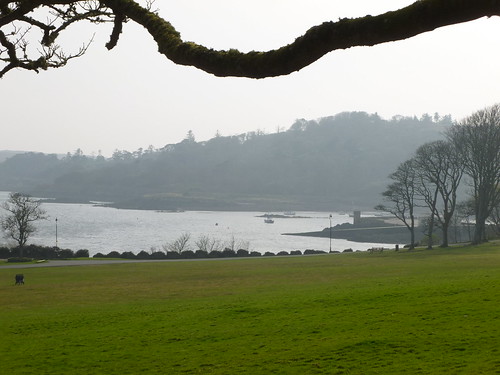
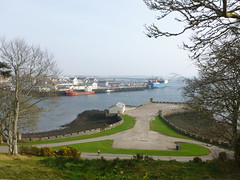
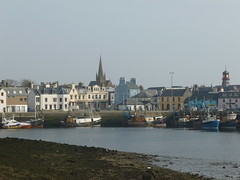
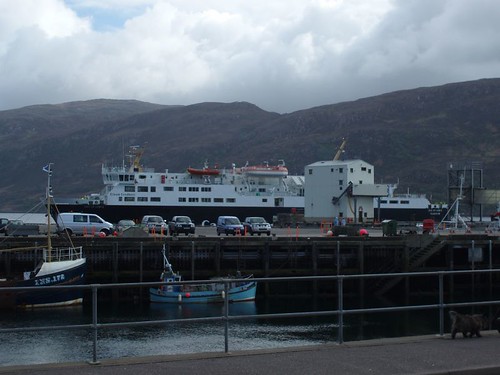
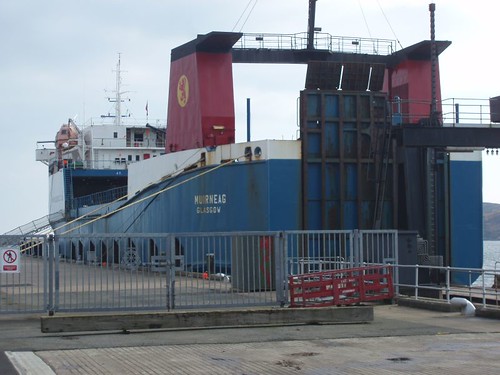
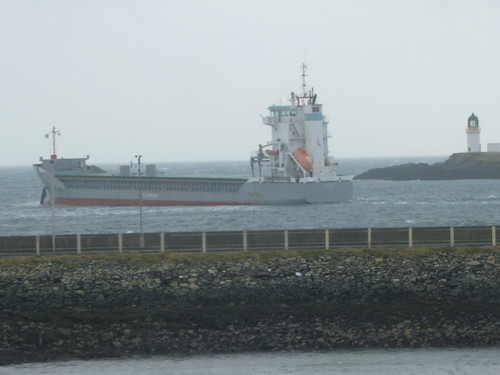
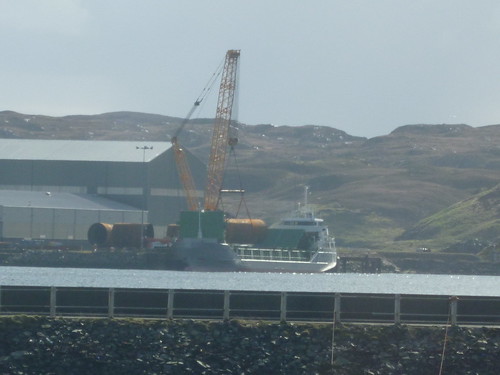
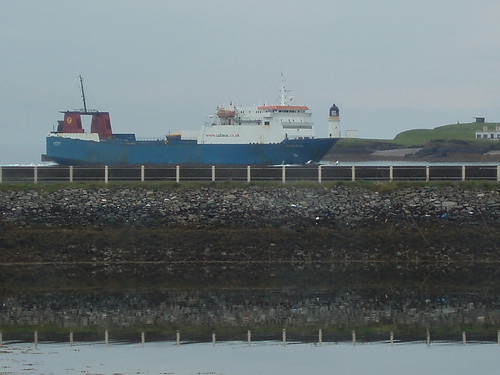
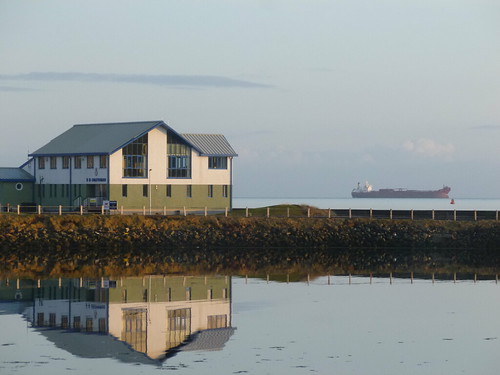
View across the Outer Harbour of Stornoway

Monday, 26 March 2012

Monday 26 March

Another sunny and warm day, with the mercury in Stornoway reaching a summery 17C / 63F. Apparently, this warm air is being blown straight from North Africa. Unfortunately, our spell of early summer looks set to come to an end on Wednesday. Better make the most of it while it lasts.

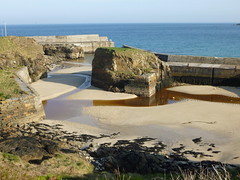
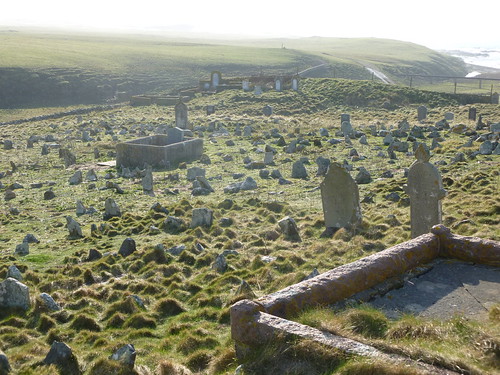
Which I did today, by going on a road trip to Ness, in the far north of Lewis, during the afternoon. The object was to visit an old cemetery, and have a look round the small harbour of Port of Ness. I shall let the pictures do the talking.


I should add that each rock represents a grave.

Sunday, 25 March 2012

Sunday 25 March

A beautiful sunny day, with a nice breeze going. It remains hazy, with the mercury up to 15C / 59F. Fyvie in Aberdeenshire reached 23C / 73F. The clock went forward last night, and we now have sunset at 8pm. The days will open out further, with sunset at 10.35pm by the summer solstice.

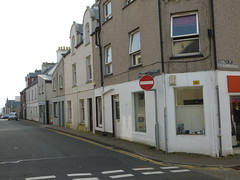
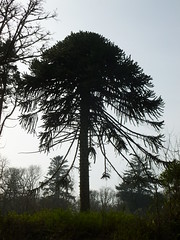
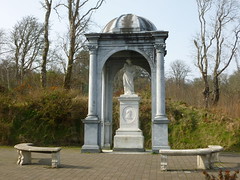
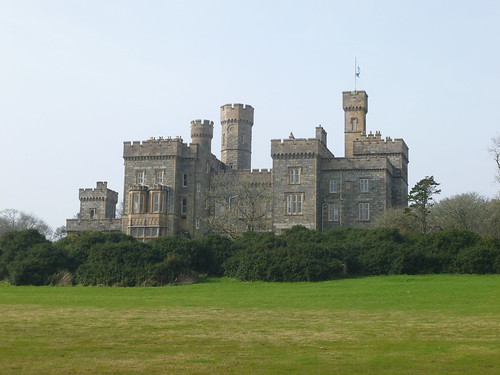
Went for a nice walk around the Castle Grounds this afternoon, where I had not been since last September at the very least. I'll leave some pictures for you all to enjoy.


Saturday, 24 March 2012

Saturday 24 March

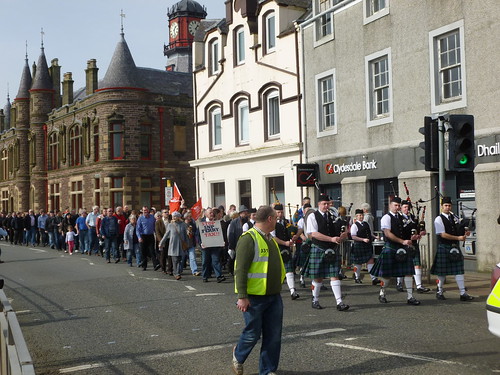
A beautiful if very hazy spring day, with the daisies out and the mercury right up at 14C / 57F. No wind and feeling pleasantly warm in the sun. Today was a big day in Stornoway, with a march and rally snaking through the town at lunchtime. This was in protest at the abolition of RET ferry fares for commercial vehicles (see yesterday's entry), which could see a multiplication of transportation costs and therefore costs of living for everybody. Our parliamentary representatives were conspicuous for their absence; the MSP is a government minister in Edinburgh, which may have compromised his ability to speak up for his constituents. To be honest, if he can't do that, he should quit his position in government. IMHO. I'll close this post with some pics from the event.


Friday, 23 March 2012

Friday 23 March

A beautiful sunny day, with no wind and no clouds. We managed 13C / 55F, which is very good for late March. The settled weather looks set to continue in the days ahead, with southeasterly winds bringing more mild air to the far northwest.

Tomorrow, there will be a march and rally through Stornoway to protest against the end of reduced ferry fares for commercial vehicles as of next month. In October 2008, the Scottish Government introduced reduced ferry fares to boost the local economy. The Road Equivalent Tarriff for commercial vehicles is being discontinued, meaning a steep price rise for their ferry crossings. Everything in these islands has to come in by ferry, and supplies all come in on board commercial trucks. The increased costs are passed on to customers and consumers (not necessarily the same people), and emotions are running high on the subject.

For those in Stornoway, the march starts at 1pm from the car park for the Nicolson Institute on Smith Avenue, with vehicles assembling at 12.15pm for a safety briefing by police. Pedestrians will assemble at the Mitchell Roundabout (by the Spar and the Macaulay Road Co-op) as well as the Porter's Lodge, and will join the march ahead of the vehicular cavalcade. The parade will continue through the town centre, concluding with a rally in Carnegie Square, outside An Lanntair on Kenneth Street.

Thursday 22 March

Nearly two years after I commenced transcribing the 1883 Napier Report into the condition of crofters and cottars in the Highlands and Islands, I am now on the home straight. The last batch, containing evidence taken at Edinburgh on 24 October 1883, will be waiting for me in the morning. There are 500 questions and answers left, out of 46,600 questions. The Commission went round the Highlands and Islands during a five month period, and took some distressing evidence, showing up breathtakingly arrogant and condescending attitudes - and in one case, reporting an estate factor to the authorities for neglect of his paupers. Concurrently, I am continuing to transcribe the 1912 Dewar Report, which will not take me two years; I have (so far) transcribed 40 out of the 85 pages related to the Outer Hebrides. Also awaiting me is the 1902 report into the condition of crofters and cottars, the successor to Napier's report.

I was relieved to hear that the siege in Toulouse, France, has come to an end. It was disturbing to learn that the individual, who died with guns blazing, appears to have been a well-connected islamic extremist. France is at the point where the UK was in 2005, after the London Underground attacks. I am not very conversant with the political situation in France, but am aware of ethnic tensions between the native French and the immigrant North African communities. The British government has worked hard to reestablish a rapport with its Islamic population; I think there are serious socio-economic problems in France, which need addressing urgently, as these create a fertile breeding ground for extremists of all kind.

There was a report of aurora borealis this evening, but when I went out to Mossend, I found myself in a mistbank - and no aurorae to be seen. Otherwise, it was a brilliantly sunny day and not cold at all, with the mercury at 12C. When I was at Mossend, the temperature was only just above freezing.

Wednesday, 21 March 2012

The Olympic Torch relay

Ullapool and Stornoway have something in common today. They have ferry boats alongside their quays which are going nowhere.

The Isle of Lewis is stuck in Ullapool following a breakdown after this morning's crossing. So, that's a pretty sight for that village.


In Stornoway, meanwhile, the Muirneag was once more stuck in port following bad weather in the Minch overnight.

MV Muirneag

The Muirneag is known in these parts as the Olympic Flame, as it 'never goes out'. Bearing that in mind, I wonder how they are going to hawk that boat around the streets of Stornoway on June 11th as part of the torch relay for the London Olympics.

Tuesday, 20 March 2012

Tuesday 20 March


This ship is the Dutch-registered MV Flinterspirit, which put in an unscheduled appearance at Stornoway today. The vessel had been en-route to Belfast when she decided to dispute passage with the island of North Uist, 70 miles southwest of Stornoway. The island won, and the boat was stuck fast on rocks at 10.45pm last night. Fortunately, the tide was rising and the boat was able to refloat herself in the early hours of today. She was ordered north to Stornoway to check her hull for cracks. As I type this, she is anchored a few miles southeast of the town, within sight of my position.

The stranding has provoked a furious row, as the provision of an emergency tug in the Minch had been terminated as of last Saturday - without so much as a word to the Western Isles Council. The emergency tug Anglian Sovereign, based at Kirkwall in Orkney (200 miles to the eastnortheast), came across, but her services were fortunately not required, as no damage or injuries were reported. The UK government has decided that the maritime industry should provide its own tugs. I suppose that the next proposal is for the burghers of Stornoway to band together to buy and run their own ambulances, and in the meantime, an emergency ambulance would be available from Kirkwall.

Today was a windy day, with the force 7 wind prompting the cancellation of the overnight freight ferry to Ullapool.

Monday, 19 March 2012

Monday 19 March

After yesterday's sunshine, we are now back to dreich. Grey, overcast, at times wet, windy and feeling very cold in said wind. It's March, what do we expect.

I continued the transcription of the Napier Report, with the large chunk of evidence (400 pages) from Lanark and Edinburgh left to do. One of the most cruel things I came across was the episode of the bull. A factor (manager) had purchased a bull for use on his estate on the island of Mull. When the beast arrived, it soon became clear that it was infected with foot and mouth disease. So, rather than slaughtering it, the animal was shunted off to the neighbouring island of Iona, where a lot of livestock unsurprisingly died.

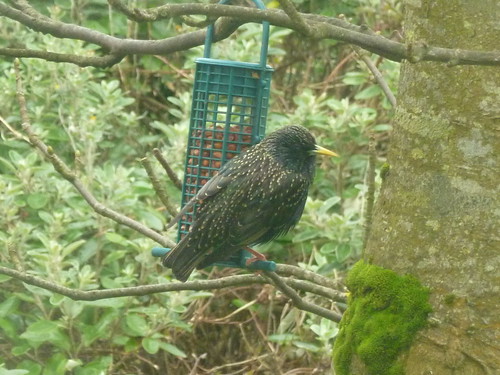
I'm closing this post with an image of a starling on the birdfeeder. It is in spring plumage, ready for the mating season. More blooming starlings...

Sunday, 18 March 2012

Sunday 18 March

Happy Mothering Sunday to all in the UK. Mother's Day in the US will be on the second Sunday in May.

It was a bright and sunny day here in Stornoway, but with a regular if infrequent litany of short showers. Not warm by any standard, only 7C / 45F. Spent the afternoon transcribing two sections of the Napier Report, namely Lochaline and Lismore. Apart from Boxing Day evidence from Tarbert (Argyll), I have now finished all the Highlands and Islands evidence. What remains is a large amount of blether from the hearings at Edinburgh and Lanark. Last week, I did the sections related to Islay for a local historian in that island, and can be read here

It is rare for me to comment on football, but two things have happened this weekend that made me break my rule.

I was sad to hear of the footballer who collapsed during a match. Premier League footballer Fabrice Muamba, who plays for Bolton Wanderers, apparently suffered a cardiac arrest and required at least 6 minutes of CPR on the pitch before his heart started working again. The match, a cup-tie with Tottenham Hotspur, was abandoned.
And just as I am about to close this post, news comes through that the father of a player of Kilmarnock FC (Liam Kelly), whose team beat Celtic in a cup-final here in Scotland 0-1 this afternoon, has died after suffering a heart attack at the game.

Saturday, 17 March 2012

Saturday 17 March

Happy St Patrick's Day to all. It has been a sunny day in the Western Isles, with only one shower to speak off. Across the water, the freight ship Scots Isles is loading up more items for the renewable energy industry that have been produced at the fabrication yard at Arnish. Earlier this week, a plan for wave energy was put on display here in the town, as wave energy is being thought of as the way forward in this part of the world. At least you won't see much of it when it's in operation, in contrast to wind turbines.


Australia has taken a hit from tropical cyclone Lua, which came ashore at the Pardoo Roadhouse northeast of Port Hedland. Winds were at 95 knots at the time of landfall, but as the cyclone moved inland it is quickly weakening. The storm will blow itself out over the Gibson Desert, but not before having dumped vast amounts of rain there.

As their cyclone season moves towards a close, our spring is just around the corner.

Friday, 16 March 2012

Friday 16 March


Image courtesy MSNBC

Today, my focus was firmly directed southeast, towards Belgium. At 11 am local time, the 22 children and 6 adults, killed in Tuesday's bus crash in Switzerland, were remembered in a nationwide one-minute silence.I found it incredibly moving to see the white coffins lined up in an airport hanger at Melsbroek airforce base near Brussels - realising that its occupants had set forth for a skiing holiday less than a fortnight previous. All programs on Belgian radio and television, in all languages, was altered to suit the mood of national mourning. It is rare for Belgians to feel Belgian, rather than Flemish or Walloon. But today was one such day.

Here in Stornoway, we are back to sunshine and showers. We were deprived of the northern lights last night; I went to Mossend to have a look, but was instead treated to a hailshower on the way back. Eoropie Tearoom did get a display.

Thursday, 15 March 2012

Thursday 15 March

The weather has not changed very much this week, with mostly grey skies, some drizzle and temperatures just below 10C. Winds are fairly brisk. I am hoping for clear-ish skies tonight, as there is a fair chance of the aurora putting in an appearance at my latitude, 58 north.

On the other side of the world, Australia is bracing itself for tropical cyclone Lua. The storm, which will blow up to a category II (95 knots) hurricane, is expected to impact the Pilbara coast near Port Hedland in Western Australia on Saturday.

The parents of the children, killed in the Swiss bus crash have been shown the personal possessions and a picture of the dead body. If desired, they could also view the corpse itself. I cannot begin to imagine what they must be going through. Six of the dead were Dutch, one was German. Belgium will observe a minute's silence at 11 am local time tomorrow morning.

Wednesday, 14 March 2012

Coach crash

A tourbus, carrying Belgian school children, has crashed into a tunnel wall at Sierre in the Valais canton of Switzerland. Twenty eight people have died, of whom 22 were children aged around 12. Another 24 are injured. The crash happened at 9.15pm last night, but the recovery of the victims and wreckage has taken all night. The communities of Heverlee and Lommel in northeastern Belgium are in shock, as the fate of some of the children is not yet known. The group had been on a skiing holiday at Val d'Anniviers just outside Sierre, and was on its way home.The coach crashed into a tunnel wall recess, and no other vehicles were involved.

My sympathies go out to the family and friends of those who were lost in this tragic accident.

Tuesday, 13 March 2012

Tuesday 13 March

One of those grey, non-descript days. Not too cold, bit of a breeze.

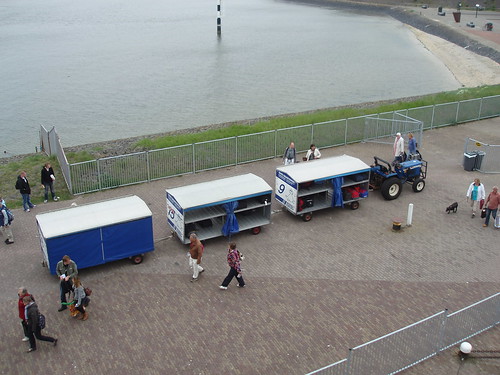
The big news locally is the row about luggage going on board our ferry, the MV Isle of Lewis. Until recently, you could leave it in the hands of bus company Citylink, who would take it off you at Stornoway and you'd be reunited with your bags in Inverness. They stopped doing it, so you have to lug your luggage on and off the ship yourself. If you have too many bags to take up in one go, you're stuffed: the company apparently does not allow you back to collect the remainder of your luggage.So I suggested this system of luggage trolleys that are used by a Dutch ferry company. They manage to disembark all their passengers within about 10-15 minutes.


It is fairly quiet on the hurricane front, but I am keeping an eye on a forming tropical cyclone near Darwin, Australia, and a strengthening one off Port Hedland, Western Australia. Neither are expected to pose serious problems, although heavy rainfall could still be an issue.

Monday, 12 March 2012

Euthanasia

As I type this, the BBC news is running its lead news item on the plight of a man, suffering from "locked-in syndrome", who wants his doctor to kill him. The man is mentally alert, but paralysed from the neck down and unable to communicate other than through a computer that reacts to the blinking of his eye, or through a perspex board, mounted with large letters. The courts have now decided that the man can challenge the application of the law on murder in a case like this, as the pre-meditated ending of life is murder.

A discussion has been raging in the UK for some time on assisted suicide, where people are helped to end their own lives. So far, that has also been illegal. The case that today's furore is all about is different, as the sufferer is unable to take any medication independently.

This discussion has also been held in Holland, and over the last decades of the 20th century, euthanasia was permitted. It is still not legal to end someone's life, but the public prosecutor will decide not to prosecute, provided the certain conditions have been met in carrying out the euthanasia: I quote the criteria, in translation.
Please note that the link will show a Google Translation, which I have cleaned up below. 
 
Euthanasia criteria, Netherlands
The GP must be certain that the request for euthanasia from the patient is voluntary and informed.

Explanation: The request for euthanasia should not be made under pressure or under the influence of others, or because of a mental disorder. The patient has complete insight into his illness, the likely course and its treatment options. He has also repeatedly expressed a desire to die.

The GP must be certain that there is hopeless and unbearable suffering of the patient. The patient is informed about his situation and the prognosis, and the patient is convinced that there is no reasonable alternative.

At least one other physician consult, who sees the patient and will report on whether in his opinion due diligence was exercised in performing the euthanasia or medically assisted suicide.

Notes: The doctor should perform the act himself. He must not leave it to others. In the case of assisted suicide, the physician will be present at the patient's side until death has occurred.

Euthanasia doctor may deny the request
A physician has two obligations to his patient. The first is to alleviate or eliminatethe suffering of the patient. The second is to save the life of the patient. The second obligation is diametrically oppoed to a request from a patient to die with help from the doctor. Doctors therefore refuse a request for euthanasia. Also, nurses may refuse to cooperate in the preparation of euthanasia.

A doctor or nurse may never be prosecuted for such a refusal to cooperate. The law ensures that a doctor or nurse is not in conflict with his own conscience. The doctor who himself rejects euthanasia, must refer the patient to a colleague who may be prepared to honour the request for euthanasia.

The procedure
After the death of the patient, the doctor carried out the euthanasia will write a report on the events. The non-natural death should be reported directly to the municipal coroner. The pathologist examines the body of the deceased, examines how and by what means the euthanasia was carried out and explains the findings in a separate report.

Both reports with the required attachments (eg, if present, the written directives of the patient) was sent to the regional assessment in the area where euthanasia has occurred and the local prosecutor receives the findings of the municipal coroner, because he has to give permission for the body to be released for burial.

Regional review committees
There are five regional review committees in the Netherlands: Groningen, Arnhem, Haarlem, Delft and Den Bosch. The regional review committees consist of an odd number of members, including in each case, a lawyer, a doctor and an ethicist, and they view each case whether the due diligence by the doctor who carried out the euthanasie has been observed. If this is the case, no action will be taken against him. If the opinion is that the doctor has acted contrary to the requirements or that there is doubt, then the Public Prosecutor and the regional health care inspector will be informed. When there is a criminal offense, a prosecution may follow. The inspector assesses whether disciplinary action should be taken against the physician.

What is not euthanasia:

Discontinuation or non-imposition of medical treatment at the request of the patient.
The waiver of a futile medical treatment by the doctor (this is part of normal medical practice).
Easing the pain with progressively heavier drugs (like morphine) and the stopping of artificial fluids and nutrition as a side effect that they shorten life (called palliative sedation).
The termination of life of non-viable or severely handicapped newborns and coma patients are not covered euthanasia and not by the regional review committees evaluated, or by the Public Prosecutor.
Dementia is not as unbearable and hopeless suffering, provided the person has made a euthanasia declaration before the disease has struck.

Sunday, 11 March 2012

Sunday 11 March

Commemorating the first anniversary of the Japanese tsunami put me in mind of that other tsunami, seven years ago on Boxing Day 2004. It was triggered by an earthquake of similar magnitude, but had a far worse loss of life - about a quarter of a million people died on the fringes of the Indian Ocean. Another day worthy of remembrance. In exactly six months from now, we'll have the eleventh anniversary of 9/11.

Today was grey and drizzly in Stornoway, with the odd blink of sunshine behind the clouds.
I spent a large part of the afternoon transcribing more evidence from the Napier Commission of 1883 and the Dewar Commission of 1912. I have also unearthed the predecessor of Lord Napier's report, namely that by Sir John McNeill of 1851; in my possession is the successor report to Napier, taken in 1902. The transcriptions take the shape of cleaning up OCR renditions of scanned images of the original documents.

All these reports show the conditions of crofters and cottars (landless people) in the Highlands and Islands, which (particularly following the potato famine of 1846) was particularly dire in 1851. However, things were still so bad in the 1880s that it something not far off an uprising in the west of Scotland, leading to the setting up of the Napier Commission. Sir John A. Dewar headed up a commission to look into the provision of medical services across the Highlands and Islands, which (in 1912) was poor in this part of the world.
You'll be hearing more about this from me in the days and weeks to come.

A year ago today

Friday morning, 11 March 2011. Switched on TV to be greeted by scenes of horror from Japan. An earthquake, measuring 9 on the Richter scale, has hit Japan. Half an hour later, a tsunami of up to 40 feet in height has swept onto the country's eastern coastline, causing unbelieveable scenes of devastation. Villages, towns and cities swept away in an instant.

To date, 20,000 people are known to be dead or are still missing.

What followed was even worse. The tsunami knocked out the cooling system of the nuclear plant at Fukushima, leading to a meltdown in three of its reactors. This caused two large explosions, which spread radio-activitiy over a large area. The radio activity will take decades to decay, leaving the area around Fukushima unfit for habitation for generations.

A natural disaster, compounded by a man-made disaster.

Saturday, 10 March 2012

Saturday 10 March

Overcast and grey, but mainly dry. Went over to Sandwick Cemetery in the afternoon to retake some pictures of two gravestones, primarily to get more information about the loved ones that were named on them. One was a private stone; the other related to the sinking of the Norge on 28 June 1904. In that incident, about 700 people were drowned after the ship tore out its keel on Rockall. Nine died after coming ashore in Stornoway, and lie buried at Sandwick.

The night has cleared up, and the forecast for the aurora borealis appears to be favourable. The moon is past full, so I'll be checking the northern sky regularly.

I have been transcribing more evidence from the Napier Report, some of it harrowing. A family in Tiree was being turfed out of their house, in spite of the fact that the mother was in confinement. So she had to give birth in a cart. It was not so much the landowner himself, the Duke of Argyll, but his agents who behaved like complete monsters. Next port of call will be Bunessan, Isle of Mull.


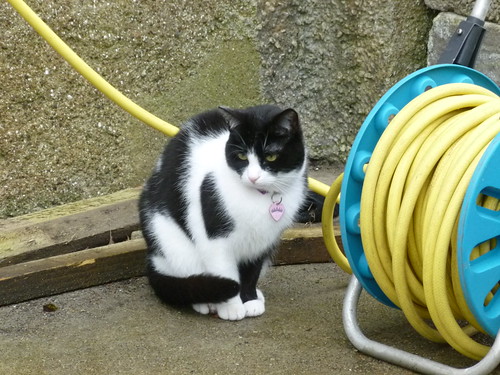
Hello puss


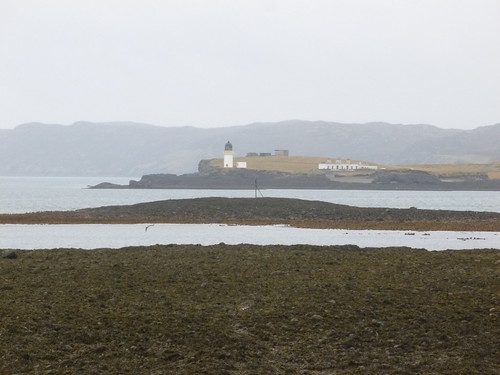
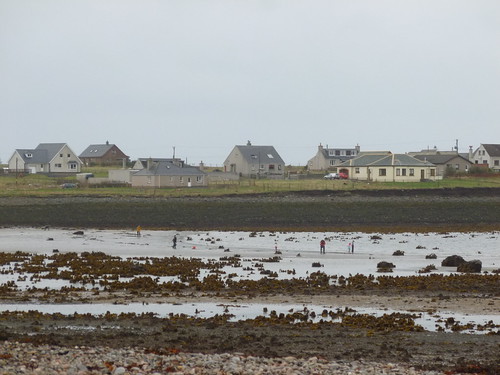
Arnish Lighthouse behind the Sgeir Mhor [Skerryvore]


Lower Sandwick and low tide in Sandwick Bay


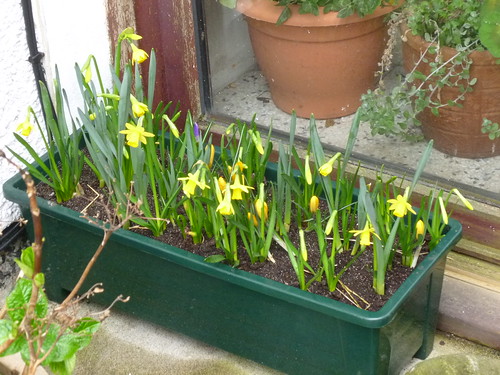
Daffs are out!

Friday, 9 March 2012

Friday 9 March

Changeable cloud and rising wind today, with just the odd drop of drizzle. Temperatures were highest in the night, slowly dropping from an overnight high of 10C to about 7C at the moment. As it's cloudy, we're missing out on the aurora. Being at latitude 58 north would mean a spectacular display. Well, it's raining as I type this, no tough luck.
Completed the first batch of additional research on WW1 casualties from the town of Stornoway, their number exceeding 140 - i.e. about 10% of the total number of those lost in the Great War. I have revised the Stornoway page of the memorial site Faces from the Lewis War Memorial. All the information on one person is now contained on the one page. Sometimes it is very little; sometimes there is rather more. The outlying districts are next.

An MP who went bananas in a bar in the Houses of Parliament on 22 February has been sentenced to a fine of £3,000 plus £1,400 in compensation to his victims; two fellow MPs and two researchers. He was also banned from all pubs and bars for several months. I would have expected Eric Joyce to have stepped down as MP for Falkirk (central Scotland) after such a disgraceful performance. But it is probably not politically expedient to have a by-election.

The Convener of Western Isles Council is stepping down in May, after 28 years as councillor and 13 years as Convener. Mr Macdonald finished by making a swipe against internet bloggers, whom he referred to as scurrilous and cowardly as well as not belonging to our community. Freedom of speech, anyone?

Independence

The Scottish National Party, which is in government in Scotland at the moment, has proposed to hold a referendum on Scottish independence in the autumn of 2014. I have previously made my views on independence - I'm against.

Scotland was an independent nation until 1703, when it amalgamated with England, Wales and Ireland into the United Kingdom of Great Britain and Ireland (latterly Northern Ireland). Uprisings in 1715 and 1746 were organised to resurrect the monarchy in Scotland, led by the house of Stewart. Both failed abysmally, and the Battle of Culloden in April 1746 was the last to be fought on British soil. There is ill feeling in certain quarters between the English and the Scottish, and there is no denying the historical facts that underpin that. During the latter half of the 18th century, atrocities were committed in the Highlands to suppress any further uprisings. The clearances of the 19th century were, however, not solely committed by English landowners - a lot of them were carried out at the behest of Scottish landowners, living it up down in London.

Independence for Scotland is a serious matter. Independence is a serious matter for any nation, seeking to break away. If the referendum returns a definite 'yes' in favour, mechanisms should be in place to smooth over the transition. And that is where I start to get seriously criticial.

The SNP have been in power at Holyrood since May 2007. In those 5 years, they do not appear to have given much thought to the practicalities of running a country. To what needs to be done in order to effect the separation from England. The same accusation must be leveled at the Westminster government, which has failed to plan for the contingency of independence for Scotland. Each and every day, the papers here in Scotland are full of examples of things that have not been thought about. The nuclear submarine base at Faslane. The oil revenues. Taxation. Border controls. Security. Neither side have given it any thought.

I am not having a jibe specifically against any party. Labour was in power in Westminster in 2007; the Conservative / Liberal Democrat coalition has been in since 2010. So everybody has had their eye off the ball. The SNP is more concerned with England bashing than seriously preparing the country for a possible separation from England. Worse than that, England will most likely be their main trading partner following independence, so being confrontational is about the worst thing they could do.
Labour can be accused of complacency, and in disenfranchising 110,000 Scottish voters in the 2007 Scottish Parliament elections. The Conservatives can be bothered even less, as they have the grand total of one MP in Scotland.

Anyway, we're stuck with the present mess, and I dread for the future.

Thursday, 8 March 2012

Thursday 8 March

Another of those eminently forgettable days in terms of weather. Grey, overcast and very windy. The ferry is stormbound in Ullapool overnight, the freight ferry is once again not running tonight - because we are on warning for a force 9. Not complaining though, I find the Hebrides' changeable weather one of its many redeeming features.

I have completed one more section of transcriptions of the Napier Report from 1883, this time for the county of Inverness. The commission of six sat at Glenelg, Arisaig, Inverness and Kingussie. The next section incorporates the hearings in Argyll - Tiree, Mull, Lismore, Morvern and Tarbert, Loch Fyne. After Argyll, only the hearings at Edinburgh and Lanark remain for me to transcribe. The Napier Commission posed some 47,000 questions, resulting in a report of about 4,000 pages. It is a keystone of Highlands and Islands history, which (through these internet transcriptions) I hope to make more easily accessible and searchable for other researchers.

I was saddened to hear of the death of the six British soldiers in Afghanistan. Each life lost is one too many. However, as an ex-army man myself (although never seen active service), I am only too aware that death is a major occupational hazard of soldiering. I think those guys knew it, having seen nearly 400 go ahead of them in Afghanistan. Their friends and family knew it too, and I was heartened by one relative who said that the mission in Afghanistan had to go on, on to success. Else all the blood, sweat and sacrifice would have been in vain.

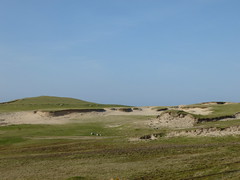
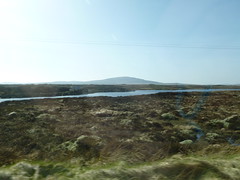
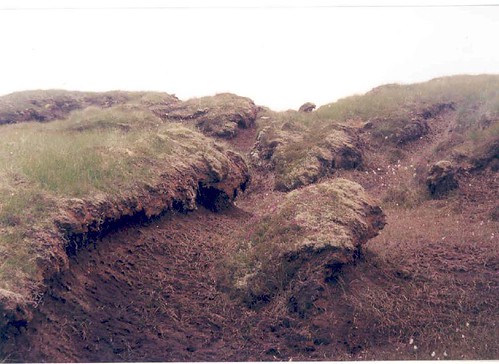
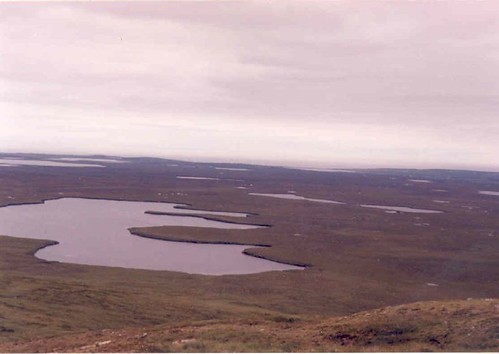
I was disgusted to hear that our local council has rubberstamped the construction of another bl**dy windfarm on the outskirts of Stornoway. It is the substitute to the scheme that got thrown out in 2008, which would have seen 180 turbines, each standing 450 feet tall, marching over the Lewis moor from Stornoway north to Port of Ness. The forty turbines that have now been proposed will be in a smaller area, around the Barvas Hills, 4 miles north of Stornoway. These two images show the terrain on the Hills, and the view north. You can't get more desolate than that. And have turbines all around them? No way.


Wednesday, 7 March 2012

Wednesday 7 March

A day of sharp March showers, with rain, hail, sleet, snow and the kitchen-sink. It is feeling quite cold when the sun goes in. The wind has died down a little from yesterday's severe gale, but it remains very breezy.

A man was reported missing on Benbecula, some 70 miles south of here, after last being seen at Creagorry on Monday night. The body of the janitor at Lionacleit School was found in the waters of the South Ford earlier today. He was known to go out winkle picking at low tide.

Until the 1960s, crossing from Benbecula to South Uist was done by crossing through the waters and over tidal sand banks in the South Ford, a treacherous piece of water. The sands shift over time, and it was easy to be caught out. I stress that I make this remark in a historical and geographical perspective, and has no bearing on the incident involving the janitor. Lionacleit School is a large school, serving the islands of the Uists (North and South Uist, Berneray, Benbecula, Grimsay and Eriskay).

Talking of schools, the new primary school at Barvas, 11 miles north of Stornoway, has now been completed, on schedule and on budget. It is one of six new schools being built in the Western Isles, which include the new Nicolson Institute here in Stornoway. Pupils will start taking lessons in all 6 new buildings as of August this year.

Tuesday, 6 March 2012

Tuesday 6 March

A filthy day, with rain and a gale all day. Our ferry, the MV Isle of Lewis, has not had a good day at all. Halfway across the Minch, a crossing of 2 hours 45 minutes, one of its main engines cut out. The master decided to press on for the mainland port of Ullapool, which was reached 1½ hours late. The boat had to stay alongside pending repairs, as maritime regulations forbid her sailing on just the one engine. The baffling part of this story is that the Isle of Lewis has only just come out of dry-dock following her annual refit. Last night, the freight ferry Muirneag was not running either, on account of this bad weather, which sprang up overnight. The Isle of Lewis is due back on the run as of the 10.25 sailing from Ullapool back to Stornoway. It will not be a nice crossing, as the wind will only drop a notch, from force 8 to force 7.

Collected my new spectacles and sit here getting used to them. Reading is a lot easier, but the distortion is something I'll have to get used to over the next few days. 

Monday, 5 March 2012

Picture post - 5 March


Stornoway Coastguard Station on a windless afternoon, with the tanker Grena in the background.


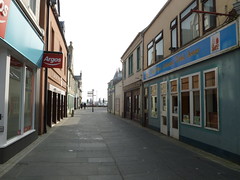
Francis Street, Stornoway


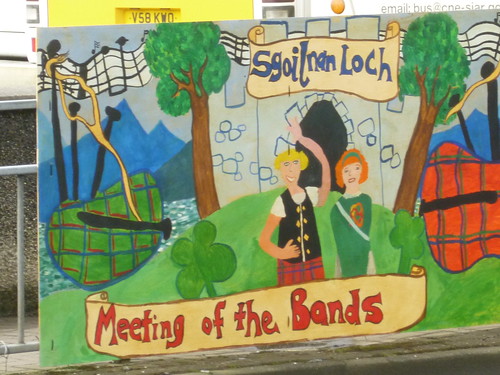
Meeting of the Bands

Monday 5 March

Another bright and sunny, if slightly nippy, day here in the Outer Hebrides. For the time being the last nice day, as we are on warning for high winds overnight. The freight ferry Muirneag has been cancelled - it usually departs Stornoway at 11.30pm, to return at 8 am the following morning. In other words, the shop is going to be empty tomorrow.

It has transpired that the Scottish Government is intending to slash parts of the Air Discount Scheme, ostensibly on account of demands from the European Union, but more likely to cut costs - of £2.7m per annum. Under ADS, islanders could purchase airtickets to a mainland hub at a discount of 40%. Bearing in mind that your average return from Stornoway to Glasgow costs about £160, ADS would take a useful £60 off. Our airfares are quite high at the best of times, and what with the cessation of reduced ferry fares for commercial vehicles, the economy of these islands is being adversely affected.

Sunday, 4 March 2012

Sunday 4 March

A bright and sunny day, but with isolated showers. Some of them of a wintry nature at higher elevations, as shown in this picture from North Harris. It has turned noticeably colder, as I found out when I went out for an amble in the afternoon.

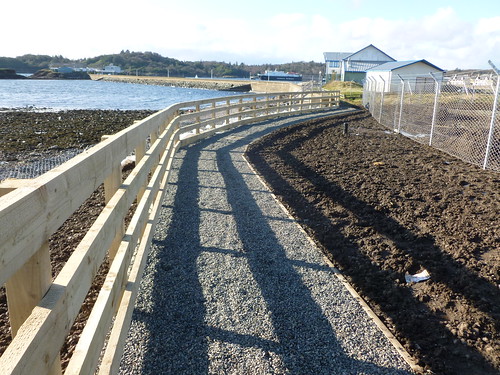
To my delight, I found that my regular short walk round the powerstation has reopened following months of closure due to soil cleaning work. Four years ago, several fuel storage tanks were removed outside the powerstation, and the fuel had leaked into the ground. This necessitated a huge clear-up, which continues today.

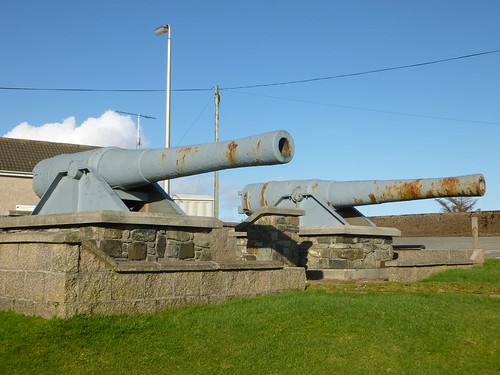
The walk takes me round to the Battery.

And yes, those are two ships' cannon. They mark the spot where the Royal Naval Reserve had a base during WW1, and it was near there that the bodies of the sailors who drowned in the Iolaire Disaster of 1 January 1919 were brought ashore. The total number of casualties was 205, but 60 of those lost were never found.

I continued to look at details of several Stornoway men who were lost during WW1 - you can follow progress here. I have researched 124 (not claiming to be supplying complete information by a long shot), and still have about 1170 to go. I completed the transcription of evidence given to the Napier Commission at Inverness, From the county of Inverness, I have the evidence from Kingussie left to transcribe. Otherwise, there is the sessions in Argyll, Lanark and Edinburgh. And I have also continued to transcribe the evidence from the Dewar Report at Stornoway. I copy interesting bits onto my local history blog Pentland Road. The Dewar Report was published 100 years ago this year and led to a revolution in healthcare in Scotland.

Saturday 3 March

Quite a bright day to start with, but clouds rolled in after lunch, and we were treated to a few heavy downpours. Spent the afternoon transcribing a large segment of the Napier Report of 1883, closing the evidence that was taken at Inverness. This, to a large extent, related to evidence from other parts of the Highlands. The witnesses consisted mainly of factors and other representatives of landowners, but with a widely varying take on the problems facing crofters and cottars in the north of Scotland. I have yet to copy the transcripts from Inverness onto the website.

Friday, 2 March 2012

Friday 2 March

Quite a mild day with good long spells of sunshine. We managed an unexpected 13C, but we'll have to wait a while to temperatures like that again. A cold spell is headed our way from the Atlantic.

I have continued to transcribe the Report from the Napier Commission, which had been hearing some very lengthy evidence during its session at Inverness in October 1883. The question was all about deer forests. Now, what is a deer forest? Forget about trees. They tend to be depopulated areas of land, whether depopulated through compulsion or through inhospitable terrain, where deer roam free. The deer are there to be shot, for sport, by gamesmen who rent a day's shooting from the relevant estate. During the 19th century, hundreds of villages and thousands of people were cleared from land, in order to make way for deer forests, sheep farms or other means of making more money for the landowners. Bear in mind though that the landowners were required to support their tenants at times of need, like supply food. In 1846, e.g., the potato harvest failed, giving rise to famine in many areas of the British Isles, such as Ireland and Scotland. Earlier that century, people had been forced to emigrate, even though there was no real need for them to do so.

The resentment, created by this less salubrious episode in Scottish history, still runs to the surface today. Some believe that Scottish independence is the way forward. However, many forget that it was Scottish lairds that were responsible for some of the clearances.

Thursday, 1 March 2012

Thursday 1 March

March has come in like a lamb, here in the Hebrides. A cloudy morning gave way to a sunny afternoon, although when cloud gradually increased, it began to feel colder, out of the sun.

The unfamiliar outline of the ferry MV Clansman loomed up at the ferry pier this morning. The boat is here until the weekend, when she will sail the 40 miles to Tarbert to take up the triangular service between Uig, Lochmaddy and Tarbert, whilst its regular vessel, the MV Hebrides goes off for refit. Checking AIS, I noticed the MV Hjaltland passing Cape Wrath, the far northwestern corner of the British mainland, on its way to Lerwick. The Hjaltland sails between Aberdeen, Orkney and Shetland, but has been in drydock at Birkenhead for the past couple of weeks. The people of the Northern Isles will be very happy to see her back, as they have been on a severely curtailed service for the past couple of weeks.
There is an on-going hullabaloo about fuel prices in these parts. The UK government introduced a price derogation of 5p per litre today, but it is alleged that fuel wholesalers have been edging up the prices by 5p over the past fortnight, so the net effect of this fuel derogation is zilch. A government minister has warned that profiteering will be dealt with, but knowing how the fuel business is tied in with certain councillors in these parts, I really do wonder if that will carry much clout.

I spent 45 minutes in the library, scanning 57 pages from the Dewar Report and uploading them to my Dropbox account. I shall unleash an on-line OCR (optical character recognition) programme to turn the scans into manageable text, for uploading to another of my blogs. Of which I now have 61.

Wednesday, 29 February 2012

Wednesday 29 February

It's :Leap Year Day today, and the babies born today will only be able to celebrate their birthday properly once every 4 years. It reminds me of the Gilbert & Sullivan operetta Pirates of Penzance, where the hero can leave his apprenticeship with the pirates on his 21st birthday. Only to find out it was February 29th, so he can't leave until he is 84.

It felt very cold today, as a strong wind blew over Stornoway. Quite a contrast to the summery scenes over in Aberdeen, particularly yesterday. Went into town for a few bits and bobs, but it felt bitterly cold in the southerly breeze. We are set for a colder spell as March comes in, but just a dip in temperatures, no return to winter imminent.

Quite a few schools in the Western Isles are closing this year, among them the ones at Sandwickhill and Bragar. A Facebook page, organised by Tasglann nan Eilean [Hebridean Archives] has been set up for each of the schools, and the one at Airidhantuim seems to be particularly popular. Wanna try pronouncing that last name? Unless you're a local person here in Lewis, you will never get it right.

Tuesday, 28 February 2012

Tuesday 28 February

An overcast day, but fairly mild. However, the mercury at Aberdeen crested 17C / 63F, which is 11 degrees above the long-term average. The high temperatures were caused by the föhn over the Cairngorms.

Ferry company Calmac have made a hash of their brochure for their services. On a map of the islands to the west of the mainland, several hotels and guesthouses have been pinpointed to the wrong location. And not just a little; a hotel in Barra has been placed in Skye, 50 miles to the east, and a guesthouse north of Stornoway is placed 50 miles away in Uig. They have apologised for the error.

I spent about 40 minutes in the library scanning pages from the Dewar Report of 1912, which reviewed the provision of medical services in the Highlands and Islands of Scotland at the start of the 20th century. As I outlined last week, this report led to the establishment of the Medical Service for the Highlands and Islands, and ultimately the NHS in 1948. Some of those pages I have forwarded to my friend and fellow researcher Direcleit, who covers Harris, Berneray and adjacent areas of North Uist.

Monday, 27 February 2012

Monday 27 February

A very mild day, with the mercury easily reaching 12C under cloudy skies. It was also quite breezy, but nothing dramatic.

Went to the optician's for an eye-test and the selection of a new pair of spectacles. Should be ready within one or two weeks. The prescription will have to be faxed to a place on the mainland, which will produce the lenses. The optician's will then insert the lenses into the frame, and get in touch with me to come and collect them. Like everybody else, I'm not getting any younger, so I'm joining the ranks of the varifocal brigade. A certain person, well-known to me, decided to wear their varifocals for the first time when going on a train journey. On alighting from the train, they misjudged the distance between carriage floor and station platform (2½ feet), so they ended up prostrate on the platform.

Our Post Office, on Francis Street, has had to shut unexpectedly due to security concerns. People with car tax applications have been panicking, because they faced a round trip of 50 miles to Ness or 75 miles to Tarbert to have their forms processed. Fortunately, Royal Mail have seen sense and deployed their staff to the sub-postoffice on Bayhead.

Sunday, 26 February 2012

Sunday 26 February

Yesterday, it was reported that a pedestrian had been knocked down in the road between Carloway and Callanish. The man was taken to hospital in Stornoway, and has undergone an operation. Following an appeal in local media, the driver of the car, which had driven off following the incident, has come forward.

An overcast day, with plenty of wind and rain, although the wind appears to have subsided somewhat.
Kept another quiet day, watching an episode of Columbo in the afternoon. More tomorrow.

Saturday, 25 February 2012

Saturday 25 February

A pretty bright day with good periods of sunshine. We managed 10C / 50F, but the mercury is going down fast as I type, 9.20pm. Tomorrow will not be as good a day, as the Met Office is warning of rain and wind. What's new, it's the Hebrides.

Have completed the second set of transcriptions of the Napier Commission's report from Inverness, dated October 1883. This document is pivotal in the history of the Highlands and Islands, and amongst today's gem was an exercise in polite jibing between the commissioners and a less than pleasant witness. The subject was the clearance of Strathnaver, in the far north of Scotland, which the witness played down.

Otherwise, I kept a quiet day on account of a very disturbed night.

Friday, 24 February 2012

Ferry woes


After the problems surrounding the ferry Isle of Lewis, which decided to dispute passage with the town of Birkenhead, the lifeline service between Stornoway and Ullapool has gone back to normal. Fellow blogger Tony has highlighted the issues surrounding the freight ferry Muirneag, which was out of action this week either because of bad weather (what bad weather?) or on account of its steering gear being faulty. The Muirneag carries our freight, varying from roofbeams to cans of catfood. However, she is an old lady of the seas, starting life in 1979 and plying various routes in northern Europe before coming to Stornoway in 2002. Muirneag will be scrapped in 2013.

The reason for the cancelled sailings are two-fold. First of all, her manoeuverability is poor, and the fact that she carries light loads means she is high out of the water, making her susceptible to high winds. The second reason goes back just over 6 years, to events on 11 November 2005. Muirneag ventured out to sea, hoping to beat the forecast storm. Unfortunately, the Met Office was late issuing its storm warning, meaning that she was forced to go with the force 12 winds and ended up 60 miles north of the Butt of Lewis, well on her way to the Faeroes. Since that hairy episode, Calmac have been justifiably cautious with her sailings. And I'd rather have Muirneag stuck in port than stuck on the bottom of the Minch.

Muirneag is named after this hill in the north of the island, 4 miles west of North Tolsta.

Friday 24 February

A fairly bright and sunny day, but quite a bit cooler than yesterday. The mercury only just about reached 8C / 46F. The weather in the Southern Hemisphere tropics is calm, with no hurricanes worth mentioning. The two disturbances that the Joint Typhoon Warning Center has detected have little chance (less than 30%) of developing into anything serious.

Dutch prince Friso, second son of Queen Beatrix, is in coma and unlikely to ever waken up again. Last Friday he was buried under an avalanche for 20 minutes, after which he was resuscitated for 50 minutes. Doctors in Austria today revealed he had sustained massive brain damage. The mood in Holland has shifted from quiet hope to gloom. Several public engagements by Queen Beatrix have been cancelled. Prince Friso will be transferred to a neurological rehab unit elsewhere in due course.

I am continuing with my transcription of the Napier Report, a 4,000 page document relating the conditions under which crofters and cottars were living in the third quarter of the 19th century. Having reached evidence that was taken at Inverness in October 1883, I found contrasting witnesses. One decried the crofters in western Scotland as lazy and indolent; the very next witness listed the achievements of his fellow residents in a glen, some 20 miles west of Inverness. Several had become bishops, and quite a few had achieved high ranks in the Army.
In 2007, a statue was unveiled at Helmsdale, 40 miles north of Inverness. Strath Kildonan, just north of Helmsdale, was the scene of clearances in the early 19th century. The statue depicted a Highlander, boldly striding forth to a new life in the New World, ready to achieve great things. And many did so. My point is, however: why were they not allowed to achieve great things on their home soil?

Thursday, 23 February 2012

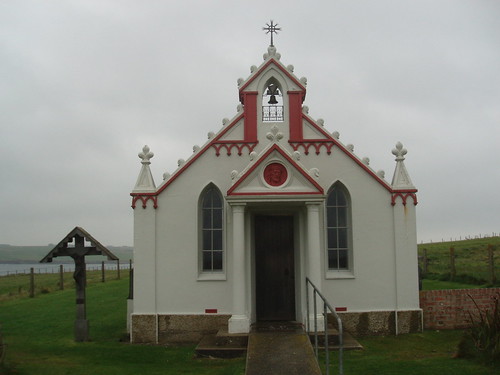
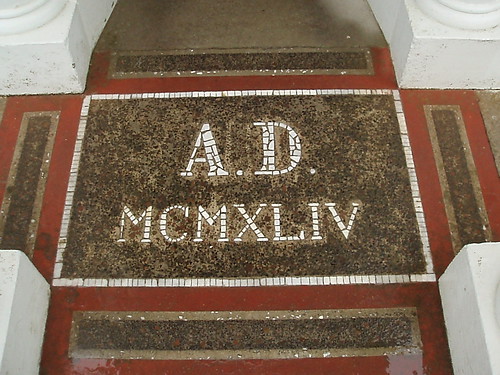
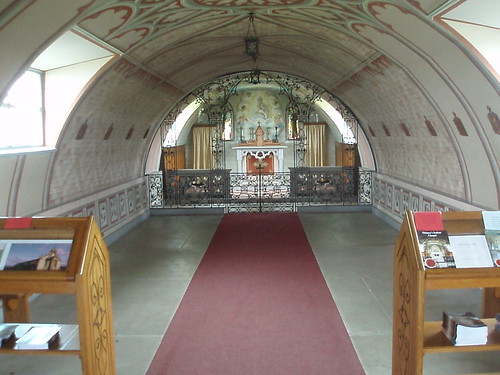
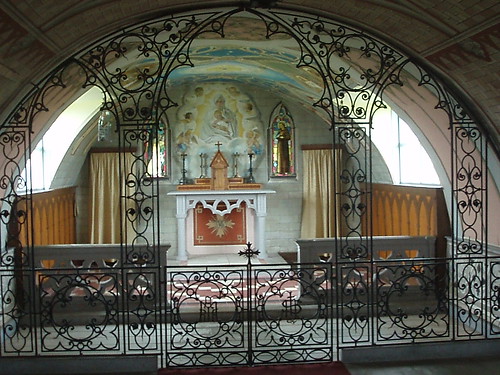
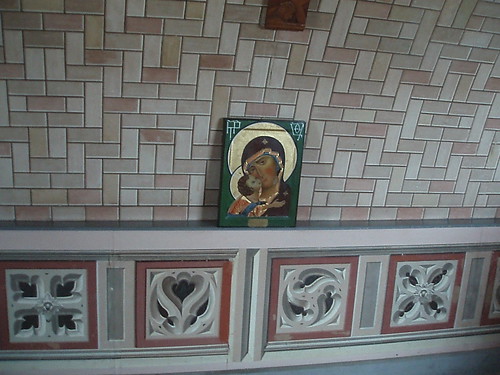
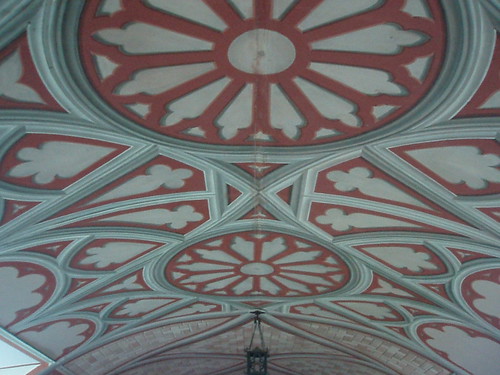
The Italian Chapel

It is 70 years ago today that the first Italian prisoners of war (POW) arrived on the Orkney island of Lamb Holm. They would spend the next two years reinforcing the Churchill Barriers, which protect the then naval base at Scapa Flow. In between, they also converted two old Nissen huts into a church. In addition to these picture slides on the BBC, I am posting some of my own pics, which I took during a visit in October 2008.


Thursday 23 February

After a slight mishap with my spectacles, I had to attend the optician's first thing this morning. Only to be told that repairs were not really possible. So, I'm going to have an eye test next week and hopefully a new pair of specs soon. I have made a temporary fix on the old ones, but it is a tad annoying.

Today's highest temperature in the UK has been 18.7C (65.7F) in Warwickshire, central England. Here in Stornoway, it has been slightly less warm at 13C / 55F. Still far above normal for the time of year. Everybody will revert back to normal by the weekend. The weather here has otherwise been rather damp and quite windy, with force 7 being the rule.

I have been asked about the condition of Prince Johan Friso of the Netherlands, who was severely injured in an avalanche in the Austrian Alps last Friday. He remains in coma, with apparently a body core temperature of around 34C / 93F, and no change in condition since the accident. Doctors will now not declare when they expect to make a prognosis. Johan Friso's mother, Queen Beatrix, and his wife Mabel are never far from his side; the Queen has even cancelled an engagement to accept papers of accreditation from new foreign ambassadors to The Hague.

Wednesday, 22 February 2012

Wednesday 22 February

Although the day started out wet, it did clear up and we had a decent amount of sunshine. It felt slightly colder than of late, but I'm still happy with 9C / 48F. Two hundred miles away in Aberdeenshire, they are expecting the mercury to hit 16C / 60F tomorrow.

Spent a couple of hours in the library, looking at the two historical reports I mentioned yesterday: the 1912 Dewar Report (evidence from Lewis and Harris) and the 1902 Crofters Commission for Lewis. I also took information from the Croft Histories of the villages of Sheshader and Bayble in Point, some 6 miles east of here. I need the latter info to double-check my WW1 tribute site.

The island is bemused tonight as the freight ferry Muirneag is not sailing tonight due to bad weather. However, the forecast is not for bad weather. At least, not until tomorrow night. Some wag on Twitter was wondering whether it would be carrying the Olympic Torch to Stornoway in June. The Torch will come here, and like the Muirneag, it never goes out.

Tuesday, 21 February 2012

Sunshine Colorado Notes

Our J-land community appears to have moved from blogging to Facebooking, but I somehow don't feel quite at home on Facebook. It seems to invite one-liners, just about as bad as Twitter. So, when I have something more to say than can be squeezed into the entry box on Facebook, I return to Blogger. Well, if you're a regular reader, you know I blog here every day.
This post is to highlight David Wheeler's blog Sunshine Colorado Notes. A few years ago, David very kindly sent me a copy of the book about the history of Sunshine, a small mining community, a few miles outside Boulder CO. It was probably typical of many a frontier town of that era (late 19th C) and area, with the go-ahead spirit that comes with that. It was almost as if I was there myself. And although I live quite a few thousand miles away, on the other side of the Atlantic, I felt as gutted as the village when I learned of the devastating wildfire of October 2010. It destroyed most of the houses. Apart from the loss of property, I guess it also ended, whether temporarily or permanently, a way of life for its residents. This was portrayed quite graphically when David had to let go of his faithful canine, Milo, who could not settle away from the village. I know property can be replaced, and the village can be rebuilt. But whether the people will return, and more importantly, its spirit remains to be seen. However, one day I may come across and look for myself. Better keep some of that homebrew ready, David.

Tuesday 21 February

Shrove Tuesday, and no, I haven't had a pancake today. I'm not a pancake eater, as I am full-up after just the one. Those that know me off-line are aware that I'm not averse to food, but pancakes are beyond me above a quantity of one.

Weather today was not very good, overcast and grey, with occasional drizzle. By 4.30pm a serious downpour passed over with rising wind. The forecast is for a gale tomorrow. The only redeeming feature of today's weather was the elevated temperature of 10C / 50C. The east of Scotland may see the mercury right up at 15C / 59F tomorrow. No such luck for the Hebrides, but I don't really mind.

I am sending off another five postcards for the postcrossing project, bringing my tally to 94 when they are all delivered. One is still in the mailsystem, bound for the USA. Over the year I've done this, two never arrived. One was headed for Taiwan, the other for Germany.

I have researched another handfull of men from this island who were lost in the First World War. I am making my way through the Stornoway, which will take me a wee while yet. Another project, equally large, is the transcription of the Napier Report from 1883.
In addition, I want to go and have a look at the findings of a successor commission, which went round the Highlands and Islands in 1902; as well as at the findings of the Dewar Commission of 1912, which led to the foundation of the medical service in this part of the world and contributed towards the setting up of the NHS 36 years later. Both reports (from 1902 and from 1912) are available in my local library, so it's only a 10 minute walk away.

Monday, 20 February 2012

Monday 20 February

After a windy night, the day started wet. However, the sun came out and the wind dropped after midday, leaving us with a mild afternoon. The mercury reached double figures, and it felt quite mild outside. Rather a contrast to yesterday morning's snow.

The thaw has spread across Europe, causing problems on the river Danube in Serbia. The ice has started to break up and move downstream, taking riverside accoutrements such as floating restaurants and ships with it. The cost cannot yet be estimated, but are reckoned to be substantial.

You may remember the case of the alleged murder of Liam Aitchison last November, which was the first murder in these islands in 43 years. Channel 5 presenter Matthew Wright and his team thought it was an appropriate subject for some off-the-cuff humour, but more than 2,200 people disagreed. They lodged an appeal with broadcasting regulator Ofcom, who have now ruled that the program was liable to cause offence. However, as apologies have been profuse and apparently sincere, Ofcom have now declared the matter resolved. No further action against Matthew Wright or Channel 5 will be taken. I will continue not to watch garbage like that.

It was pointed out in a letter to an on-line news website that it took our local council an awful long time (months) to join the campaign against high fuel prices, contrasting to the few weeks that it took them to join the campaign to retain reduced ferry fares for commercial vehicles. At least two councillors have vested interests in the fuel business in these islands. Anyone thinking of a word starting with C?

Sunday, 19 February 2012

Sunday 19 February

A cold day, which started very white. Snow had fallen last night, and more fell through the night, leaving us with just a little under an inch on the ground. Most of it had melted by mid afternoon, in spite of a few more snow showers through the morning. The mercury is rising slowly, and is presently at 4C / 39F.

Cromwell Street after a hailshower, yesterday
I was bemused by the news of the two boxers who had a punch-up during a post-match press conference - and they had not even been in the ring together. One taunted the other and they had an off-the-ring bout. Everybody is crying shame, but they do it all the time inside the ring, so what's the fuss? Said he sarcastically.

A climber has died after falling more than 1,000 feet near the summit of Ben Nevis. The circumstances are as yet unclear, but police think it was probably just an unfortunate accident. Although the mountains in Harris are nowhere near as tall as Ben Nevis (the Clisham is shy of 2,700 feet), they are serious mountains. I remember people having to be guided off at dusk in December one year, after their undertaking to traverse the Clisham Horseshoe proved to be too lengthy for the 7 hours of daylight at that time of year.


Clisham Horseshoe, April 2005

Saturday, 18 February 2012

Saturday 18 February

And all of a sudden, winter is back. Heavy hail showers pepper Stornoway all day, leaving the place looking decidedly white at times. The strong northwesterly wind makes it feel very cold outside. The sun does compensate, and it is gaining strength every day. It is also rising higher in the sky.

The Dutch prince who was injured in an avalanche yesterday remains in hospital in Innsbruck, Austria, in a stable but as yet life-threatening condition. He is kept in an induced coma. His mother, Queen Beatrix, and his wife, Mabel, have been to see him at his bedside. Doctors say that no prognosis can be made for a number of days, until they lift the coma.

Locally, the ferry Isle of Lewis has finally taken up her duties again, after returning to Stornoway during the night. She sailed for Ullapool at 2.30pm, leaving the Hebridean Isles to complete its last morning run to and from Ullapool.

Friday, 17 February 2012

Friday 17 February

An overcast day with rainy spells at time. Not cold, but that is going to change. Tomorrow, we're in for wintry showers, which will bring 6 inches of snow to the mainland. Galeforce winds are likely to bring blizzard conditions to Highland Scotland. Not a nice day for being out and about.

Snow has caused a skiing accident in Austria, involving the brother of the Dutch crown prince. Johan Friso (43) was skiing off-piste when he was buried under an avalance. It took 15 minutes for him to be extracted, and he is currently in an artificial coma in hospital, dangerously ill. Dutch news media are reporting on the incident continually. The royal family has flown to Austria to be beside the prince's bedside.

Broadband service has resumed more-or-less normality, although there was another brief outage around midday. It appears that all of Stornoway and adjacent areas were affected, with even shops and banks being cut off.

Thursday, 16 February 2012

Thursday 16 February

After 42 hours, the broadband connection came back. And I'm not ashamed to admit that I suffered from withdrawal symptoms, of not being able to dash to the laptop to look this up and that up, continue my researches and go on Facebook and Twitter. Now, a lot of that is not exactly hyperimportant, but it does go to show how much the internet has taken over my life. Our lives.

Anyway, it was a nice sunny morning, until those showers put in an appearance after midday. Went for a wee walk to find a mansion along Goathill Road, but the name plaque had been removed from the house that was once called Gowancroft. Will have to ask around which one it was, I think no 3, as shown below

View Larger Map
I am interested, because I was asked about a former resident, who lived there 100 years ago and went away to serve in the Royal Army Medical Corps. For reference, the chap concerned did survive the war.

Wednesday, 15 February 2012

Wednesday 15 February

The day started overcast and at times drizzly, but the sun took over after 3pm. On time to see the Hebridean Isles off on its late departure for Ullapool.

I have not been around (much) on-line today,due to a protracted broadband outage. I am posting this using dial-up, which is about 50 times slower than my usual broadband speed. There is no firm indication when this problem will be resolved, but hope to be back tomorrow.