Although I'm currently in Holland, I am posting this story on Atlantic Lines, as it is firmly an island story. A blogger in North Uist posted an image of a parcel on her blog the other day. It had arrived in her home after an epic journey through Shetland and the Uists. The sender, a man in a small town in Germany, had misspelled the name of the island of Unst, calling it Uist instead. After the parcel had gone through nearly all the three postal code areas in the Uists (HS6, HS7 and HS8), the postman left it with someone sharing the same surname as the addressee. And she decided to enlist the help of the global community, of which I am (with everybody reading this) a member.
I looked up the sender's address and found a telephone number in an on-line German telephone directory. I rang it, and fortunately the man answering it spoke English, better than my German which is exceedingly rusty. He told me that the packet was in fact intended for a Shetland family. For reasons of privacy, I cannot go into details, but I managed to find full address details and a telephone number. These I forwarded to the lady in North Uist and the package should be on its way to Shetland by tomorrow.
Monday, 25 January 2010


Saturday, 23 January 2010
Journey update
Currently at Edinburgh airport, suffering one delay after another. The plane from Stornoway left nearly 2 hours late because the aircraft needed de-icing: which they did (1) using an ice-scraper and (2) using a warm hanger and (3) using the sun.
Presently at Edinburgh, where the onward connection to Gatwick is delayed by an hour, jeopardising my connection to Amsterdam. I only have 90 minutes at LGW, making it very dicey. Will update further on the Shell Gallery.
Presently at Edinburgh, where the onward connection to Gatwick is delayed by an hour, jeopardising my connection to Amsterdam. I only have 90 minutes at LGW, making it very dicey. Will update further on the Shell Gallery.
Friday, 22 January 2010
Evening notes
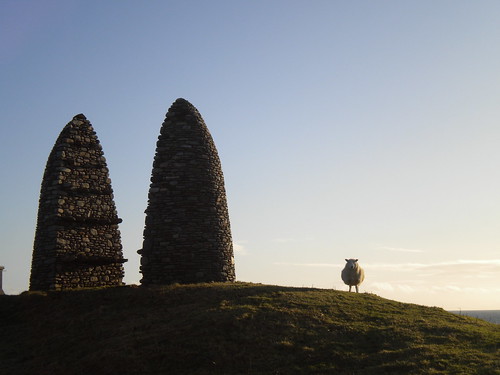
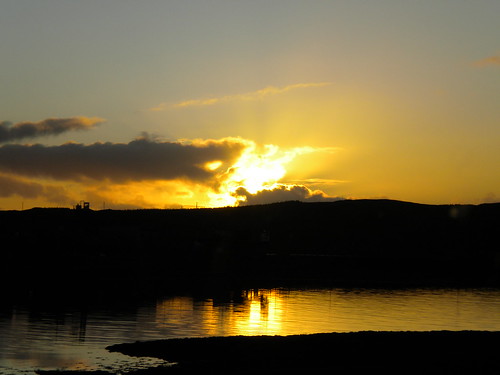
Went on the bus to Aignish this afternoon; Aignish is a small village a couple of miles east of Stornoway, a mile or so past the airport. Been there a couple of times before, and was back in the cemetery to take photographs of gravestones that had not come out very well on previous occasions. At one time, in late November '07, the light was very poor. No such problems today - the sun was shining brightly, there was hardly any wind and it almost felt warm. The report put us as high as 9C / 48F; at the moment the clear skies have allowed the mercury to nosedive to freezing. I am currently uploading pictures, and will post some of them a little later.
Tomorrow, I shall once more be wending my way across to Holland. Once there, I shall resume posting on the Shell Gallery. Those that follow my blogs through Facebook should see those entries appear there. Blogging on Atlantic Lines will resume on Wednesday 3 February.
Tomorrow, I shall once more be wending my way across to Holland. Once there, I shall resume posting on the Shell Gallery. Those that follow my blogs through Facebook should see those entries appear there. Blogging on Atlantic Lines will resume on Wednesday 3 February.
Friday 22 January
What a difference a day makes: bright sunshine and hardly a cloud in the sky. Only the fact that the ferry had to stay in Ullapool overnight is indication that yesterday was not a good day. It is still not a good day in the Highlands, where several accidents have occurred on the A9 between Inverness and Perth, attributable to drifting snow.
Windows is now installing a security update for Internet Explorer, which should patch a hole previously abused (allegedly) by the Chinese authorities to tap their opponents' gmail accounts. I haven't used IE for yonks; I only use Firefox these days. Apparently somewhat safer and decidedly faster than IE.
More later
Windows is now installing a security update for Internet Explorer, which should patch a hole previously abused (allegedly) by the Chinese authorities to tap their opponents' gmail accounts. I haven't used IE for yonks; I only use Firefox these days. Apparently somewhat safer and decidedly faster than IE.
More later
Thursday, 21 January 2010
Euthanasia
The Scottish Parliament today started to debate a Bill on Assisted Suicide. It was launched by MSP (Member of Scottish Parliament) Margo Macdonald, who is a passionate believer in what she terms assisted suicide. I think it is a good thing to have a debate on this very difficult issue, and party leaders at Holyrood have promised that members will have a free vote on the issue, once the time for that arrives.
I copy a summary of the Bill's main points from the BBC website:
In the UK, there have been several high-profile cases, where terminally ill people travelled to Switzerland for euthanasia. Doctors in the UK would face prosecution for manslaughter or murder, and so would anyone else involved in the euthanasia. It is time this issue is sorted out either way. I hope this Bill will start a nationwide debate in the UK on euthanasia - to place it on the statute book as accepted legal practice, or not as the case may be.
I realise that my standpoint may be incompatible with that of several of my readers, and I apologise for any upset or distress caused. However, this is an issue under debate in society and if anyone has any views on this, it would be very good to have them all aired.
I copy a summary of the Bill's main points from the BBC website:
- Person must be terminally ill or "permanently physically incapacited"
- Request must be made to and approved by doctor and psychiatrist
- Both must be asked twice after 15-days cooling off period
- Assistance must be supervised by the approving doctor
- Close friends and relatives banned from administering drug
- Only over-16s qualify
- Applicants must be registered with Scottish GP for 18 months
- Bill does not apply to those with dementia or other degenerative mental condition
In the UK, there have been several high-profile cases, where terminally ill people travelled to Switzerland for euthanasia. Doctors in the UK would face prosecution for manslaughter or murder, and so would anyone else involved in the euthanasia. It is time this issue is sorted out either way. I hope this Bill will start a nationwide debate in the UK on euthanasia - to place it on the statute book as accepted legal practice, or not as the case may be.
I realise that my standpoint may be incompatible with that of several of my readers, and I apologise for any upset or distress caused. However, this is an issue under debate in society and if anyone has any views on this, it would be very good to have them all aired.
Thursday 21 January
Overcast this morning with a strengthening wind. Severe gales could develop later today, keeping up our average of one gale a week. Ferry services up and down the west coast of Scotland are duly disrupted.
Australia is bracing itself for tropical cyclone Magda. This storm formed last night (GMT) and is headed straight for the coast of Western Australia, north of the town of Derby. Magda is expected to strengthen rapidly, with the Australia Bureau of Meteorology anticipating the storm to be at category 4 strength (that is a lower category of strength than the corresponding category in the Saffir Simpson scale) by landfall, late on Friday (GMT).
More later.
Australia is bracing itself for tropical cyclone Magda. This storm formed last night (GMT) and is headed straight for the coast of Western Australia, north of the town of Derby. Magda is expected to strengthen rapidly, with the Australia Bureau of Meteorology anticipating the storm to be at category 4 strength (that is a lower category of strength than the corresponding category in the Saffir Simpson scale) by landfall, late on Friday (GMT).
More later.
Wednesday, 20 January 2010
Promises

This suggests that spring will one day return. Needed the reminder today, wall to wall wind and rain.
Wednesday 20 January
A wet and breezy day in the Western Isles, and the wind will only increase. Tomorrow, a force 9 severe gale is forecast. Across in Australia, a tropical cyclone is forming off the northwest coast, and this could blow up into a category II system in the next few days. It is hurricane season there (southern hemisphere summer).
I am not apologising for switching my front picture, to a wintry scene from Laxay. I tend to change my front picture every couple of weeks, and as the snow had disappeared I felt a new image was in order. I realise the colours are quite bland, but that's the way it looks. It won't be until April that colours will return to this island.
Twitter just went into an outage, although I managed to put a tweet through using shortening service bit.ly.
I am not apologising for switching my front picture, to a wintry scene from Laxay. I tend to change my front picture every couple of weeks, and as the snow had disappeared I felt a new image was in order. I realise the colours are quite bland, but that's the way it looks. It won't be until April that colours will return to this island.
Twitter just went into an outage, although I managed to put a tweet through using shortening service bit.ly.
Tuesday, 19 January 2010
Tuesday 19 January
A cold and cloudy day, although some brightness is about. The mercury stands at 7C, but the cold wind makes it feel rather less than that. In spite of the wintry feel, I jumped on the bus to Laxay this morning to take more photographs of wargraves in that village's cemetery. The total was ten.
Laxay lies 12 miles south of Stornoway in the district of Lochs, and it is surrounded by quite a few lochs and rivers. A loch, for those unfamiliar with the regional vocabulary, is a lake or an inlet from the sea. Loch Erisort, which bounds Laxay to the south, stretches for 15 miles from the Minch in the east and causes long travel distances. The village of Cromore, for instance, lies 12 miles from Stornoway as the gull flies, but it's more like 30 miles by road (Cromore is marked on the map below).
Some pictures from the village are shown at the bottom of this post.
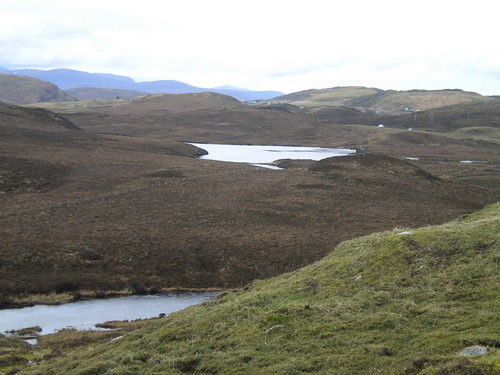
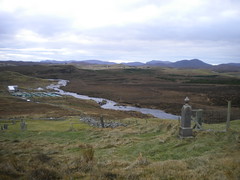
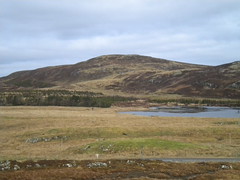
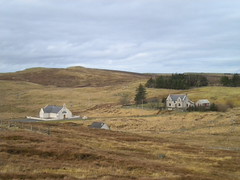

Laxay lies 12 miles south of Stornoway in the district of Lochs, and it is surrounded by quite a few lochs and rivers. A loch, for those unfamiliar with the regional vocabulary, is a lake or an inlet from the sea. Loch Erisort, which bounds Laxay to the south, stretches for 15 miles from the Minch in the east and causes long travel distances. The village of Cromore, for instance, lies 12 miles from Stornoway as the gull flies, but it's more like 30 miles by road (Cromore is marked on the map below).
Some pictures from the village are shown at the bottom of this post.
Monday, 18 January 2010
Visit to Carloway
As today was nice and sunny, I jumped on the afternoon bus to Carloway with the object of photographing the local war memorial. The bus trip, 45 miles, costs me a mere £4.40 and lasts for 2½ hours. Normally, it is 2 hours, but the bus picks up and drops off school children from two different schools. This allowed me to jump off at Carloway and photograph said memorial and a few village scenes.
On the way along, I noticed that there was quite a bit of snow and ice left in verges and in shaded locations.The first pic in the below gallery shows what was left in the shade of some trees at Garynahine junction. Below that, you'll see five images from Carloway.
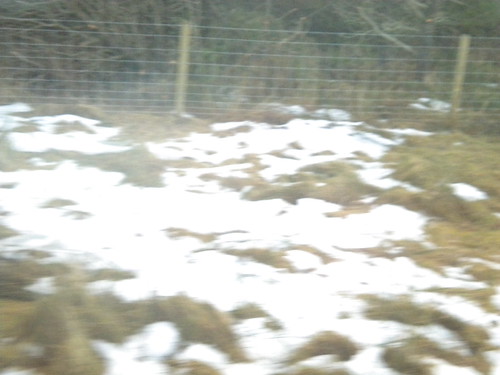
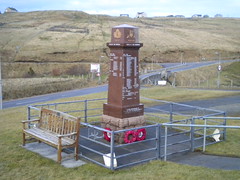
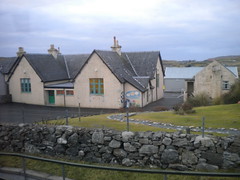
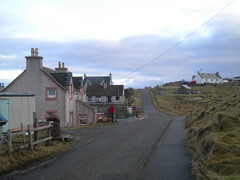
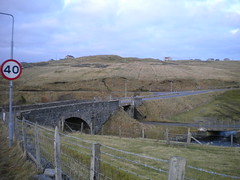
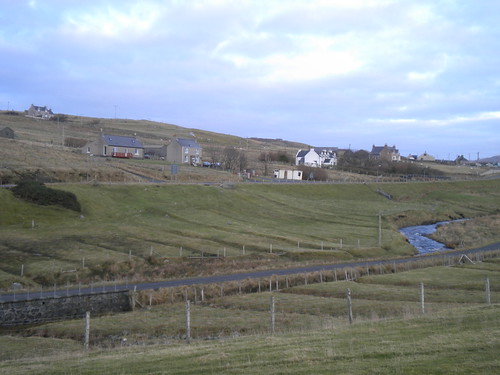
On the way along, I noticed that there was quite a bit of snow and ice left in verges and in shaded locations.The first pic in the below gallery shows what was left in the shade of some trees at Garynahine junction. Below that, you'll see five images from Carloway.
Money for not rearing pigs
NIGEL JOHNSON-HILL,
PARKFARM,
MILLAND,
LIPHOOK
GU30 7JT
Rt Hon David Miliband MP
Secretary of State.
Department for Environment, Food and Rural Affairs (DEFRA),
Nobel House
17 Smith Square
London
SW1P 3JR
16 July 2009
Dear Secretary of State,
My friend, who is in farming at the moment, recently received a cheque for £3,000 from the Rural Payments Agency for not rearing pigs.. I would now like to join the "not rearing pigs" business. In your opinion, what is the best kind of farm not to rear pigs on, and which is the best breed of pigs not to rear? I want to be sure I approach this endeavour in keeping with all government policies, as dictated by the EU under the Common Agricultural Policy.
I would prefer not to rear bacon pigs, but if this is not the type you want not rearing, I will just as gladly not rear porkers. Are there any advantages in not rearing rare breeds such as Saddlebacks or Gloucester Old Spots, or are there too many people already not rearing these?
As I see it, the hardest part of this programme will be keeping an accurate record of how many pigs I haven't reared. Are there any Government or Local Authority courses on this?
My friend is very satisfied with this business. He has been rearing pigs for forty years or so, and the best he ever made on them was £1,422 in 1968. That is - until this year, when he received a cheque for not rearing any.
If I get £3,000 for not rearing 50 pigs, will I get £6,000 for not rearing 100? I plan to operate on a small scale at first, holding myself down to about 4,000 pigs not raised, which will mean about £240,000 for the first year. As I become more expert in not rearing pigs, I plan to be more ambitious, perhaps increasing to, say, 40,000 pigs not reared in my second year, for which I should expect about £2.4 million from your department. Incidentally, I wonder if I would be eligible to receive tradable carbon credits for all these pigs not producing harmful and polluting methane gases?
Another point: These pigs that I plan not to rear will not eat 2,000 tonnes of cereals. I understand that you also pay farmers for not growing crops. Will I qualify for payments for not growing cereals to not feed the pigs I don't rear?
I am also considering the "not milking cows" business, so please send any information you have on that too. Please could you also include the current Defra advice on set aside fields? Can this be done on an e-commerce basis with virtual fields (of which I seem to have several thousand hectares)?
In view of the above you will realise that I will be totally unemployed, and will therefore qualify for unemployment benefits. I shall of course be voting for your party at the next general election.
Yours faithfully,
Nigel Johnson-Hill
PARKFARM,
MILLAND,
LIPHOOK
GU30 7JT
Rt Hon David Miliband MP
Secretary of State.
Department for Environment, Food and Rural Affairs (DEFRA),
Nobel House
17 Smith Square
London
SW1P 3JR
16 July 2009
Dear Secretary of State,
My friend, who is in farming at the moment, recently received a cheque for £3,000 from the Rural Payments Agency for not rearing pigs.. I would now like to join the "not rearing pigs" business. In your opinion, what is the best kind of farm not to rear pigs on, and which is the best breed of pigs not to rear? I want to be sure I approach this endeavour in keeping with all government policies, as dictated by the EU under the Common Agricultural Policy.
I would prefer not to rear bacon pigs, but if this is not the type you want not rearing, I will just as gladly not rear porkers. Are there any advantages in not rearing rare breeds such as Saddlebacks or Gloucester Old Spots, or are there too many people already not rearing these?
As I see it, the hardest part of this programme will be keeping an accurate record of how many pigs I haven't reared. Are there any Government or Local Authority courses on this?
My friend is very satisfied with this business. He has been rearing pigs for forty years or so, and the best he ever made on them was £1,422 in 1968. That is - until this year, when he received a cheque for not rearing any.
If I get £3,000 for not rearing 50 pigs, will I get £6,000 for not rearing 100? I plan to operate on a small scale at first, holding myself down to about 4,000 pigs not raised, which will mean about £240,000 for the first year. As I become more expert in not rearing pigs, I plan to be more ambitious, perhaps increasing to, say, 40,000 pigs not reared in my second year, for which I should expect about £2.4 million from your department. Incidentally, I wonder if I would be eligible to receive tradable carbon credits for all these pigs not producing harmful and polluting methane gases?
Another point: These pigs that I plan not to rear will not eat 2,000 tonnes of cereals. I understand that you also pay farmers for not growing crops. Will I qualify for payments for not growing cereals to not feed the pigs I don't rear?
I am also considering the "not milking cows" business, so please send any information you have on that too. Please could you also include the current Defra advice on set aside fields? Can this be done on an e-commerce basis with virtual fields (of which I seem to have several thousand hectares)?
In view of the above you will realise that I will be totally unemployed, and will therefore qualify for unemployment benefits. I shall of course be voting for your party at the next general election.
Yours faithfully,
Nigel Johnson-Hill
Monday 18 January
Another week starts, and it's actually quite a nice if slightly nippy day. Hosed the salt off the windows, facing away from the sea. Those fronting the sea were washed clean by rain. The spray was blown in by Saturday morning's highish winds. Although the weather is calm at present, high winds are expected to return late tomorrow.
Locally, plans have been unveiled to improve Perceval Square, currently in use as a carpark off Stornoway's main shopping street, Cromwell Street. In order to turn Perceval Square into a town square, the toilet block will have to be moved, leading to despairing reactions from those liable to be caught short. Leaving that to one side, the plans look like an improvement to me.
I was somehow surprised to read that every person in Scotland drinks on average 46 bottles of vodka or 550 pints of beer each year. Scots have this unenviable love affair with alcohol, and the results show in society. The Monday morning local news in Lewis tends to be full of the misdeeds of the preceding weekend, mainly drink-fuelled.
Locally, plans have been unveiled to improve Perceval Square, currently in use as a carpark off Stornoway's main shopping street, Cromwell Street. In order to turn Perceval Square into a town square, the toilet block will have to be moved, leading to despairing reactions from those liable to be caught short. Leaving that to one side, the plans look like an improvement to me.
I was somehow surprised to read that every person in Scotland drinks on average 46 bottles of vodka or 550 pints of beer each year. Scots have this unenviable love affair with alcohol, and the results show in society. The Monday morning local news in Lewis tends to be full of the misdeeds of the preceding weekend, mainly drink-fuelled.
Sunday, 17 January 2010
Sunday 17 January
Today started sunny, but turned wet mid afternoon. It feels cold, although the mercury has risen to 8C.
Her Majesty Queen Elizabeth II is coming to the Western Isles to celebrate her summer hols in North Uist and adjacent Berneray this year. She has requisitioned the small cruiseliner MV Hebridean Princess, the converted ferry MV Columba of yore, to tour the islands. Anyone who had booked a cruise at the same time that HM is going to the islands has been notified that their holiday has been cancelled.
In Haiti, a small number of survivors are being extricated from the rubble of Port-au-Prince and surrounding towns. The death toll is likely to rise into six digits, whilst the aid effort is grinding along, severely impeded by the collapsed infrastructure of the country.
Her Majesty Queen Elizabeth II is coming to the Western Isles to celebrate her summer hols in North Uist and adjacent Berneray this year. She has requisitioned the small cruiseliner MV Hebridean Princess, the converted ferry MV Columba of yore, to tour the islands. Anyone who had booked a cruise at the same time that HM is going to the islands has been notified that their holiday has been cancelled.
In Haiti, a small number of survivors are being extricated from the rubble of Port-au-Prince and surrounding towns. The death toll is likely to rise into six digits, whilst the aid effort is grinding along, severely impeded by the collapsed infrastructure of the country.
Saturday, 16 January 2010
Sandwick revisited
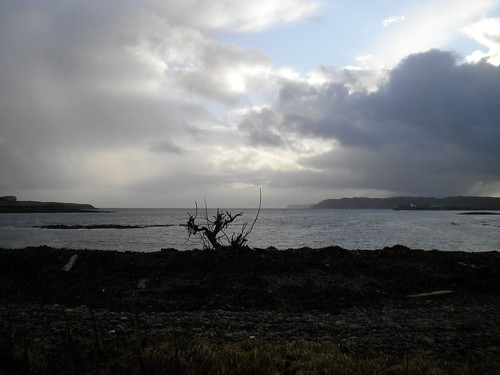
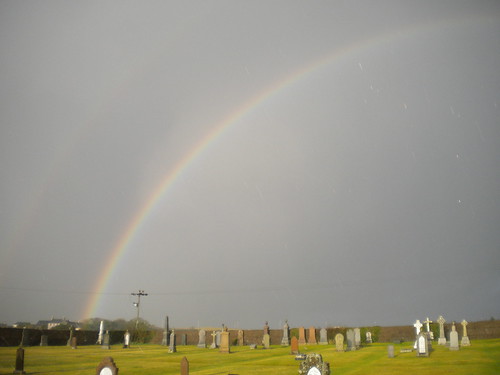
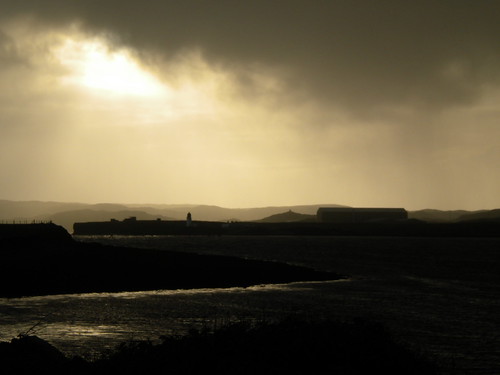
This afternoon, I returned to Sandwick Cemetery, after a dismally abortive attempt to reach it last Sunday. Today, there was no problem and I covered the distance in the customary 15 minutes. As I was going through the old part of the cemetery, a heavy shower passed by, leaving a fantastic double rainbow in its wake. The sun returned as I went up the new cemetery, which made photography a bit difficult if the gravestone faced north.
Saturday 16 January
Another collision on a level crossing today, following a crash in the far north of Scotland earlier this week. Today, two cars were hit by a train in Herefordshire, western England. Three people were hurt, two seriously. The cause of the accident is yet to be investigated, as it only occurred 2 hours ago.
As promised, I've been going through the blogs this morning and caught up with quite a few of you.
Friday, 15 January 2010
Blog reading
I think most of comments in 2010 have been something like "happy new year". My Google Reader section for blogs I read regularly now stands at more than 300 items unread, a sure sign that I need to catch up. There are a handful of you that I do keep up with, whenever you post. Others I should keep up with more diligently, I admit. Anyway, there is a bad forecast for tomorrow, so there's a fair chance you'll see a comment from me.
Community benefit?
Hebrides News has published an article, outlining the benefits to be bestowed on the community of South Lochs through the construction of the Muaitheabhal Project, better known as the Eishken Windfarm. These benefits will leave South Lochs out of pocket to the tune of £6.9m. Let me explain
Initial expenditure
Four turbine sites in the windfarm: £0
Four turbine towers: £18.5m
Contribution to Western Isles Council development fund: £11.5m
Total initial expenditure: £30m
Income
1% of income of main windfarm: £8.75m
Revenue of own turbines: £21.6m
I should clarify that it is unclear whether the above two figures are per annum or over the lifetime of the project
Total income: £30.35m
Contribution
Contribution to Western Isles Council Development Fund: £7.2m (1/3 of revenue, as above)
Net income for Muaitheabhal Community Trust
-£6.9m
Initial expenditure
Four turbine sites in the windfarm: £0
Four turbine towers: £18.5m
Contribution to Western Isles Council development fund: £11.5m
Total initial expenditure: £30m
Income
1% of income of main windfarm: £8.75m
Revenue of own turbines: £21.6m
I should clarify that it is unclear whether the above two figures are per annum or over the lifetime of the project
Total income: £30.35m
Contribution
Contribution to Western Isles Council Development Fund: £7.2m (1/3 of revenue, as above)
Net income for Muaitheabhal Community Trust
-£6.9m
Friday 15 January
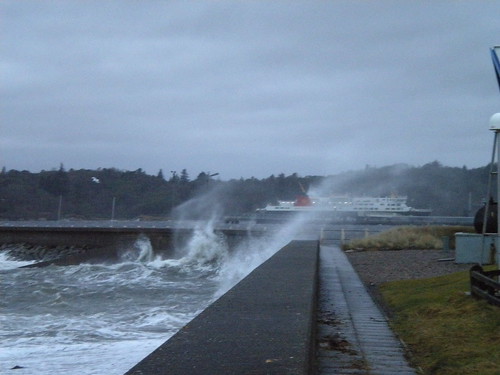
A very windy night followed by a day with heavy showers and more strong winds. Our ferry did not sail this morning, due to high winds in the Minch and heavy swells. The afternoon sailings are under review as I type.
Aid is beginning to reach Haiti, but the situation is growing dire. Looting of warehouses containing food has taken place as people are desperate for food. BBC TV showed images of people constructing a shelter using branches and a sheet of fabric material. Haiti is not in its rainy season at the moment, but the tropical sun is beating down. If you wish to donate to assist in the relief effort, please only do so through reputable aid organisations like the Red Cross.
Aid is beginning to reach Haiti, but the situation is growing dire. Looting of warehouses containing food has taken place as people are desperate for food. BBC TV showed images of people constructing a shelter using branches and a sheet of fabric material. Haiti is not in its rainy season at the moment, but the tropical sun is beating down. If you wish to donate to assist in the relief effort, please only do so through reputable aid organisations like the Red Cross.
Thursday, 14 January 2010
Western Isles windfarm approved
The Scottish Government has granted approval for 33 windturbines to be constructed for the Muaitheabhal project. Each turbine will stand 450 feet tall, and their combined output (118 megawatts) is reported sufficient to power 55,000 homes. That is several times the number of homes in the Western Isles.
Objections from the John Muir Trust on account of visual impact of the machines have been sidestepped by reducing the number of turbines from 39 to 33. Reactions on BBC Radio Scotland Highlands and Islands this afternoon varied widely. The Scottish Energy Minister stated that this first major windfarm in the Western Isles would grant the islands their place in the renewable energy sector. Others asserted that the decision made a mockery of the recent Local Public Inquiry.
I have made my position on this issue patently clear, as being opposed. This is founded on the visual impact in combination with the effects on wildlife. It also strikes me that the Scottish Government is prejudiced, bearing in mind that one of its advisors on renewable energy is actually a high-ranking official within one of the power companies that will develop this scheme.
Comhairle nan Eilean Siar has hailed this announcement as a major boost for the Western Isles. In my perspective, they have fallen for the beads and mirrors flashed in front of them by the developers of the Muaitheabhal project. Yes, there will be a few million pounds a year for the Comhairle. But the major winners are the developers and the Eishken landowner.
Anyone who thinks that this will eradicate the islands’ economic woes at a stroke is seriously at variance with reality. Job benefits will only last for the duration of the construction of the windfarm, and I wonder how many islanders will be getting a job out of it. Maintaining the windfarm only requires a handful of people.The islands’ economy could arguably suffer through the windfarm, as it might deter visitors. They come here for an unspoilt wilderness, not to see an industrial estate.
I wonder what the European Union will think of this project, which will have adverse effects on wildlife; on a species of bird that are protected, and any threat to their habitat posed by such a scheme should by default lead to it being turned down. Not so, it would seem.
Once more, big money has spoken. It did so with the Beauly - Denny powerline upgrade, and has done so here. This is not for the benefit of the Western Isles. The Eishken Windfarm is a development to the islands’ detriment.
Objections from the John Muir Trust on account of visual impact of the machines have been sidestepped by reducing the number of turbines from 39 to 33. Reactions on BBC Radio Scotland Highlands and Islands this afternoon varied widely. The Scottish Energy Minister stated that this first major windfarm in the Western Isles would grant the islands their place in the renewable energy sector. Others asserted that the decision made a mockery of the recent Local Public Inquiry.
I have made my position on this issue patently clear, as being opposed. This is founded on the visual impact in combination with the effects on wildlife. It also strikes me that the Scottish Government is prejudiced, bearing in mind that one of its advisors on renewable energy is actually a high-ranking official within one of the power companies that will develop this scheme.
Comhairle nan Eilean Siar has hailed this announcement as a major boost for the Western Isles. In my perspective, they have fallen for the beads and mirrors flashed in front of them by the developers of the Muaitheabhal project. Yes, there will be a few million pounds a year for the Comhairle. But the major winners are the developers and the Eishken landowner.
Anyone who thinks that this will eradicate the islands’ economic woes at a stroke is seriously at variance with reality. Job benefits will only last for the duration of the construction of the windfarm, and I wonder how many islanders will be getting a job out of it. Maintaining the windfarm only requires a handful of people.The islands’ economy could arguably suffer through the windfarm, as it might deter visitors. They come here for an unspoilt wilderness, not to see an industrial estate.
I wonder what the European Union will think of this project, which will have adverse effects on wildlife; on a species of bird that are protected, and any threat to their habitat posed by such a scheme should by default lead to it being turned down. Not so, it would seem.
Once more, big money has spoken. It did so with the Beauly - Denny powerline upgrade, and has done so here. This is not for the benefit of the Western Isles. The Eishken Windfarm is a development to the islands’ detriment.
Subscribe to:
Posts (Atom)