
The BBC is reporting that the planned upgrade to the power-line between Beauly (near Inverness) and Denny (near Stirling) is recommended for approval by MSPs. The current line carries 132 kV, which will be increased to 400 kV. The pylons are expected to be 200 feet / 60 metres tall each, and there will be 600 of them along the length of the current powerline. The planning application for this upgrade has been the subject of a public inquiry, the report of which was submitted to Scottish Ministers 8 months ago. The application attracted 18,000 objections.
The upgraded powerline is important for renewable energy projects across the Highlands and Islands, as it will convey electricity, generated by these projects, to users in the Scottish Central Belt and into the UK National Grid.
Objectors have stated that this will irrevocably harm the iconic landscape of the Scottish Highlands, and adversely affect tourism. They also think that alternative options have not been sufficiently explored.
This issue is controversial, and involves high stakes, politically and economically. The Beauly to Denny powerline is part of a policy to cover Scotland's [sic] energy needs, without recourse to new nuclear powerstations.
The relevance to Lewis is high. A number of renewable energy projects are in the pipeline for this island, including a 39-turbine windfarm at Eishken, and a smaller 6-turbine project some 5 miles outside Stornoway. Similar schemes have been mooted for North Tolsta, Ballantrushal and the West Side between Shawbost and Dalbeg. Other schemes include a tidal barrage at Shader (although is probably only going to generate electricity for local consumption) and a wave-energy project off Great Bernera. In order to get this power to mainland consumers, a powerline will also have to be constructed between Little Loch Broom (Dundonnell) and Beauly, as well as a subsea cable (referred to as an interconnector).
Should final approval be granted by Scottish ministers (very likely), then we are likely to see the construction of the Eishken Windfarm go ahead at pretty short notice, and the same will apply to the Pentland Road scheme.
I do not believe that windfarms will bring long-term, sustained employment to the Isle of Lewis. There will be short-term work in the construction of the windturbines and electricity infrastructure. Once the turbines are in place, only a handful of people will be needed to monitor and operate the windfarm. The community benefits of the Eishken windfarm are spurious, in my opinion, as they require a massive cash injection from said community - and Lochs is not exactly the most affluent area in this part of the world.
The environmental impact will be substantial. I am restating my assertion that although nobody is entitled to a view, views is what attracts tourism. That being a mainstay of the island makes a shore-based windfarm a good example of a shot in the foot.
Although the final decision rests with Scottish Ministers, I cannot imagine that approval for the powerline upgrade through the Highlands will be taken lying down by its opponents.




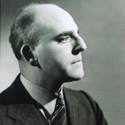

 This is a date that is obviously still a couple of weeks away, but I am having a problem. For the past few years, I have marked this date as being the anniversary of the infamous
 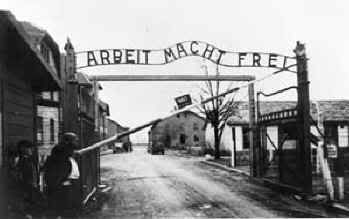 After the unspeakable atrocities of the Second World War, Germany was divided into four by the victorious allies. The British, French and American sectors became West Germany, whilst the Soviet sector was turned into East Germany, a communist state. Berlin was similarly divided. Until 1961, people from the East fled to the West in droves. A barrier was erected across Berlin in August 1961, later replaced by a high, concrete wall. Similar barriers were put up along the borders between East and West Germany. Anyone trying to flee from East to West was shot on sight, no questions asked. The advent of Mikhail Gorbatchov as leader of the USSR in the 1980s heralded a start of change. And when this wind of change blew across eastern Europe, it blew away all the communist regimes within the space of a few months in 1989.
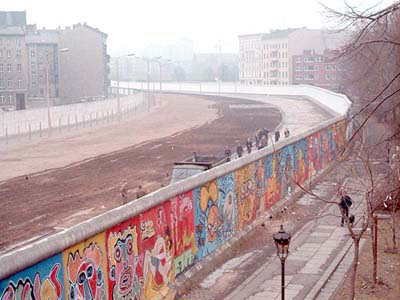 The Berlin Wall was torn down on 9 November 1989, and you can see my dilemma. Do I remember the Kristallnacht, and not celebrate the reunification of Germany? Do I celebrate the reunification, and ignore the Night of Broken Glass? Or can the two be reconciled? The city of Berlin is mounting a huge celebration on 9 November 2009, the 20th anniversary of the Fall of the Wall. I wonder if anyone will think of the Kristallnacht then. For the two are inextricably linked. The Kristallnacht heralded the start of tyranny - perhaps the end of the Berlin wall heralded the end of it. Maybe that's the way to look at it. I'll think about it. I'm not convinced.