As I'm typing this, the 18th miner is on his way up from the collapsed mine in Chile, 30 miles from the town of Copiapo, about 400 miles north of the country's capital, Santiago. Esteban Rojas follows the route, up an incredibly narrow shaft, taken by 17 of his shiftmates over the preceding 15 hours. It is hoped to have all 33 out in the early hours of Thursday morning, local time (GMT -3 hours). It is not often that a mining accident of this scale leads to a happy outcome, and I really hope that the rescue will be completed successfully. Chile's mines do not have a good safety record, and it is expected that regulations will be tightened. I have watched this operation on live television over the past 8 hours, and it has been very moving.
Further information has come forth regarding the unsuccessful operation to rescue Linda Norgrove in Afghanistan last week. It would appear that an American marine tossed a fragmentation grenade into the compound where Linda was cowering, exploding next to her - wounding her mortally.
Wednesday started dull and overcast, but the sun put in an appearance after lunchtime. Not very warm, only 11C / 52F.
Wednesday, 13 October 2010


Tuesday, 12 October 2010
Remembered
In the compilation of “Faces from the Lewis War Memorial” (which remembers the Fallen from the Isle of Lewis in World War I), there are quite a few names with very little information. It sometimes takes a little bit of effort to disentangle the web and let the light from the past shine more clearly. An example.
The Roll of Honour mentions an Iver Maciver from 9 North Shawbost, who, serving with the Canadians, died of wounds in 1916 at the age of 21. I just couldn’t cross reference him - not with the Commonwealth War Graves Commission, not with the Canadian Virtual War Memorial, and not with the CEF records on Libraries and Archives Canada either.
Until this evening. Looking at the page for North Shawbost again, it occurred to me that Kenneth Maciver, also quoted at 9 North Shawbost, might be the brother of “Iver”. Kenneth Maciver is reported to have been born at Lochcarron, so I did a search on ScotlandsPeople for Macivers in Lochcarron around 1895 - and who came out but Evander Maciver. Born to the same parents as Kenneth.
Using the sources quoted above, I now search for Evander Maciver, dying in 1916 - and this was the result:
Corporal EVANDER MACIVER
Last address in Lewis: 9 North Shawbost,
Son of John and Isabella Maciver, of Carnan House, Shawbost, Stornoway. Born at Lochcarron, Ross-shire.
Service unit: 52nd Canadian Infantry (Manitoba Regiment)
Service number: 440086
Date of death: 9 July 1916 at the age of 21
Died of wounds
Interred: Lijssenthoek Military Cemetery, grave VIII. C. 6
Local memorial: West Side, Bragar
Evander was born at Lochcarron, northeast of Kyle, on 9 August 1894
When he enlisted for service, in the Manitoba town of Sewell in Canada, he stood 5 ft 5 in tall.
He is described as of fair complexion and fair-haired with light blue eyes.
Evander was a Presbyterian, and a carpenter by trade.
Rest in peace.
The Roll of Honour mentions an Iver Maciver from 9 North Shawbost, who, serving with the Canadians, died of wounds in 1916 at the age of 21. I just couldn’t cross reference him - not with the Commonwealth War Graves Commission, not with the Canadian Virtual War Memorial, and not with the CEF records on Libraries and Archives Canada either.
Until this evening. Looking at the page for North Shawbost again, it occurred to me that Kenneth Maciver, also quoted at 9 North Shawbost, might be the brother of “Iver”. Kenneth Maciver is reported to have been born at Lochcarron, so I did a search on ScotlandsPeople for Macivers in Lochcarron around 1895 - and who came out but Evander Maciver. Born to the same parents as Kenneth.
Using the sources quoted above, I now search for Evander Maciver, dying in 1916 - and this was the result:
Corporal EVANDER MACIVER
Last address in Lewis: 9 North Shawbost,
Son of John and Isabella Maciver, of Carnan House, Shawbost, Stornoway. Born at Lochcarron, Ross-shire.
Service unit: 52nd Canadian Infantry (Manitoba Regiment)
Service number: 440086
Date of death: 9 July 1916 at the age of 21
Died of wounds
Interred: Lijssenthoek Military Cemetery, grave VIII. C. 6
Local memorial: West Side, Bragar
Evander was born at Lochcarron, northeast of Kyle, on 9 August 1894
When he enlisted for service, in the Manitoba town of Sewell in Canada, he stood 5 ft 5 in tall.
He is described as of fair complexion and fair-haired with light blue eyes.
Evander was a Presbyterian, and a carpenter by trade.
Rest in peace.
Hurricane update - 12 October
Hurricane Paula, which was not even a recognised tropical cyclone 24 hours ago, has intensified to category II status on the Saffir Simpson hurricane wind scale. This means that the storm carries maximum sustained winds of 100 mph. The system is located east of the Yucatan Peninsula and will move north along the peninsula's coastline, then curve away east and weaken. The National Hurricane Center issued an intermediate advisory at 1745 GMT (1345 EDT) to reflect an unexpected round of strengthening.
Tuesday 12 October
Further details continue to emerge about the death of Lewis-based aid worker Linda Norgrove in Afghanistan. Prime Minister David Cameron spoke at a press-conference yesterday, saying that she may have died after US forces threw a fragmentation grenade into the compound where she was being held. Either that, or her captors detonated a bomb vest. Ms Norgrove's parents are understandably very upset, even more so after that revelation. They have not issued any statement to the media, as investigations into the exact circumstances of their daughter's death have to run their due course. Today, some of Linda's friends visited her parents in Mangersta, a remote community, some 40 miles west of Stornoway. I'll only go so far as to say that "friendly fire" is one of those horrible statements emanating from any "theatre of war", much like "collateral damage". In the heat of combat, mistakes and errors of judgment are unavoidable. Some people are asking what she was doing in such a dangerous part of the world - well, she was involved with a programme, steering farmers away from growing opium poppies. I'll close this post by stating that in a small community like Lewis, and even more so a thinly populated district such as Uig, or a tiny township like Mangersta - population 28.
Today was overcast and cool after a cold night, with the overnight low at +3C; daytime max was 11C / 52F. Autumn has now arrived.
Today was overcast and cool after a cold night, with the overnight low at +3C; daytime max was 11C / 52F. Autumn has now arrived.
Monday 11 October
Another sunny and cloudless day, but a tad cooler than the weekend. Went into town for an amble around shops at 1pm. Passed the ferry terminal where a couple of cattle trucks were awaiting boarding - the cows on board were lowing loudly. I wouldn't relish the prospect of sitting on a cattle truck for 3 hours either. The refurbishment of Perceval Square is nearing completion.
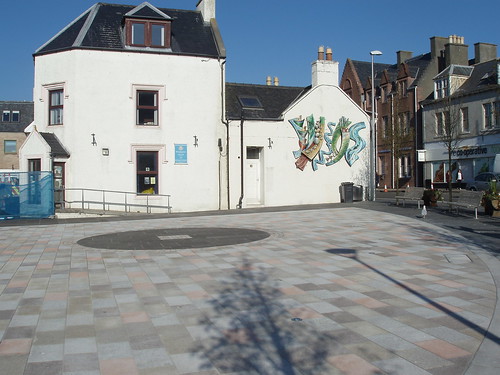
Out of sight of the above image the toiletblock is still undergoing renovation, which requires 30 million pennies to be spent. That's a lot of - yes, I know.
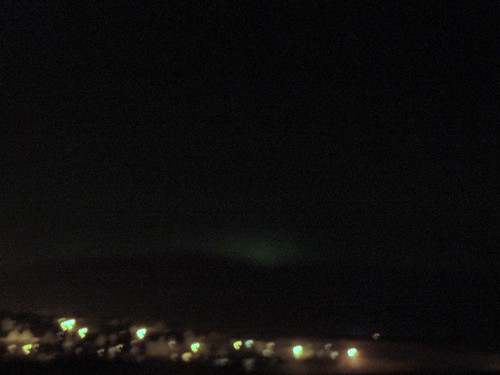
After nightfall, I had a message saying the Northern Lights were out, so I went to a dark part of Stornoway, where light pollution was low and with a clear view of the north: Mossend. The streetlights were out along that road, so I managed this 4-second exposure (digitally enhanced) of the Aurora.
Out of sight of the above image the toiletblock is still undergoing renovation, which requires 30 million pennies to be spent. That's a lot of - yes, I know.
After nightfall, I had a message saying the Northern Lights were out, so I went to a dark part of Stornoway, where light pollution was low and with a clear view of the north: Mossend. The streetlights were out along that road, so I managed this 4-second exposure (digitally enhanced) of the Aurora.
Monday, 11 October 2010
Sunday 10 October
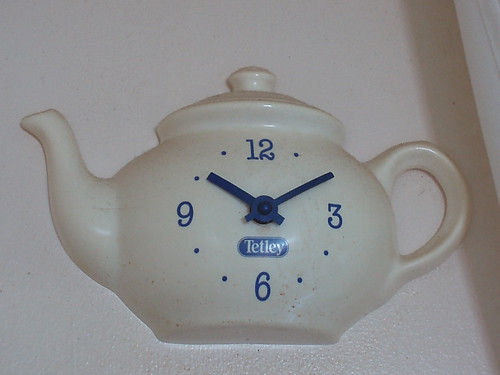
At 10.10.10 on 10.10.10 I took a picture of the clock, which I shall relay on here later today. It was another bright and sunny day, although a tad cooler than yesterday. Had lunch outside again (who would have thought of that, sitting out in October), then spent the afternoon working on the transcription of the Napier Commission's report on Orkney. I only have to do the appendices to that section to complete the work. Next in line: Sutherland, mainland Scotland.
Tragedy
British Prime Minister David Cameron has just held a press conference, in which he has given the latest information on the death of the British aid worker Linda Norgrove. She was killed when US forces were trying to rescue her from the hands of extremists in the east of Afghanistan. Initially, it was suggested that the captors had detonated a suicide bombvest near her. However, Mr Cameron has now said that Linda may have been killed by a grenade used by the US forces. This information was relayed to the PM by the General Portraeus who is in overall command of NATO forces in Afghanistan. Ms Norgrove's parents has been informed of the latest insight by Mr Cameron.
I can only offer my sympathies to the Norgrove family and the community in Uig and further afield across Lewis on their sad loss, and wish them every strength in coming to terms with the death of Linda.
I can only offer my sympathies to the Norgrove family and the community in Uig and further afield across Lewis on their sad loss, and wish them every strength in coming to terms with the death of Linda.
Saturday, 9 October 2010
Picture post - 9 October
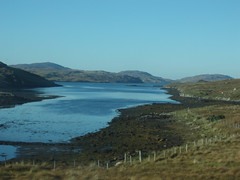
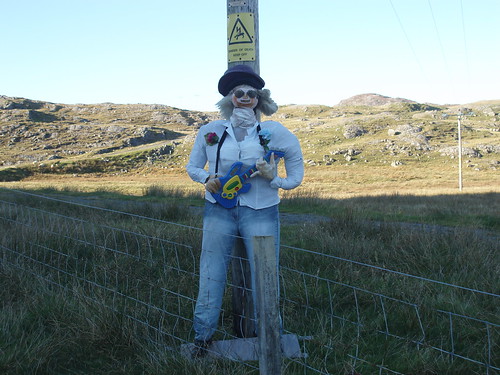
The Oldest Swinger in town, Carishader
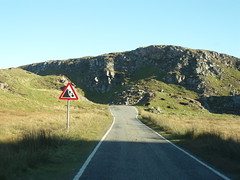
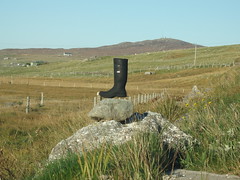

Lewis Chessman, Ardroil
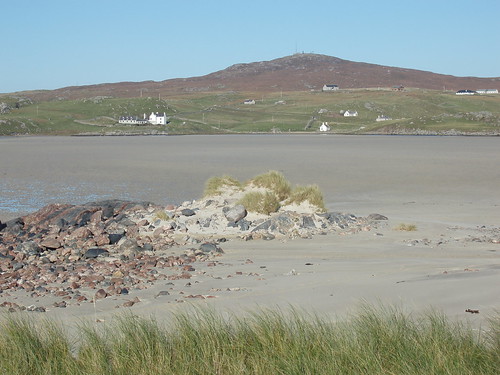
Uig Sands, Ardroil


Island in mourning
The Isle of Lewis, and in particular the tiny community of Mangersta in the district of Uig, is mourning the death of local resident Linda Norgrove, who was killed in Afghanistan today. I did not learn of this loss until I called into the Uig shop at Timsgarry this afternoon, which explained the presence of the news media in the district. Mangersta, population now 28, is perched on the edge of the west of Lewis, and can ill afford the loss of one its number, particular at such a young age. I am sure the readers of Atlantic Lines will join me in extending their heartfelt sympathies to Linda's family and friends, in Uig, Lewis and further afield.
Saturday 9 October
A stunningly beautiful autumn morning, with blue skies, hardly a cloud to be seen and only a gentle breeze. The birds were out early, looking for worms and other foodstuffs. We're promised a daytime maximum temperature of about 16C / 60F, which is quite decent for this time of year. Tomorrow should see more of the same.
I've been working with the emailed updates from a selected number of blogs, and it's working very well. I've got hundreds of feeds and blogs on Google Reader, and it was getting impossible to keep up. Now, about a dozen updates each morning is quite easy to go through.
I'll have another post later today - I may go out and about this afternoon, which usually results in dozens of pictures.
I've been working with the emailed updates from a selected number of blogs, and it's working very well. I've got hundreds of feeds and blogs on Google Reader, and it was getting impossible to keep up. Now, about a dozen updates each morning is quite easy to go through.
I'll have another post later today - I may go out and about this afternoon, which usually results in dozens of pictures.
Friday, 8 October 2010
Friday 8 October
A brilliantly sunny and warm day, with the mercury at the dizzying heights of 18C / 64F at 4pm. Some high-level cloud is drifting over, but otherwise it was warm enough to sit outside for lunch. I had already put the garden chairs away, but I was more than happy to put them back again.
Spent the afternoon transcribing more evidence from the Napier Commission in Orkney, and it contains some pretty harrowing stuff - unexpected perhaps. The island of Rousay, northwest of the archipelago's capital Kirkwall, was owned by a General Burroughs. He exercised his law-enshrined powers as landowners to such an extent that his tenants referred to his conduct as "wanton and inconsiderate inhumanity", only marginally diluted to "[being treated in an] utterly inconsiderate and unrighteous manner". The island's minister, Archibald Maccallum, spoke on behalf of most of the island's crofters, followed by an interrogation of others. James Leonard requested an assurance from the landowner that none of the evidence given by him or others would lead to 'consequences' - an assurance that General Burroughs refused to give point blank. In fact, he rebutted the request by saying that if anyone was not happy, they should just go away. The case, presented by Georgina Inkster, was a good demonstration of the general's high-handed attitude. Another exampled was quoted by James Leonard:
A woman [lived] in our island whom the proprietor visited, when she was on her death-bed. She had a small croft, and he would have to leave it, because he was going to give it to another person—a stranger. She said she would never leave it until she was put to a house from which no man could remove her. He said—What house is that?—and she said—' Where I will be buried;' and he struck his stick on the ground and said, ' Would you like to be buried here on this floor?'
Thursday 7 October
Today, I was pleased to meet with a well-known writer from the West Highlands, Roger Hutchinson, whose books include Calum's Road. This tells the tale of a man from Raasay, Calum Macleod, who single-handedly built a road to his village when Inverness-shire county council declined to do so. By the time the road was made, only Calum himself was left at Arnish, Raasay. Roger is attending a conference in Stornoway about the way forward to develop the economy of the Western Isles, which uses the model of the co-operative. Spent a couple of hours in Roger's company, alongside with a mainland-based facilitator, which made for a most enjoyable afternoon and evening.

Picture courtesy Flickr-user Raasayweb, who have released the image under a Creative Commons License.
Picture courtesy Flickr-user Raasayweb, who have released the image under a Creative Commons License.
Wednesday, 6 October 2010
Feedblitz
Feedblitz is a service that allows you to send out your own blogposts to those who have subscribed to that service; and allows you to be notified when any of the bloggers you want to keep track of makes a new post. As far as I understand it, if you are a new user you may be required to pay after 30 days. If you have been using it since about 2007 or '08, you can continue to use it for free.
If you Google for "RSS to email", you will be presented with a list of similar service providers. If you are familiar with Google Reader (or similar feed-aggregator), this should not present you with much difficulty. Basically, you need the URL of the blogs you want to be notified about and an email address to have the updates sent to. Read the FAQ's to see if you will be charged at some point.
If you Google for "RSS to email", you will be presented with a list of similar service providers. If you are familiar with Google Reader (or similar feed-aggregator), this should not present you with much difficulty. Basically, you need the URL of the blogs you want to be notified about and an email address to have the updates sent to. Read the FAQ's to see if you will be charged at some point.
Wednesday 6 October
The gale did not die down until the sun rose at 7.30 this morning. Heavy showers continued intermittently through the day, although it is not really cold outside. Spent an hour in the library transcribing tributes from the Stornoway Gazette from May and June 1917. The losses continue to mount up during those months - I found nearly twenty tributes over 5 weeks.
After the Deep Horizon disaster in the Gulf of Mexico, Europe has its own pollution catastrophe. A massive spill of red toxic sludge is moving downstream along the River Danube in Hungary - it has caused sludge floods of 6 to 7 feet deep near the site where the reservoir of sludge was breached earlier this week.
After the Deep Horizon disaster in the Gulf of Mexico, Europe has its own pollution catastrophe. A massive spill of red toxic sludge is moving downstream along the River Danube in Hungary - it has caused sludge floods of 6 to 7 feet deep near the site where the reservoir of sludge was breached earlier this week.
Tuesday, 5 October 2010
Blog reading
An attempt to resume a blog reading habit that has fallen by the wayside: I am manually transferring my entries on Google Reader to Feedblitz, which generates a daily digest of everybody's blog entries every night - much like the much maligned (and missed) AOL Alerts. I have just done the blogs A to D, and hope to complete E to Z tomorrow.
Tuesday 5 October
Quite a wild day, with a steady force 7 blowing from the south, gusting to 70 mph at the Butt of Lewis. The ferry is sailing (barely), with extensive disruption elsewhere in the west and north of Scotland. The sun is out, in between some beefy downpours, with the mercury at a creditable 14C / 57F. I have resumed transcriptions of the Napier Report, currently going through the evidence gathered at Sanday, Orkney.
Sanday, courtesy Flickr-user phedre934
Sanday, courtesy Flickr-user phedre934
Monday 4 October
World Animal Day today. It is not a terribly nice day, with strong winds. Although it is sunny in the morning and the early afternoon, rain comes down in buckets later on. The start of it caught me out as I ventured forth to the shop, a couple of hundred yards away. There is extensive disruption on the ferries, and our freight ferry, the Muirneag, is off. Expecting empty shelves in the shop tomorrow.
The Callanish Stones have had a third more visitors this year than the year before, meaning that the visitor centre there has struggled to cope. It was upgraded in March, but another upgrade seems likely if island's prime tourist site continues to pull in the crowds. Callanish is a 5,000 year old site, where several dozen stones, some up to 15 feet in height, have been arranged in a circle and outward in the shape of a cross. Its purpose is shrouded in mystery, but the leading theory is of a lunar calendar. From the site, the Lunar Standstill can be observed - this sees the moon rising low behind the Lochs hills (15 miles away to the east), disappearing behind Roineabhal, then reappearing to set behind the Clisham. Three years ago, I was at Callanish to observe the phenomenon: I close the post with some of those pics.
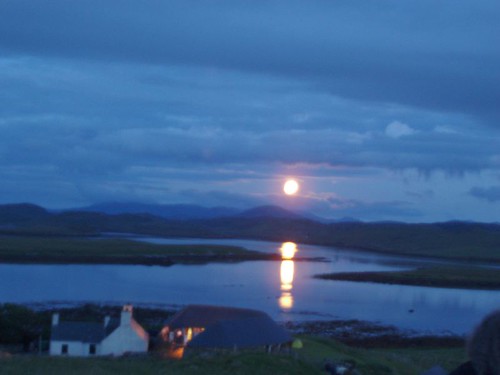
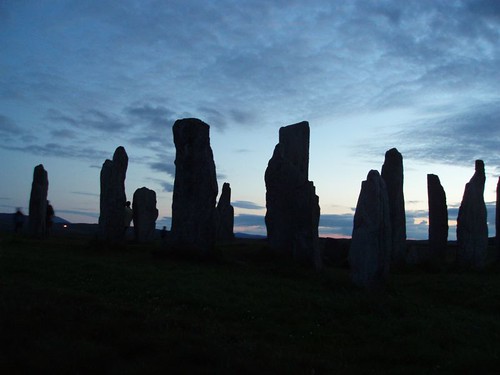
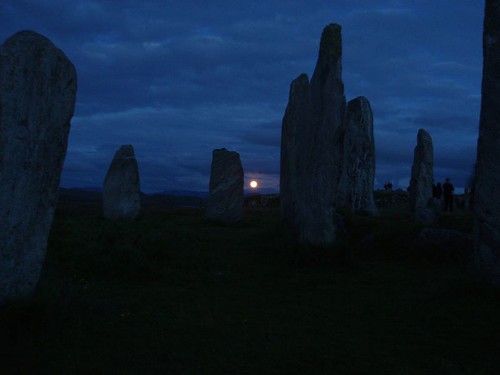
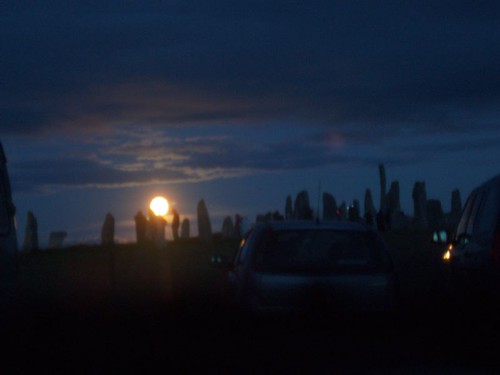
The Callanish Stones have had a third more visitors this year than the year before, meaning that the visitor centre there has struggled to cope. It was upgraded in March, but another upgrade seems likely if island's prime tourist site continues to pull in the crowds. Callanish is a 5,000 year old site, where several dozen stones, some up to 15 feet in height, have been arranged in a circle and outward in the shape of a cross. Its purpose is shrouded in mystery, but the leading theory is of a lunar calendar. From the site, the Lunar Standstill can be observed - this sees the moon rising low behind the Lochs hills (15 miles away to the east), disappearing behind Roineabhal, then reappearing to set behind the Clisham. Three years ago, I was at Callanish to observe the phenomenon: I close the post with some of those pics.
Sunday, 3 October 2010
Sunday 3 October
Fairly bright this morning, but with some showers and wind about. Not warm at all, the northeasterly making the 12C feel decidedly cool.
Today is the 20th anniversary of the reunification of Germany, which brought to a close more than seventy years of upheaval in the country. After the end of the First World War, Germany was pointed out as the sole culprit for the bloody conflagration, which was not a fair assertion. WW1 was a powderkeg, carefully assembled by the combatants United Kingdom, France, Austra-Hungary, Russia, Germany and their allies over the years between 1905 and 1914.
In the Treaty of Versailles, signed in June 1919, Germany had crippling reparations imposed upon it, which were whittled down considerably over the years. They served to wreck the German economy, and coupled with the economic depression of the 1930s, allowed Adolf Hitler to rise to the fore with a promise to make Germany great again. World War II is held by many to be a direct consequence of the Treaty of Versailles, and by implication the result of the vindictiveness of the victorious Allies.
That error was fortunately not repeated at the end of WW2. However, the division of Europe came in the wake of the Second World War, with the Berlin Wall (erected in 1961) being the most visible manifestation of that. The Wall did not just part Berlin, it also ran along the border between East and West Germany. Anyone trying to cross the boundary line without authorisation was liable to be shot dead on sight - a fate that befell several hundred people.
Communism imploded in Europe in the late 1980s, with the advent of Michail Gorbachev in the USSR and Karol Wojtyla as Pope John Paul II. On November 9th, 1989, the people of East Germany tore down the Berlin Wall and crossed into West Germany without proper authority. The armed forces stood by and did not interfere. Germany was reunified within a year, on 3rd October 1990, bringing not just liberty to its eastern Länder, but also a large economic burden to the western part of the country.
Although the Fall of the Wall took place on November 9th, this date was not adopted as the date of commemoration. On 9 November 1938, nationwide pogroms (or anti-Jewish raids) were held across Germany, which came to be known as the Night of Broken Glass, or Kristallnacht. I shall remember that night of infamy on 9 November this year (as I always do), and be thankful that much has changed in the 72 years since.
Today is the 20th anniversary of the reunification of Germany, which brought to a close more than seventy years of upheaval in the country. After the end of the First World War, Germany was pointed out as the sole culprit for the bloody conflagration, which was not a fair assertion. WW1 was a powderkeg, carefully assembled by the combatants United Kingdom, France, Austra-Hungary, Russia, Germany and their allies over the years between 1905 and 1914.
In the Treaty of Versailles, signed in June 1919, Germany had crippling reparations imposed upon it, which were whittled down considerably over the years. They served to wreck the German economy, and coupled with the economic depression of the 1930s, allowed Adolf Hitler to rise to the fore with a promise to make Germany great again. World War II is held by many to be a direct consequence of the Treaty of Versailles, and by implication the result of the vindictiveness of the victorious Allies.
That error was fortunately not repeated at the end of WW2. However, the division of Europe came in the wake of the Second World War, with the Berlin Wall (erected in 1961) being the most visible manifestation of that. The Wall did not just part Berlin, it also ran along the border between East and West Germany. Anyone trying to cross the boundary line without authorisation was liable to be shot dead on sight - a fate that befell several hundred people.
Communism imploded in Europe in the late 1980s, with the advent of Michail Gorbachev in the USSR and Karol Wojtyla as Pope John Paul II. On November 9th, 1989, the people of East Germany tore down the Berlin Wall and crossed into West Germany without proper authority. The armed forces stood by and did not interfere. Germany was reunified within a year, on 3rd October 1990, bringing not just liberty to its eastern Länder, but also a large economic burden to the western part of the country.
Although the Fall of the Wall took place on November 9th, this date was not adopted as the date of commemoration. On 9 November 1938, nationwide pogroms (or anti-Jewish raids) were held across Germany, which came to be known as the Night of Broken Glass, or Kristallnacht. I shall remember that night of infamy on 9 November this year (as I always do), and be thankful that much has changed in the 72 years since.
Saturday, 2 October 2010
Blogoversary
As I hinted a few days ago, yesterday was the second anniversary of this blog, Atlantic Lines. It was a complete change from its predecessor Northern Trip, which remains on-line as an archive of four years of blogging. AOL no longer features in amongst my on-line service providers, its functionality having been usurped by Google, Facebook and Twitter. I am contemplating a revamp of my sidebar, which has remained broadly unchanged for the past two years. Keep checking back (said he, who hardly ever reads someone else's blog these days).
Subscribe to:
Posts (Atom)