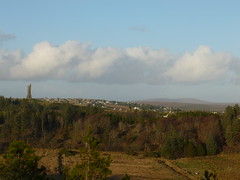
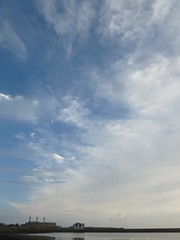
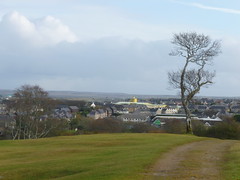
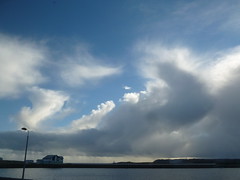
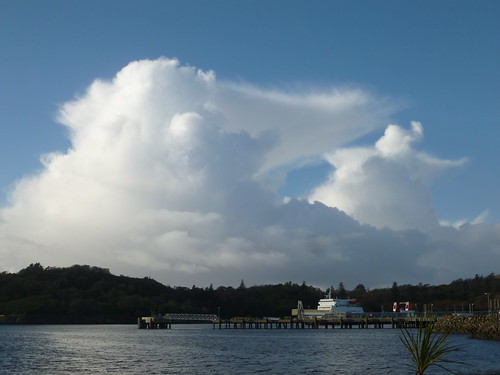
View across the Outer Harbour of Stornoway

Wednesday, 14 November 2012

Wednesday 14 November

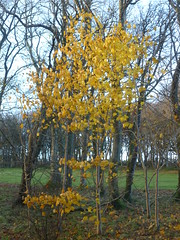
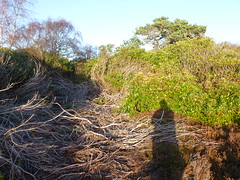
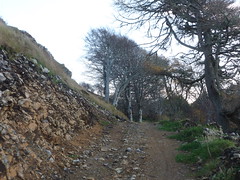
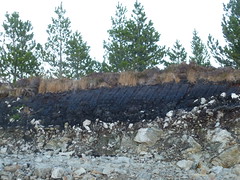
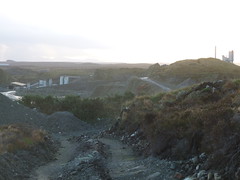
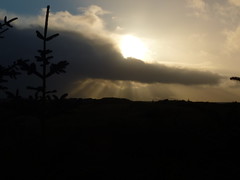
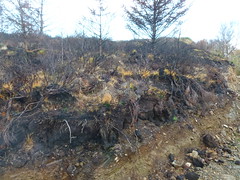
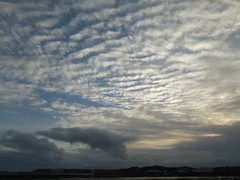
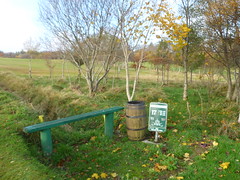
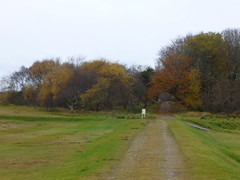
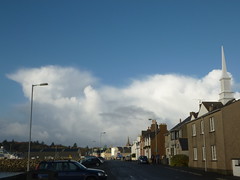
Quite a reasonable day, with good spells of sunshine and the odd drop of rain - which I managed to avoid. I went for a walk to Strawberry Hill this afternoon, and discovered that this area of the Castle Grounds is not as difficult to get to as I had thought. My first foray, in February of last year, involved scaling the southern flank of the hill (220 feet high), and last summer I tackled the hill from the north. It was at that point that I discovered the tracks leading off Strawberry Hill to the east, and I discovered an even better (if rather rough) track a little way further south. These tracks lead to the Marybank Quarry, an area that is obviously out of bounds. It being mid afternoon, the sun was setting (sunset time 4pm at the moment), leading to some nice cloud and lightscapes.

I have collected my poetry on http://castletown-writings.blogspot.com/, but will continue to copy it on here as well.

PB149506 PB149508 PB149513 PB149514 PB149520 PB149521 PB149522 PB149527 PB149530 PB149534

Sunset

Golden rays caress the sky
languid clouds
slowly moving east
an ever-changing mosaic

A cooling breeze
gently touches
the hilltop, slowly turning
brown as autumn progresses

Greens of leaves
makes way for the
grey of denuded
treebranches

Greens of grasses
turn yellow then
fade into the
background of blackened heath

The wind reminisces
as the sun bids us good night
angling its rays ever higher
airbrushing the sky pink

Slowly, colour fades
from the skye, the hills
the sea
Night has fallen

Tuesday, 13 November 2012

Tuesday 13 November

A bit milder than in recent times, as we manage double figures. It was a day of changeable fortunes, but with some nice spells of sunshine. November is set to continue in much the same fashion over the next few days. No complaints this end.

Fuel prices remain at the forefront of local politics. A pump, only a few hundred yards from my position, has dropped its prices by about 10p a litre since the wholesalers announced that island retailers could buy where they wanted; previously, they had been locked into five-year contracts, which attracted the ire of local residents. I do not drive myself, but when I go on the bus, the fuel prices do affect me indirectly, through fare increases.

82 years after being abandoned by its permanent residents, St Kilda has attracted an award for conservation of architectural heritage. The houses in Village Street quicly fell into disrepair, but were restored later. In spite of its stunning landscapes, St Kilda does not hold much attraction for me, as I hold it to be dead.

Tides

Low tide
The bar stretches
across the entrance to the basin
a rapid outflow the sole break

An old engine
now just a lump of rust
with a few floats
attached

Dirty mud with stones
seaweed
empty shells
gulls squawking

A squirt of water
scallops
other inhabited shells
try not to stand out

Six hours later
Only water
All else aforementioned?
Under 17 feet of water

Journalistic accountability

As we (in the UK) know by now, there have been major changes in personnel at the BBC. This was brought about because the Newsnight programme did not do proper journalistic checks before broadcasting a programme that appears to have been defamatory.

Well, of course when you're a journalist, you have to check and countercheck. However, why didn't that numbskull Philip Schofield, of ITV1 fame, not do his checks on the card with names that he handed David Cameron the other day? More to the point, what is he still doing on that featherweight This morning programme? Names were (allegedly) legible on the card for a second, as it was passed by Schofield to the prime minister. These names were culled off the Internet, where rumours were flying aplenty about the name of the former Tory aide who is alleged to have abused boys at (or from) the Bryn Estyn home at Wrexham, North Wales. Off the Internet, the greatest rumour box on earth? If heads are rolling at the BBC, then we should also see (metaphorically speaking) the heads of Philip Schofield (and his team at This morning) impaled on the gates of ITV HQ.

Heron

Along the water's edge
Stepping on tall legs
Looking for
a meal

in

the

water

SNAP!

Lazily, the heron
flies off to its
nest
in the treetops

Monday, 12 November 2012

Monday 12 November

Overcast, wet and initially windy. However, the wind has died down now. I finished reading a book that tried to depict Britain under Nazi occupation during the Second World War. That, of course, complete conjecture and the author, Norman Longmate, has made a creditable effort to describe the invasion and its aftermath. What I found fault with is the relative understatement of the atrocities committed by Nazi forces in occupied Europe, which the author tip-toed past. He laid heavy emphasis on the occupation of the Channel Islands, the only British territory to be occupied by Hitler's forces. However, that occupation appears to have been relatively benign, and not representative of the occupation of other countries, like France, Holland or Belgium.

I have started on the phenomenon of e-books, and purchased a novel, written by a fellow blogger, Stuart Rogerson. Another book I currently have on the go, Crime and Punishment, by Dostoevsky.

Did you ask about hurricanes? None about, and only one tropical disturbance, near Brunei, which is not likely to develop much further.

Religion

I recently finished, after a year, reading the Qu'ran, the holy text of Islam. Due to the sensitive nature of the subject in hand, I decided not to write a review on Goodreads.com, but will do so nonetheless on this relatively obscure corner of my internet output. The Qu'ran is vastly different from the Bible, being a series of revelations to a Prophet, transmitted through the Angel Gabriel from God. The Bible is a collection of scripts, which were written by many different hands, in different languages at different times, over a period of four to five thousand years.

The translation I read served to make the book accessible to me, also highlighting the many areas that Christianity and Islam have in common. However, there are also one or two statements that render the two religions incompatible. Islam states that God does not have a son - although it does acknowledge Jesus as a prophet (note lowercase). The Holy Trinity is a cornerstone of Christianity, I need not remind you. However, the Qu'ran also says, through the Prophet, that "God gave man the Torah, and he did not listen. God gave man the Gospel, and he did not listen. God gave man the Qu'ran, and he did not listen". In other words, in my opinion, Islam is the younger brother of Christianity, and a very vocal one at that.

I am profoundly saddened that, like Christianity, Islam has been hijacked for political ends, and used as justification for mass murder. I do not read or understand Arabic, but appreciate and acknowledge the  vast cultural heritage that the Arabian peninsula has to offer - do not forget that it was Arab scholars that invented the concept of the zero, without which we would not have the computers we are all working on today.

I shall reread the Qu'ran in the future, because it is a huge work with a huge impact that you cannot appreciate from just one reading. I shall also reread the Bible, in order to reacquaint myself with the Scriptures from that Book.

BBC

After a monumental failure in editorial control at Newsnight, the Director General of the BBC, George Entwistle, finally did what he should have done some time ago: resign. I am outraged to hear he is given a year's pay upon departure, "because he is helping with the Jimmy Savile case". Entwistle was torn to shreds by, first, the Culture Media and Sports Committee of Parliament, and last week by John Humphrys on BBC Radio 4. The man is plainly incompetent out of his ivory tower, and Mr Entwistle should be out of the BBC altogether, not be permitted to finish what he started off bungling in the first place. I am disgusted with Chris Patten, chairman of the BBC Trust, who stands up for the former DG because he's such a nice guy. Yes, I'm sure I'd be happy to buy George a pint down the pub myself, but this old-boys network should not come into a management structure. If that persists, Chris Patten himself should resign. It is symptomatic of a culture where malpractice is covered with the mantle of fraternal love and "he is such a nice guy". That is precisely the sort of attitude that allowed Jimmy Savile to abuse women and children between 1958 and 2011. Nobody would say anything about Jimmy, because he was such a good guy, and, well, we all know Jimmy, and didn't you enjoy it??

I have previously stated on this blog that I am a supporter of the BBC, and have been for nearly 30 years. The organisation has a high standard of journalism, but nobody is perfect, and things go wrong, even in the best-run enterprises. The test is how malpractice is being dealt with - and there have been two serious instances at the BBC where malpractice was uncovered, and it was not dealt with properly. The BBC is not a private enterprise, the broadcaster is (partly) funded by license fee money, paid by viewers in the UK - £150 per annum.

Autumn day

Rivers running down the glass
Distorting the view outside
A rapid patter of drops
and an impatient buffeting by wind

Visibility quite poor
but there isn't much to see
today is an autumnal day
as chill makes way for mild

Darkness falls near four fifteen
and daylight's getting very short
Six weeks left till solstice day
and we'll hunker down some more

Bowed down into the wind
Minimising time outside
warmed by a cosy fire
ignoring mother nature's ill temper

Remembrance Sunday (II)

They gather round
under clearing skies
remembering those
gone on ahead

Through war and strife
the trumpet sounds
and all fall silent
to contemplate

The sun comes out
and the trumpet calls
Awake!
A  new day dawns

The wreaths remain
We will remember
Their today
For our tomorrow

Sunday, 11 November 2012

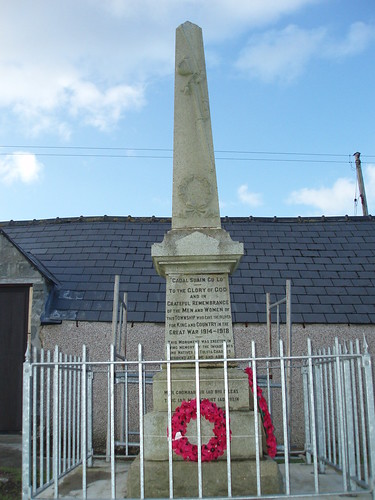
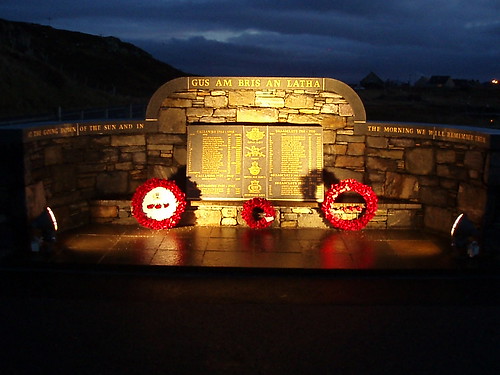
War memorials

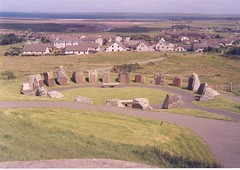
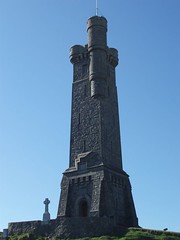
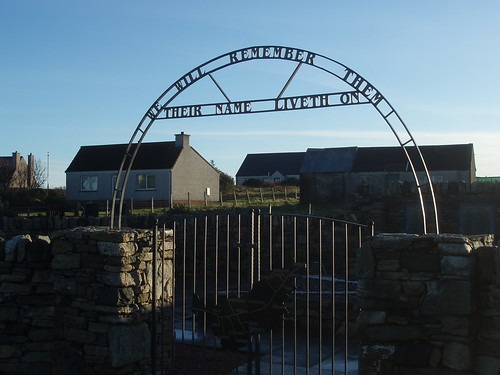
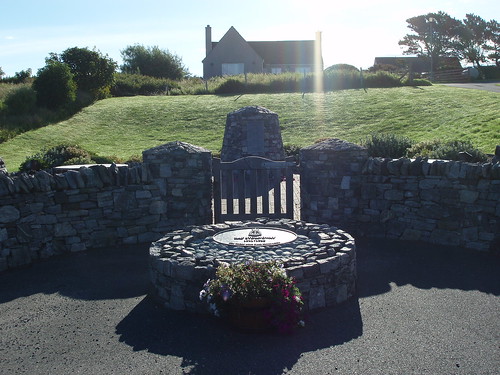
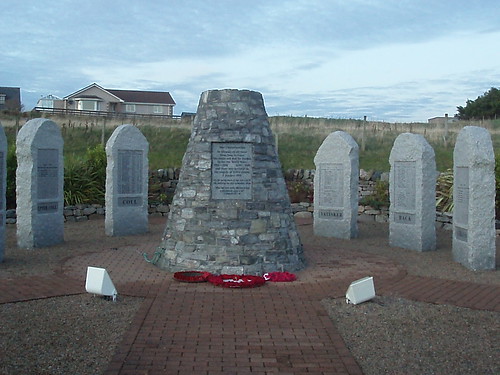
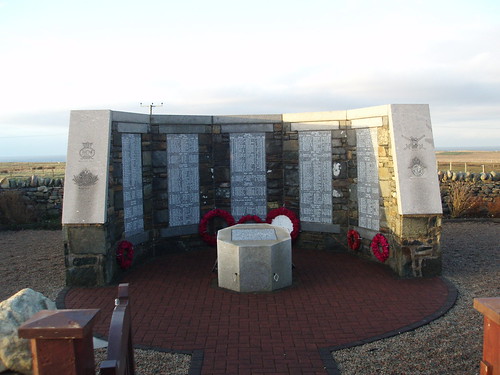
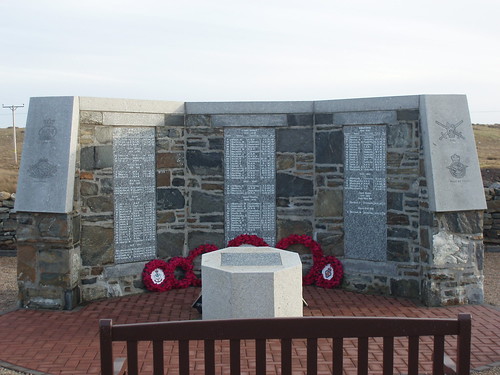
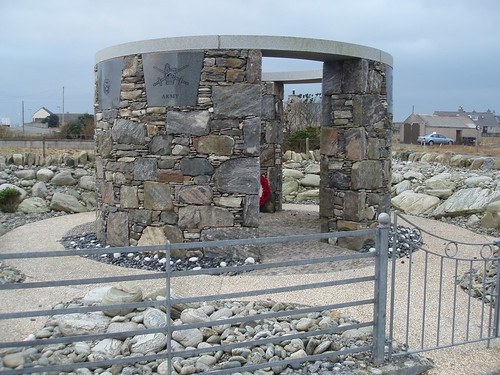
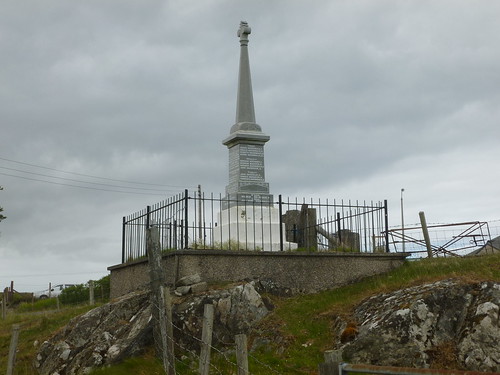
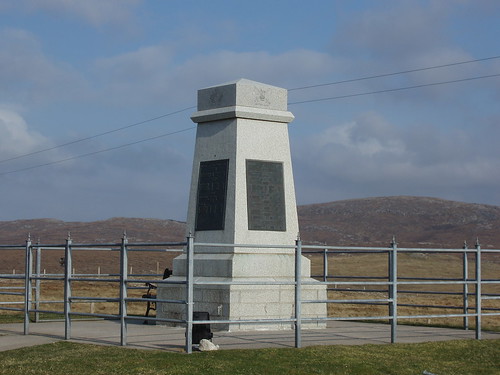
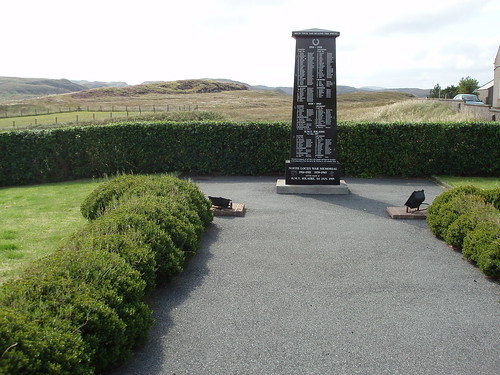
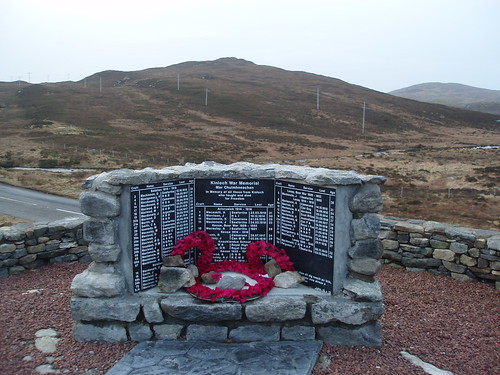
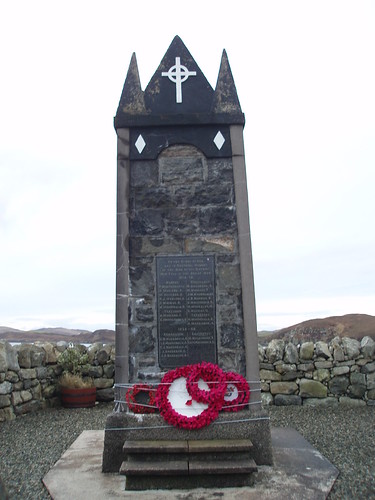
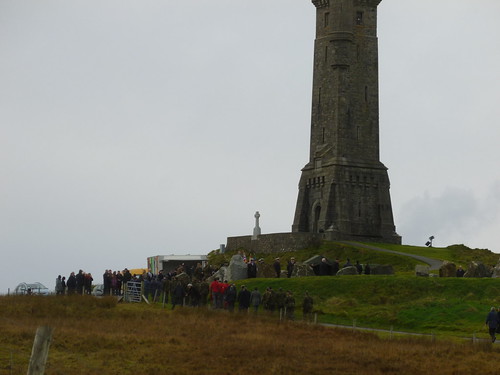
For an island of about 20,000 inhabitants, Lewis has a surprising number of war memorials, sixteen. The largest is situated just outside Stornoway and consists of a tower, with a circle of 23 plaques below. They used to be in the tower, but that is severely affected by ingress of water, so they were placed outside.

2005-07-04P0385 P4306846
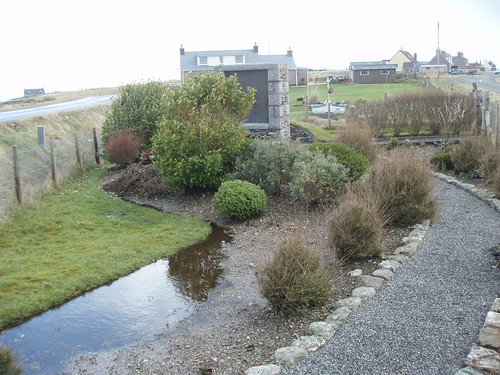
Other locations are

Garrabost (Point)
PC114031

Braighe na h-Aoidhe & Melbost
P8127260

Back
PC114078

North Tolsta
P3124007

Cross (Ness)
P1172811

Borve
P2053150

Bragar
P2123367

Carloway
 P1184938

Tolsta Chaolais
P2063227

Breasclete
P1112746

Great Bernera
P6116302

Timsgarry (Uig)
P4180628

Crossbost
P8197530

Laxay (Kinloch)
P2073291

Kershader (South Lochs)
P1082667

Sunday 11 November

Remembrance Sunday today. I watched the parade in Whitehall in London at 11 am, then walked the 40 minutes to the local war memorail for a ceremony at 1pm. The shortest route on foot leads through the local golf course. There were about 150 people present at the war memorial. The minister of one of the local churches conducted proceedings, which included the laying of wreaths by military and civilian dignitaries. After the singing of hymns and psalms, the national anthem closed the ceremony at half past one. I returned through a practically deserted town centre. It was a chilly day, but the threat of showers receded and the sun even came out. As I type this, at 7pm, we are not far above freezing.

PB119484 PB119480 PB119479 PB119478 PB119477 PB119471
The below pic shows the crowds gathering at the memorial.
PB119473

Saturday, 10 November 2012

Lewis War Memorial

Twenty-three plaques
More than fiteen hundred names
Standing in a circle
Below a prominent tower

Looking out over the town
Over the Minch
which they all had to cross
but never to return

Looking out over the island
At the villages near and far
From where they flocked
Eagerly but with hidden trepidation

In a circle near the top
their names are remembered
Parish by parish
In each World War

On land, in France or Mesopotamia
Out at sea, in the Atlantic or in the Mediterranean
In the skies over Britain and Europe
or even further from home

But closest to home
Within view of the tower now
The two hundred who drowned
at Holm Point, as 1919 started

Twenty-three plaques
More than fifteen hundred names
Remembered by theirs
Remembered by us all

Saturday 10 November

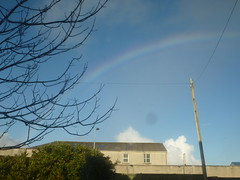
Quite a reasonable day, with showerclouds in abundance, but not much rain falling. The result was the inevitable mix of cloudscapes and rainbows. We maintained a reasonable temperature of 9C, and while the barometer rose, the showers started to peter out.

I could not help but notice that the leaves on the fuchsia bush are turning yellow. Not something that merits the news headlines, but in previous years, the gales had blown both blooms and leaves off by now. Not this year. We have had very few days with high winds this year, and (likewise in the Castle Grounds) has allowed mother nature to put up a fine display of autumn colours.

I have made a good start with my two new books. The first one, If Britain had fallen, gives a chilling account of what might have happened if the Germans had mounted a successful invasion. I'm about 1/3 of the way through, and I'm blessing my stars that this never came to be. The second one, Crime and punishment, is a very wordy but intriguing novel by Russian writer Dostoevsky, and the first twists and turns are already appearing - I'm on page 37 (of nearly 500).

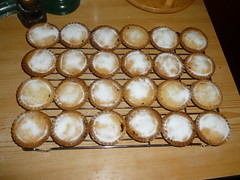
Want a mince pie? Sorry, they've all been eaten :-)


PB109461 PB109462 PB109464 PB109465 PB109467

Calum Zachary

Hey, where are you?
Need a word, real quick
You and I, well, what do you say?
Be together for good

But listen, we're poor
Can't get any land
Your folks have so little
splitting it would leave even less

Don't get me wrong, though
I'll be yours alright
We are as one
And will always be

Look, come look, who's that?
He's here for the money
What my dad hasn't got
Hasn't had for so long

Hey, where are you?
Got some news, bad and good
We've got to leave the island
Dad's been turned off his land

Come with me tonight
Nothing left here for us
We'll start a new life together
Take our chance, wherever

They were to meet on the pierhead
To start afresh somewhere
The moon set early though
and darkness shrouded all

He could not find his lady
She could not find her man
He therefore went to America
without his love by his side

His name was Calum Zachary
A name living on in song
echoing his loss
across the waves and years
Friday, 9 November 2012

Friday 9 November

After last night's wind and rain, the day dawned fairly brightly, but with intermittent heavy showers. The temperature was no great shakes either, managing 9C / 48F, achieved soon after midday. The afternoon only got colder.

My heart bled when I heard the terrible privations having to be endured by Anders Breivik as he continues his 21-year sentence (mininum) for the murder of 78 people in Norway last year. At least he has a comfy prison cell for the rest of his life; his victims' lives were cut short by him. I hope he is now deprived of the oxygen of any further publicity.

St Kilda has been awarded an international award for preserving architecture. The group of islands, 45 miles west of North Uist, was abandoned by its permanent residents in August 1930. The houses were restored by the National Trust for Scotland, and the main island is home to a tracking station for test missiles, fired from a range in South Uist. The St Kilda Centre, which is due to be constructed at Mangersta in Lewis is yet to be put up.

To Canada

The man walked down the road
his knapsack slung over his shoulder
although he had gained some land
he had lost his neighbours

There had been only one way out
to Canada
Cutting down trees
building the Pacific railway

Gratitude had led to this separation
for the man left his family behind
sending back money
that he had earned over there

His neighbours were behind with the rent
And as he had saved the proprietor's life
The reward was a piece of land
taken off his neighbours' croft

The man did not ask for a reward
even less for more land
however useful
And certainly not at the expense of his neighbour

So he walked down the road
His family staring after him
As he disappeared in the distance
Never to return

Death of army cadet

Five years ago, in August 2007, an army cadet from Fyvie, Aberdeenshire, drowned following an accident in Loch Carnan, South Uist. Kaylee Macintosh had become trapped under a RIB after it overturned, and her absence had not been noticed for 90 minutes. When the boat was finally turned over, the cadet was found drowned underneath.
It is reported today that the officer in charge, Major George Maccallum, has admitted at Inverness Sheriff Court charges on health and safety issues at the time.

Kristallnacht


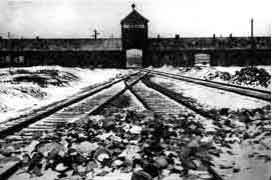
9 November 1938 - an organised mob of Nazi forces and sympathisers go on the rampage in towns and cities across Germany, smashing and destroying Jewish-owned property and businesses. It was to be a marker, to what was to come during World War II - the extermination of anyone deemed sub-human by the warped mind of Adolf Hitler and his henchmen. Jews topped their league of the unfit, closely followed by gypsies, the mentally ill and many many others. The Reichskristallnacht was a night of infamy, and not just to Germany.

For Hitler was allowed to get away with literally murder for several years beforehand. In 1936, he occupied the Rhineland which had been ceded to France at the end of the First World War. The League of Nations, a toothless talkingshop, cried wolf but had no bite. In March 1938, Nazi forces marched into Austria to join that country to Germany, an event referred to as the Anschluss. Neville Chamberlain flew to Munich to meet with Adolf Hitler on 30 September 1938, returning with the infamous phrase: "Peace for our time". Six weeks later, the Reichskristallnacht took place, a sign of ill omen. Only a few months later, Germany invaded the Sudetenland area of Czecho-Slovakia, and again, nobody moved a finger to stop. In September 1939, Hitler thought he could get away with the invasion of Poland. But instead, it prompted the outbreak of the Second World War.
The lights have gone out in Europe, it was said at the time. The lights in Europe were extinguished in 1914, and had not been relit, not even at the end of the First World War. The Versailles Peace Treaty of June 1919 contained all the ingredients for another war, which duly materialised.