Today started overcast, but after lunch the sun came out. In spite of the low temperature, only 10C / 50F, it was possible to sit out in the sun (and out of the wind). Read a large section of an interesting book, The Making of the Crofting Community by Dr. Jim Hunter. It is a historical account of how the phenomenon of crofting came to be, and how it has fared over the following 200 years.
I also went to the Post Office to buy stamps before the rise in prices on Monday. I had five cards to send off for the Postcrossing project (to Holland, Germany, Finland, Taiwan and the USA). As things stand, I have sent and received just over 100 postcards from all over the world since I joined the site 15 months ago.
Dingwall football club Ross County were awarded the First Division Championship trophy today, after an emphatic 5-1 win over Hamilton Accies at home. Ross County is the second club from the north of Scotland to play in the Scottish Premier League, with Inverness Caledonian Thistle (20 miles down the road) already there. Caley Thistle aren't doing too well, being third from bottom in the SPL after losing 4-3 at Kilmarnock this afternoon. Ross County and Caley Thistle will be groundsharing next season, alternating their home matches at the Caledonian Stadium in Inverness.
No, you don't normally find me blogging about football, but this is of regional importance, so that's why.
Saturday, 28 April 2012


Friday, 27 April 2012
Friday 27 April
Still a cold day, but far less wind than yesterday. We did have more precipitation: hail showers. In spite of that, I maintain we had the best weather in the country. I have today continued the transcription of a 1902 report into the social conditions in this island at the time, and the focus of chapter 11 was on industries - particularly kelp.
Kelp is dried seaweed, which used to be harvested in huge quantities for the production of gunpowder. However, when the Napoleonic wars ended in 1815, the bottom fell out of the kelp market when a cheaper alternative, dried bird poo (guano), became available again. The cruelty for the west of Scotland was that landowners had amassed large numbers of people on the coastline to harvest kelp - people that were now surplus to requirement. Combine that, 30 years later, with the potato famine, and you have a stamped recipe for disaster.
Dutch society is known to be tolerant, but this tolerance is being squeezed with regards to cannabis. The coffee shops (where cannabis use is tolerated) are now no longer allowed to supply pot to people who are not Dutch. It really should be stressed that cannabis remains an illegal substance, but police tolerate the presence of the coffee shops, provided individual quantities do not exceed 5 grams (1/6 oz).
There are intermittent calls for cannabis to be legalised, or at least decriminalised, but I am strongly opposed to that. Cannabis can have profound effects upon the user, and in susceptible individuals could precipitate serious mental health problems, such as paranoia or schizophrenia. And I hate the stink.
Kelp is dried seaweed, which used to be harvested in huge quantities for the production of gunpowder. However, when the Napoleonic wars ended in 1815, the bottom fell out of the kelp market when a cheaper alternative, dried bird poo (guano), became available again. The cruelty for the west of Scotland was that landowners had amassed large numbers of people on the coastline to harvest kelp - people that were now surplus to requirement. Combine that, 30 years later, with the potato famine, and you have a stamped recipe for disaster.
Dutch society is known to be tolerant, but this tolerance is being squeezed with regards to cannabis. The coffee shops (where cannabis use is tolerated) are now no longer allowed to supply pot to people who are not Dutch. It really should be stressed that cannabis remains an illegal substance, but police tolerate the presence of the coffee shops, provided individual quantities do not exceed 5 grams (1/6 oz).
There are intermittent calls for cannabis to be legalised, or at least decriminalised, but I am strongly opposed to that. Cannabis can have profound effects upon the user, and in susceptible individuals could precipitate serious mental health problems, such as paranoia or schizophrenia. And I hate the stink.
Thursday, 26 April 2012
Thursday 26 April
The noteable feature of today was a strong and bitingly cold northeasterly wind, which was blowing at 30-35 mph, force 7 on the Beaufort scale. That is normally not enough to prevent the ferry from sailing, but the direction churns up a strong swell. The freight ferry has been off for several nights now, and even the passenger ferry Isle of Lewis remained tied up all day. Its traffic was diverted the 40 miles south to Tarbert to take the ferry to Skye. The Hebrides was delayed by 40 minutes this morning on account of the volume of traffic. Otherwise it was a bright day with only the odd rogue shower (and rainbow) and the mercury at 8C / 46F.
Murdoch was grilled by the Leveson Inquiry, giving rise to more political controversy. Rupert Murdoch used the excuse that the Nazis used in 1946 at Nuremberg. To quote them in German: Ich habe es nicht gewusst. [I didn't know about it]. And former Liberian dictator Charles Taylor was found guilty of complicity in the mass murder of a million people in neighbouring state of Sierra Leone.
Murdoch was grilled by the Leveson Inquiry, giving rise to more political controversy. Rupert Murdoch used the excuse that the Nazis used in 1946 at Nuremberg. To quote them in German: Ich habe es nicht gewusst. [I didn't know about it]. And former Liberian dictator Charles Taylor was found guilty of complicity in the mass murder of a million people in neighbouring state of Sierra Leone.
Wednesday, 25 April 2012
Wednesday 25 April
A very cold northeasterly wind, force 7, is blowing throughout the day, and will continue for the next few days. It will veer north, but that will not make any difference for the temperatures. At least here in these islands, there will not be much rain. That contrasts sharply with the inches of rainfall elsewhere in the country. Snow is blanketing the mountain tops. The strong winds are disrupting our ferry service, with the passenger ferry coming in nearly an hour late this evening, and the freight ferry off altogether.
I am continuing my transcription of the 1902 Crofters Commission Report, which involves cleaning up a slightly messy OCR of the scans. The issues of weights and measures will require some further research. Ain't I glad we now have international standards, rather than the town-by-town units in use in the 17th century.
I am continuing my transcription of the 1902 Crofters Commission Report, which involves cleaning up a slightly messy OCR of the scans. The issues of weights and measures will require some further research. Ain't I glad we now have international standards, rather than the town-by-town units in use in the 17th century.
Tuesday, 24 April 2012
Tuesday 24 April
Another bright day, but the northeasterly wind is now strong, making the 8C on the thermometer feel even colder than it already is. Fortunately, it being late April, the sunshine compensates.
I am continuing to transcribe a 1902 report into the condition of local crofters, and am coming across some unusual units of measurement. When meal is being doled out, it is measured in bolls, and I'm actually yet to find out how much that is in kilos or pounds. Worse than that, bolls are subdivided into seteen, pecks and lippies. However, when I started to research the issue on the Net, I came across a bewildering array of units, which varied from town to town in the 17th century. In Orkney, a barrel equates to so many lispund. Then there is such a thing as a Last, being subdivided into a chalder, a boll, a firkin, a peck and a lip. The mind boggles, and there is a document full of that. The Earl of Orkney was being taken to task over the fact that his lispunds were make up of 18 lips, rather than 15. Still with me? Me neither. I'll find out more.
I am continuing to transcribe a 1902 report into the condition of local crofters, and am coming across some unusual units of measurement. When meal is being doled out, it is measured in bolls, and I'm actually yet to find out how much that is in kilos or pounds. Worse than that, bolls are subdivided into seteen, pecks and lippies. However, when I started to research the issue on the Net, I came across a bewildering array of units, which varied from town to town in the 17th century. In Orkney, a barrel equates to so many lispund. Then there is such a thing as a Last, being subdivided into a chalder, a boll, a firkin, a peck and a lip. The mind boggles, and there is a document full of that. The Earl of Orkney was being taken to task over the fact that his lispunds were make up of 18 lips, rather than 15. Still with me? Me neither. I'll find out more.
Monday, 23 April 2012
Monday 23 April
Quite a nice, bright day with good spells of sunshine, but a cold nor'easter blowing. Our nor'easters are commonplace in spring, and they usually bring fair and dryish weather. I'm not speaking for the south of the UK, which is set to received inches and inches of rain - much-needed, incidentally.
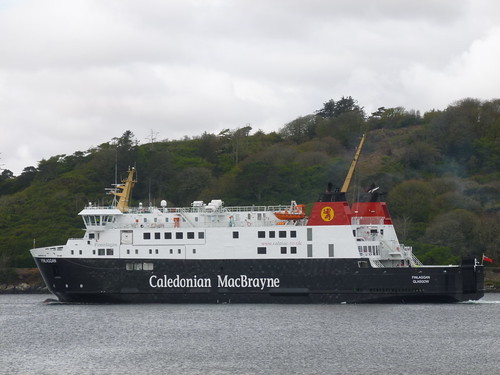
The day started with the surprise arrival of ferry boat MV Finlaggan, which normally plies the route between Kintyre and Islay, in the south of the Hebridean archipelago. Finlaggan is reported to be testing berthing at various ports on the Scottish west coast.
It is reported that last Saturday's traincrash in Amsterdam could have been caused by one of the train drivers passing a signal at danger, known in the UK as a SPAD. Her Sprinter train was less seriously damaged than the Intercity double decker she smashed into. However, a formal investigation is still underway. Still in Holland, the Prime Minister, Mark Rutte, has tendered his resignation after no agreement could be found in his coalition for austerity measures. General elections are likely in late June.
I have often highlighted our high fuel prices, 152p per litre. However, I was surprised to see that fuel prices in London have now reached the same sort of level, 145p per litre (as seen on London Marathon coverage yesterday). For my American readers, that equates to $9.24 per US gallon.
The day started with the surprise arrival of ferry boat MV Finlaggan, which normally plies the route between Kintyre and Islay, in the south of the Hebridean archipelago. Finlaggan is reported to be testing berthing at various ports on the Scottish west coast.
It is reported that last Saturday's traincrash in Amsterdam could have been caused by one of the train drivers passing a signal at danger, known in the UK as a SPAD. Her Sprinter train was less seriously damaged than the Intercity double decker she smashed into. However, a formal investigation is still underway. Still in Holland, the Prime Minister, Mark Rutte, has tendered his resignation after no agreement could be found in his coalition for austerity measures. General elections are likely in late June.
I have often highlighted our high fuel prices, 152p per litre. However, I was surprised to see that fuel prices in London have now reached the same sort of level, 145p per litre (as seen on London Marathon coverage yesterday). For my American readers, that equates to $9.24 per US gallon.
Sunday, 22 April 2012
Sunday 22 April
A bright and sunny day, although cloud is gradually increasing as the afternoon wears on. In the sun and out of the wind it is quite pleasant, feeling even warm. But the mercury is firmly rooted down at 10C / 50F.
I was bemused by the tales of woe of a 69-year old, who is walking the 1150 miles from Lands End to John o'Groats, getting stuck in mud, losing her glasses and GPS as well as walking into roadsigns. Just plain mishaps, and not attributable to her age, I should hasten to add.
I was sad to learn in the last hour or so that one person, a woman of 68, has died of the injuries she sustained in yesterday's railcrash in Amsterdam. One of the trains has been towed away from the accident site; the other could not be moved much beyond 200 yards, due to the instability of the train. This is the result of damage, sustained in the 30 mph head-on crash. It is thought likely that the component carriages of the double-decker train will have to be separated before they can be shifted.
I was bemused by the tales of woe of a 69-year old, who is walking the 1150 miles from Lands End to John o'Groats, getting stuck in mud, losing her glasses and GPS as well as walking into roadsigns. Just plain mishaps, and not attributable to her age, I should hasten to add.
I was sad to learn in the last hour or so that one person, a woman of 68, has died of the injuries she sustained in yesterday's railcrash in Amsterdam. One of the trains has been towed away from the accident site; the other could not be moved much beyond 200 yards, due to the instability of the train. This is the result of damage, sustained in the 30 mph head-on crash. It is thought likely that the component carriages of the double-decker train will have to be separated before they can be shifted.
Saturday, 21 April 2012
Train crash
At 6.24pm local time, two trains collided head-on a mile or so west of Amsterdam's Central Station in the Netherlands. One was headed north from Amsterdam, the other south towards the city. The trains are reported to have been travelling at 30 mph. Nobody was killed, but 136 people were hurt. 56 were seriously hurt, of whom 13 very seriously. The force of the collision is thought to have thrown passengers around in the carriages. The train service west of Amsterdam, including to Schiphol Airport, remains suspended for the evening.
 Image courtesy www.rtvnh.nl
Image courtesy www.rtvnh.nl
Saturday 21 April
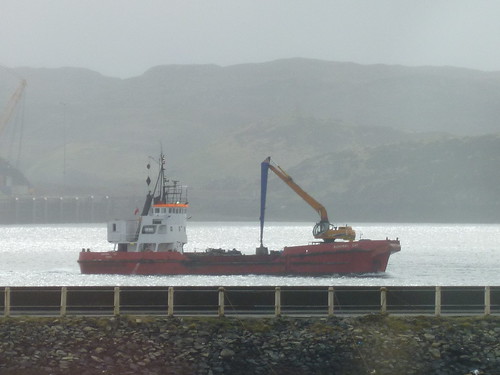
A bright but cold day, with the mercury barely into double figures. The little dredger Admiral Day keeps going back and forth to the dumping ground off the lighthouse, after continuing to clear out the inner harbour here.
I spent most of the day rebuilding the blog of a lady by the name of Pamela Hilger. She died 6 years ago, after a 10-month battle against breast cancer. Her blog was one of the first AOL journals, but it was lost in 2008 when AOL pulled its journals service. Using the Wayback When machine on the WWW, I managed to retrieve about 130 entries from August 2003 until November 2005, when she moved to another blogsite. This one was salvaged in 2008; the first blog was not.
Reading back those entries is in fact profoundly saddening, as the outcome is by now known to me. From someone who is blogging about her cats, her daughter and her ex, Pamela changes into a cancer patient, looking only at the positive - whilst all points to the negative. The blog also demonstrates how things have changed in another aspect. Until 2008, blogging in J-land was done several times a day; my old blog Northern Trip would have updates up to a dozen times a day. Now, I manage one, sometimes two entries a day. The rest goes through Facebook and Twitter.
I spent most of the day rebuilding the blog of a lady by the name of Pamela Hilger. She died 6 years ago, after a 10-month battle against breast cancer. Her blog was one of the first AOL journals, but it was lost in 2008 when AOL pulled its journals service. Using the Wayback When machine on the WWW, I managed to retrieve about 130 entries from August 2003 until November 2005, when she moved to another blogsite. This one was salvaged in 2008; the first blog was not.
Reading back those entries is in fact profoundly saddening, as the outcome is by now known to me. From someone who is blogging about her cats, her daughter and her ex, Pamela changes into a cancer patient, looking only at the positive - whilst all points to the negative. The blog also demonstrates how things have changed in another aspect. Until 2008, blogging in J-land was done several times a day; my old blog Northern Trip would have updates up to a dozen times a day. Now, I manage one, sometimes two entries a day. The rest goes through Facebook and Twitter.
Friday 20 April
Quite a nice bright day, until this downpour trundled past at 5 o'clock in the afternoon. Continued the transcription of the Crofter Commission's Report from 1902 about the care of the poor and of lunatic paupers. Generally speaking, the report has quite a condescending tone, but remains a valuable piece of social history of this island.
In the afternoon, I happened to glance into the backyard (which is enclosed by a 7 foot high wall) and spotted a female mallard duck.
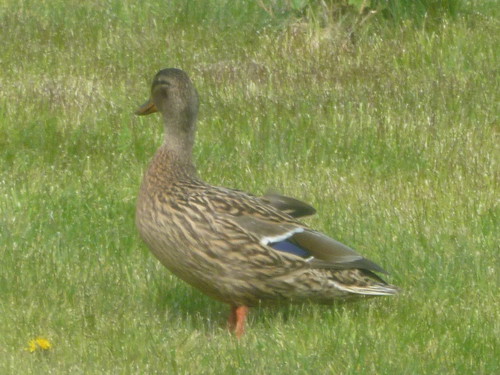
She was frantically looking around her and quacking intermittently. Standing in amongst a patch of dandelions, she was soon spooked by a passing bumblebee and flew off. Ten minutes later, an SSPCA van pulled up and the driver rang the doorbell. Did we see a female duck - yes. The duck had flown away in the direction of the sea. The SSPCA man had 5 ducklings in a box in his van who were found wandering in the middle of the road, holding up the traffic. The animal welfare had been called and they were now looking for their mum. Well, to cut a long story short, mum never turned up again. A lady had been located who could look after the chicks, so they got taken away to be reared by hand. The duck had waddled in under a wooden fence, set in the wall. The fence has a 6 inch gap underneath. The duck had not been followed by her brood, who could no longer see or hear her on account of the fence and the noise of traffic.
In the afternoon, I happened to glance into the backyard (which is enclosed by a 7 foot high wall) and spotted a female mallard duck.
She was frantically looking around her and quacking intermittently. Standing in amongst a patch of dandelions, she was soon spooked by a passing bumblebee and flew off. Ten minutes later, an SSPCA van pulled up and the driver rang the doorbell. Did we see a female duck - yes. The duck had flown away in the direction of the sea. The SSPCA man had 5 ducklings in a box in his van who were found wandering in the middle of the road, holding up the traffic. The animal welfare had been called and they were now looking for their mum. Well, to cut a long story short, mum never turned up again. A lady had been located who could look after the chicks, so they got taken away to be reared by hand. The duck had waddled in under a wooden fence, set in the wall. The fence has a 6 inch gap underneath. The duck had not been followed by her brood, who could no longer see or hear her on account of the fence and the noise of traffic.
Thursday, 19 April 2012
Thursday 19 April
Bright and sunny today, although the keen easterly wind continues. We had no rain, and the mercury reached 11C / 52F. Although the temperatures are no great shakes, spring is definitely here. Last week, I saw lots of young lambs in Harris, some only a day old, if that. The dandelions are running riot, despite being zapped with weedkiller.
At the beginning of last week, a car crash in Harris left several people injured, some seriously. An 80-year old grandfather gave cause for concern, but local news website Hebrides News relates that he is doing much better. His car aquaplaned off the A859 Tarbert to Leverburgh road and ended up in a loch.
I'm continuing with transcription of a historical document, which shows conditions in this island in 1902.
At the beginning of last week, a car crash in Harris left several people injured, some seriously. An 80-year old grandfather gave cause for concern, but local news website Hebrides News relates that he is doing much better. His car aquaplaned off the A859 Tarbert to Leverburgh road and ended up in a loch.
I'm continuing with transcription of a historical document, which shows conditions in this island in 1902.
Community Photo Challenge - Tulips

A bedraggled set of tulips, which appear to be past their prime, but nonetheless providing a colourful addition to the front steps. For the Community Photo Challenge.
Wednesday, 18 April 2012
Wednesday 18 April
A nice bright day, with plenty of sunshine and no rain. There was a steady northeasterly breeze, which took the edge of the sun's warmth, pegging the mercury back to 10C.
In the afternoon, I went to the Eye Cemetery, 4 miles east of Stornoway, and had a look through the wargraves there. A total of about 100 graves, both Commonwealth War Graves and private tombstones relate to men and women, lost in both world wars. The cemetery is very exposed, sitting on a narrow isthmus linking the Eye peninsula with mainland Lewis, and the wind was very keen. However, I managed to get suitably sunburned for my two-hour sojourn there. A service bus carried me back to town in short order.
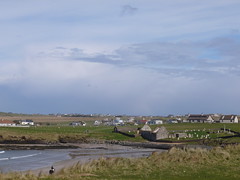
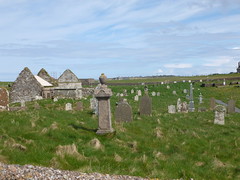
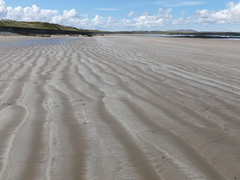
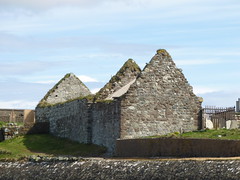
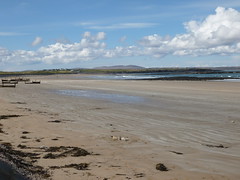
In the afternoon, I went to the Eye Cemetery, 4 miles east of Stornoway, and had a look through the wargraves there. A total of about 100 graves, both Commonwealth War Graves and private tombstones relate to men and women, lost in both world wars. The cemetery is very exposed, sitting on a narrow isthmus linking the Eye peninsula with mainland Lewis, and the wind was very keen. However, I managed to get suitably sunburned for my two-hour sojourn there. A service bus carried me back to town in short order.
Tuesday, 17 April 2012
Tuesday 17 April
The day started very wet, but dried up during the morning. The sun even came out around 2pm. Not warm by any means, although a bit warmer than of late with the thermometer at 8C. I have spent the day transcribing parts of the 1902 Crofters Commission Report, but will need to continue with another couple of pages before chapter 6, about education, is complete.
As I just said on Twitter, the residents of the Small Isles (Eigg, Muck, Rum and Canna) appear to have discovered the art of microblogging. Rum is the largest island, measuring 8 miles by 8 miles, with mountains rearing up to 2800 feet above sealevel. It also hosts a place called Harris, population zero.
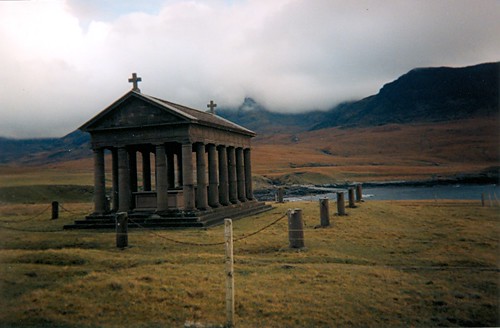
The edifice you see is a mausoleum, containing the remains of the last private owner of Rum, Lady Monica Bullough. She passed away in 1957, and was laid to rest beside her late husband, Sir George. The island was bequeathed to the nation. Scottish Natural Heritage have managed the island since, maintaining a herd of red deer there for the purposes of study. Recently, the village of Kinloch (where the ferry docks) has gone into community ownership. The community trust aims to increase the population from 30 to 80, apportioning crofts and building new homes. Rum lost its last indigenous people in 1826, when they were all cleared from Kinloch, Harris, Guirdil, Kilmory, Dibidil and Papadil. Lord Salisbury tried to harness Rum's prodigious rains (100 inches annually) with a dam below Ard Nev, but the dam was broken by - excess water.
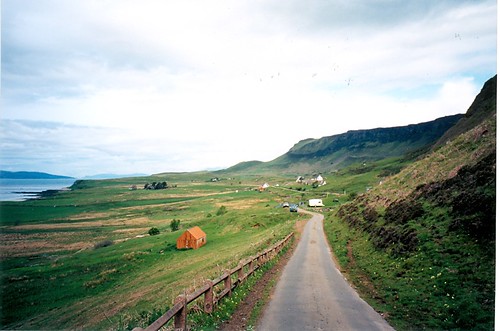
My association with the Small Isles dates back to 1989, and I was a small contributor to the community buy-out of the isle of Eigg [above] in 1996/7. Although I haven't been back there since 2004 (apart from a visit to Rum in 2007), I keep a beady eye on proceedings - being quite pleased with what I see going on. The community buy-out of Eigg is something that the residents of Pairc, in Lewis, can only dream of. They have been bogged down in a legal quagmire, created by their unwilling landlord, which has delayed their buy-out by (at time of writing) 8 years.
As I just said on Twitter, the residents of the Small Isles (Eigg, Muck, Rum and Canna) appear to have discovered the art of microblogging. Rum is the largest island, measuring 8 miles by 8 miles, with mountains rearing up to 2800 feet above sealevel. It also hosts a place called Harris, population zero.
The edifice you see is a mausoleum, containing the remains of the last private owner of Rum, Lady Monica Bullough. She passed away in 1957, and was laid to rest beside her late husband, Sir George. The island was bequeathed to the nation. Scottish Natural Heritage have managed the island since, maintaining a herd of red deer there for the purposes of study. Recently, the village of Kinloch (where the ferry docks) has gone into community ownership. The community trust aims to increase the population from 30 to 80, apportioning crofts and building new homes. Rum lost its last indigenous people in 1826, when they were all cleared from Kinloch, Harris, Guirdil, Kilmory, Dibidil and Papadil. Lord Salisbury tried to harness Rum's prodigious rains (100 inches annually) with a dam below Ard Nev, but the dam was broken by - excess water.
My association with the Small Isles dates back to 1989, and I was a small contributor to the community buy-out of the isle of Eigg [above] in 1996/7. Although I haven't been back there since 2004 (apart from a visit to Rum in 2007), I keep a beady eye on proceedings - being quite pleased with what I see going on. The community buy-out of Eigg is something that the residents of Pairc, in Lewis, can only dream of. They have been bogged down in a legal quagmire, created by their unwilling landlord, which has delayed their buy-out by (at time of writing) 8 years.
Monday, 16 April 2012
Monday 16 April
A sunny day after a very cold night. The overnight low went down to -3C, a temperature we have not often seen this winter. However, cloud increased through the afternoon and we are awaiting wind and rain in the night. No hurricanes to report on elsewhere in the world; the States have had another dose of tornadoes, and my sympathies go out to those lost or injured in the outbreak in the Mid West.
I am currently transcribing another document from this island's history, which is supposed to follow on from the Napier Report of 1883. The Crofters Commission, reporting in 1902, finds me raising my eyebrows at their condescending attitude, with phrases like "primitive native" and "simple crofter". Lord Napier, in his earlier inquiry, treated all who came before him with courtesy and deference, irrespective of social class. The 1902 report for the then Scottish Secretary Lord Balfour or Burleigh even seems to scoff at the findings of the Napier Commission with this unforgettable quote:
The trial of Anders Breivik has commenced in Oslo, and the man is totally convinced of the right of his deeds. He was moved to tears by his own promotional video, but unmoved by the footage of his own atrocity. In worse circumstances, he could have become another Hitler. Breivik will be locked up for life, either in jail or in a psychiatric unit. It is my conviction that when idiots like that come to prominence, there is something very badly wrong in society, that there is a problem not being addressed. Once this trial is out of the way, I hope the Norwegians will be able to conduct some introspection as to what ill in society allowed this monster to develop. The ideologies of another far-right politician, Dutch MP Geert Wilders, are reported to have been an inspiration to Breivik. I am pleased to note that Mr Wilders' popularity is waning in the Netherlands.
I am currently transcribing another document from this island's history, which is supposed to follow on from the Napier Report of 1883. The Crofters Commission, reporting in 1902, finds me raising my eyebrows at their condescending attitude, with phrases like "primitive native" and "simple crofter". Lord Napier, in his earlier inquiry, treated all who came before him with courtesy and deference, irrespective of social class. The 1902 report for the then Scottish Secretary Lord Balfour or Burleigh even seems to scoff at the findings of the Napier Commission with this unforgettable quote:
The schoolmaster is the great Highland depopulator and evictor of modern timesI dread to think what else I am going to read. I have transcribed 14 pages, and still have about 90 to go.
The trial of Anders Breivik has commenced in Oslo, and the man is totally convinced of the right of his deeds. He was moved to tears by his own promotional video, but unmoved by the footage of his own atrocity. In worse circumstances, he could have become another Hitler. Breivik will be locked up for life, either in jail or in a psychiatric unit. It is my conviction that when idiots like that come to prominence, there is something very badly wrong in society, that there is a problem not being addressed. Once this trial is out of the way, I hope the Norwegians will be able to conduct some introspection as to what ill in society allowed this monster to develop. The ideologies of another far-right politician, Dutch MP Geert Wilders, are reported to have been an inspiration to Breivik. I am pleased to note that Mr Wilders' popularity is waning in the Netherlands.
Sunday, 15 April 2012
Sunday 15 April
After an overnight low of -1C / 30F, the day was bright but cold, with the mercury once more not managing more than 6C / 43F. Sunday is always quiet in Stornoway, and some people find it too quiet. However, restaurants are open, the pubs too, and you can even get petrol if need be. Just know where to find it all is the tricky bit if unfamiliar with the town.
I was awake until 2.20 am this morning, tracking the sinking of RMS Titanic 100 years ago through the Twitter feed of TitanicRealTime, now mothballed. Resuming to follow its output at 9 am, the figures of 700 survivors and 1500 dead really hit home. I have followed the feed for a couple of weeks, and up unto yesterday afternoon, it read like the journey of your average cruise. But once the references to ice started to creep in, the tale merged with history.
Having completed the transcriptions of the Napier Report, I have embarked on a new project, which is rather smaller in size; transcribing the Report from the Crofters Commission which went round in Lewis in 1902.
I was awake until 2.20 am this morning, tracking the sinking of RMS Titanic 100 years ago through the Twitter feed of TitanicRealTime, now mothballed. Resuming to follow its output at 9 am, the figures of 700 survivors and 1500 dead really hit home. I have followed the feed for a couple of weeks, and up unto yesterday afternoon, it read like the journey of your average cruise. But once the references to ice started to creep in, the tale merged with history.
Having completed the transcriptions of the Napier Report, I have embarked on a new project, which is rather smaller in size; transcribing the Report from the Crofters Commission which went round in Lewis in 1902.
Saturday, 14 April 2012
Remembering Norge & Titanic
When this post gets published, it will be exactly 100 years ago to the minute when RMS Titanic hit the iceberg. The Twitter-account @Titanicrealtime will relay the story as it happened, exactly a century earlier. This post is to remember those who were lost on board the SS Norge on 28 June 1904. The listings are in Norwegian.
Although it was subsequently determined that there were not sufficient lifeboats to accommodate all passengers and crew, the recommendation was never carried through in ships' designs.
So when Titanic was built in Belfast between 1909 and 1912, she only had lifeboat space for one out of every third person who was on board the ship on April 14th, 1912. The 635 souls lost on the Norge, lost their lives in vain.
I remember also the 1,517 who were lost on the Titanic, or in the freezing waters around her.
Although it was subsequently determined that there were not sufficient lifeboats to accommodate all passengers and crew, the recommendation was never carried through in ships' designs.
So when Titanic was built in Belfast between 1909 and 1912, she only had lifeboat space for one out of every third person who was on board the ship on April 14th, 1912. The 635 souls lost on the Norge, lost their lives in vain.
I remember also the 1,517 who were lost on the Titanic, or in the freezing waters around her.
Saturday 14 April
A very cold day, with the mercury stuck down at 5C / 41F, made even colder in a steady north wind. Light showers of snow punctuated the return of winter. Temperatures will not change much in the days to come, although we should get more sun on Sunday and Monday.
Later tonight, at 2.20am, will see the centenary of the sinking of the Titanic. Following @titanicrealtime on Twitter will display events on board as they unfold, at present showing some concern over ice in the vicinity. However, the focus remains on doing 22 knots. Put in the context of the speed of our ferry, which is just over 17 knots in the open Minch, the Titanic was racing along. She consumed 600 tons of coal a day, dumped 100 tons of ashes in the day. Until she met that fateful iceberg. I intend to follow the above-mentioned Twitter account from 11.40pm onwards - if I can manage to stay awake.
The only man convicted of the bombing of flight PanAm 103 over Lockerbie on 21 December 1988, Abdelbaset Al-Megrahi, is reported to be terminally ill in hospital in Libya, undergoing blood transfusions. Megrahi was released on compassionate grounds in August 2009, expected to live less than three months. It is a commonly held belief that Megrahi was a scapegoat, put up to hide bigger fish in the murky pond that downed flight 103.
Later tonight, at 2.20am, will see the centenary of the sinking of the Titanic. Following @titanicrealtime on Twitter will display events on board as they unfold, at present showing some concern over ice in the vicinity. However, the focus remains on doing 22 knots. Put in the context of the speed of our ferry, which is just over 17 knots in the open Minch, the Titanic was racing along. She consumed 600 tons of coal a day, dumped 100 tons of ashes in the day. Until she met that fateful iceberg. I intend to follow the above-mentioned Twitter account from 11.40pm onwards - if I can manage to stay awake.
The only man convicted of the bombing of flight PanAm 103 over Lockerbie on 21 December 1988, Abdelbaset Al-Megrahi, is reported to be terminally ill in hospital in Libya, undergoing blood transfusions. Megrahi was released on compassionate grounds in August 2009, expected to live less than three months. It is a commonly held belief that Megrahi was a scapegoat, put up to hide bigger fish in the murky pond that downed flight 103.
Friday, 13 April 2012
Friday 13 April
Friday 13th today, but did not spot any black cats, overhanging ladders or other ill omens. I lived with a black cat for 15 years, so I don't think they do me harm.
It was a nice bright day, although it continues to feel cold. Mercury at 8C / 46F. I keep getting notifications that the aurora could be on, but it will soon become impossible to see the aurora from my latitude, 58 North. The nights are getting shorter and shorter, meaning that the aurora will be invisible.
Today, I found out that two of my contacts had their email addresses hacked. It is important to regularly change passwords, and choose a password that is not easily guessable. Picking a word from a dictionary is a bad idea though; better combine letters, numerals and codes (such as %, ^ or &).
It was a nice bright day, although it continues to feel cold. Mercury at 8C / 46F. I keep getting notifications that the aurora could be on, but it will soon become impossible to see the aurora from my latitude, 58 North. The nights are getting shorter and shorter, meaning that the aurora will be invisible.
Today, I found out that two of my contacts had their email addresses hacked. It is important to regularly change passwords, and choose a password that is not easily guessable. Picking a word from a dictionary is a bad idea though; better combine letters, numerals and codes (such as %, ^ or &).
Thursday, 12 April 2012
Thursday 12 April
A cold day but with plenty of sunshine and the odd shower. Mercury stopped short at 8C / 46F.
I kept quiet as my muscles were aching a bit following yesterday's up- and downhills in Harris. It amounted to 700 feet of descent and ascent, which I haven't done for a wee while. I have put the graveyard pics on the Western Isles War Graves forum, which more or less completes my contributions. The pictures for the cemetery on Scarp are someone else's; in order to reach Scarp, you have to charter a private boat. I may do that yet. One of the graves at Maraig was for a sailor, who had died when his ship went down in a snowstorm in January 1918. The ship was lost off Malin Head in Ireland. Harris is about 300 miles to the north. Casualties from the Racoon washed up on the isles of Coll and Barra; one other is interred at Sandwick, a mile east of Stornoway.
After completing the transcription of the Napier Report, I shall now proceed to indexing the 46,600 questions and answers. Which should be a doddle.
I kept quiet as my muscles were aching a bit following yesterday's up- and downhills in Harris. It amounted to 700 feet of descent and ascent, which I haven't done for a wee while. I have put the graveyard pics on the Western Isles War Graves forum, which more or less completes my contributions. The pictures for the cemetery on Scarp are someone else's; in order to reach Scarp, you have to charter a private boat. I may do that yet. One of the graves at Maraig was for a sailor, who had died when his ship went down in a snowstorm in January 1918. The ship was lost off Malin Head in Ireland. Harris is about 300 miles to the north. Casualties from the Racoon washed up on the isles of Coll and Barra; one other is interred at Sandwick, a mile east of Stornoway.
After completing the transcription of the Napier Report, I shall now proceed to indexing the 46,600 questions and answers. Which should be a doddle.
Subscribe to:
Posts (Atom)