73 years ago, the D-Day landings (Operation Neptune) were underway on four beaches in Normandy, France. It was the beginning of the end of the Second World War in Western Europe. The turning point in the east had come more than a year before, when the forces of Nazi Germany were defeated at Stalingrad, the present-day Volgograd. Originally, D-Day was to have been on June 5th, but the weather was unfavourable. Also, a decoy operation had been put in place to lure the Nazi German forces into thinking that an Allied invasion would occur near Calais. Although the invasion marked the beginning of the end, war was to continue to another 11 months in Europe and 14 months in Asia.
We remember all those who laid down their lives in the defense of freedom in Europe.
Showing posts with label ww2. Show all posts
Showing posts with label ww2. Show all posts
Tuesday, 6 June 2017


Monday, 14 November 2016
Remembrance Sunday
Remembrance Sunday has been and gone. I watched the parade in Whitehall on the television, and was impressed with the people in it, and some of their stories. It is for all wars since 1914, including the two world wars, the conflicts in Korea, Suez, Iraq and Afghanistan.
Here in Lewis, a new war memorial was taken into use at Barvas (also covering the village of Brue), and in spite of the poor weather, attendance was good. Services were also conducted at Stornoway, Back, Branahuie, Garrabost (Point), North Tolsta, Cross, Borve, Bragar (West Side), Carloway, Tolsta Chaolais, Callanish, Great Bernera, Timsgarry (Uig), Kershader (South Lochs), Laxay (Kinloch) and Crossbost (North Lochs).
We have a very large number of war memorials in this island, and I'll repeat the numbers involved in the Great War.
Signed up for war service: 6,200
Lost their lives as a result of war service, during or after: 1,300
Of these, lost in the sinking of HMY Iolaire: 205
At the going down of the sun
and in the morning
We will remember them
We will remember them
Here in Lewis, a new war memorial was taken into use at Barvas (also covering the village of Brue), and in spite of the poor weather, attendance was good. Services were also conducted at Stornoway, Back, Branahuie, Garrabost (Point), North Tolsta, Cross, Borve, Bragar (West Side), Carloway, Tolsta Chaolais, Callanish, Great Bernera, Timsgarry (Uig), Kershader (South Lochs), Laxay (Kinloch) and Crossbost (North Lochs).
We have a very large number of war memorials in this island, and I'll repeat the numbers involved in the Great War.
Signed up for war service: 6,200
Lost their lives as a result of war service, during or after: 1,300
Of these, lost in the sinking of HMY Iolaire: 205
At the going down of the sun
and in the morning
We will remember them
We will remember them
Saturday, 23 April 2016
Echo from the past
In a Dutch graveyard on-line, I discovered a reference to a name of infamy in
WW2 history. The woman dubbed "the Black Widow" has her gravestone
inscribed with the words "Waarheid maakt vrij". Dutch is closely related
to the German language, and the German
version of the above line is "Wahrheit macht frei", not far off that
chilling line at Auschwitz: "Arbeit macht frei". What does it all mean?
The line on the gravestone means "Truth liberates" and the Auschwitz
line means "Labour liberates". However, the Black Widow, who died 9
years ago, was the wife of collaborator Rost van Tonningen, who headed
up the Dutch Central Bank during WW2, assisting the occupying Nazi
forces whichever way he could. After liberation, he was incarcerated in
Scheveningen jail at The Hague, and jumped (his widow always maintained
that he was pushed) over the parapet of a balcony, from which he fell to
his death some 17 feet below. The truth that she refers to is slightly
different from the commonly held view. Common parlance is not to speak
ill of the dead. On the subject of the Black Widow, I shall therefore be
silent henceforth.
Friday, 15 April 2016
Anne Frank
71 years ago yesterday, Anne Frank died in Bergen-Belsen
concentration camp.
Rather than being frog-marched through her former home in Amsterdam.
Rather, even, than reading her words from all those years ago, knowing now what she could not.
I'll just sit quietly and look out into the April showers of 2016, remembering the innocent who had to meet their premature end at the sharp end of a diseased ideology seven decades ago.
RIP
Rather than being frog-marched through her former home in Amsterdam.
Rather, even, than reading her words from all those years ago, knowing now what she could not.
I'll just sit quietly and look out into the April showers of 2016, remembering the innocent who had to meet their premature end at the sharp end of a diseased ideology seven decades ago.
RIP
Wednesday, 27 January 2016
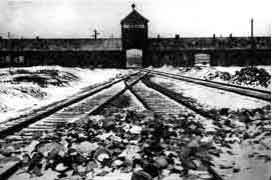
Holocaust Memorial Day 2016
Wednesday, 11 November 2015
NaBloPoMo - Armistice Day (day #11)
97 years ago today, at the eleventh hour of the eleventh day of the eleventh month, the guns fell silent as hostilities came to an end. The First World War was over. The peace treaty that came into effect, in June 1919, contained the seeds for the next conflagration, only a little over 20 years later.
The First World War did not really register on my radar until I came to the UK in 1997, as it did not affect my home country, the Netherlands, directly. The one million refugees from Belgium certainly had an impact, and a blockade of all goods going into Germany (mostly through Holland) led to shortages in Holland. However, the overriding memory of WW1 includes the wholesale slaughter at the Western Front in France and Flanders, the U-boat campaign in the Atlantic, and the first use of poison gas at the battle front. Tanks and airplanes also made their first appearance.
In my opinion, piling the blame for the first world war squarely at the door of Germany (and its allies) is historically not fair. All parties who went to war against each other were to blame, Great Britain, France and Russia as much as Germany, Austria-Hungary and Turkey. They were raring for a fight. Crippling reparations after the war led to economic collapse in Germany, and it was only a question of time before someone took political advantage of it. He promised to make Germany great, singled out one ethnic group to blame for all the country's misfortunes and got away with murder in the process. We all know his name. Adolf Hitler.
If one good thing came out of the Second World War, it was the dawning of some good sense amongst the leaders of Europe, particularly in West Germany (as was by that time) that cooperation rather than confrontation was the way forward. However, even with that in mind, World War Two also left a deadly legacy. The problems in the Middle East, already badly handled by the colonial powers Britain and France (until 1920), were to be compounded almost beyond resolution through the founding of the state of Israel in 1948, I'm sorry to have to say.
As we observe two minutes' silence at 11 am this morning (this post is scheduled to coincide with the start of that), we remember the Fallen from all conflicts. We should also reflect on the consequences of our actions in all conflicts. Did we learn from any mistakes, or are we not prepared to admit that mistakes were made, or that lessons should be learned from them?
The First World War did not really register on my radar until I came to the UK in 1997, as it did not affect my home country, the Netherlands, directly. The one million refugees from Belgium certainly had an impact, and a blockade of all goods going into Germany (mostly through Holland) led to shortages in Holland. However, the overriding memory of WW1 includes the wholesale slaughter at the Western Front in France and Flanders, the U-boat campaign in the Atlantic, and the first use of poison gas at the battle front. Tanks and airplanes also made their first appearance.
In my opinion, piling the blame for the first world war squarely at the door of Germany (and its allies) is historically not fair. All parties who went to war against each other were to blame, Great Britain, France and Russia as much as Germany, Austria-Hungary and Turkey. They were raring for a fight. Crippling reparations after the war led to economic collapse in Germany, and it was only a question of time before someone took political advantage of it. He promised to make Germany great, singled out one ethnic group to blame for all the country's misfortunes and got away with murder in the process. We all know his name. Adolf Hitler.
If one good thing came out of the Second World War, it was the dawning of some good sense amongst the leaders of Europe, particularly in West Germany (as was by that time) that cooperation rather than confrontation was the way forward. However, even with that in mind, World War Two also left a deadly legacy. The problems in the Middle East, already badly handled by the colonial powers Britain and France (until 1920), were to be compounded almost beyond resolution through the founding of the state of Israel in 1948, I'm sorry to have to say.
As we observe two minutes' silence at 11 am this morning (this post is scheduled to coincide with the start of that), we remember the Fallen from all conflicts. We should also reflect on the consequences of our actions in all conflicts. Did we learn from any mistakes, or are we not prepared to admit that mistakes were made, or that lessons should be learned from them?
Thursday, 15 October 2015
Film rebuff
I am not into films at all. I have only darkened the door of a cinema twice in the last twenty years. First occasion was in 2001, when I went to see The Fellowship of the Ring (Lord of the Rings trilogy) - too violent and noisy. My remaining memory: please lob off his head so we can get on with the storyline. I know Lord of the Rings back to front. Second movie was Harry Potter and the Somniferent Stone, which (as my cheeky rename implies) nearly sent me to sleep.
Oh, I saw a few local movies during my time in Stornoway - The Rocket Post (December 2005) was enjoyable. The Rocket Post is about the explosive failure of the experiment to send mail from Scarp to Harris by rocket - which exploded after launch, scattering the mail far and wide.
Another example is Crowdie and Cream, after the book by Finlay J Macdonald. The subject matter is a young boy growing up at Scarista in the shadow of looming World War II. It brings a laugh, mingled with a tear. The most moving episode is when the men go off to war on the ferry, and are sent off with a Gaelic psalm. You can watch the excerpt here.
Oh, I saw a few local movies during my time in Stornoway - The Rocket Post (December 2005) was enjoyable. The Rocket Post is about the explosive failure of the experiment to send mail from Scarp to Harris by rocket - which exploded after launch, scattering the mail far and wide.
Another example is Crowdie and Cream, after the book by Finlay J Macdonald. The subject matter is a young boy growing up at Scarista in the shadow of looming World War II. It brings a laugh, mingled with a tear. The most moving episode is when the men go off to war on the ferry, and are sent off with a Gaelic psalm. You can watch the excerpt here.
Saturday, 19 September 2015
Operation Market Garden - 71 years on
Seventy-one years ago last Thursday, the airborne landings commenced just
west of the city of Arnhem in eastern Holland. On 17 September 1944,
the Allied forces had been on campaign through western Europe for 3
months, after the successful landings in Normandy on 6 June. Airborne
troops were parachuted into the area between Ede and Arnhem to engage the
Nazi-German forces, which were occupying Holland at the time. Although the
Allies managed to penetrate into Arnhem, they failed to seize the Rhine
bridge there. Fierce fighting in the city dislodged them from forward
positions. Poor communications as well as a stronger resistance than
anticipated forced a withdrawal south across the River Rhine.
Arnhem and Oosterbeek were evacuated, and looted by the Nazis. Holland north of the Rhine remained occupied until the early spring of 1945. In the wake of the failed action at Arnhem, the Netherlands' railway network in the occupied sectors went on indefinite strike. This caused major problems for the Nazi forces, but also for food supplies - by the spring of 1945, many people in the major conurbations in western Holland had starved to death. Others survived by eating flower bulbs. The Allies finally managed to cross the river at Remagen, between Cologne and Koblenz, in February 1945.
Reposted and modified from an original posting in 2009
Arnhem and Oosterbeek were evacuated, and looted by the Nazis. Holland north of the Rhine remained occupied until the early spring of 1945. In the wake of the failed action at Arnhem, the Netherlands' railway network in the occupied sectors went on indefinite strike. This caused major problems for the Nazi forces, but also for food supplies - by the spring of 1945, many people in the major conurbations in western Holland had starved to death. Others survived by eating flower bulbs. The Allies finally managed to cross the river at Remagen, between Cologne and Koblenz, in February 1945.
Reposted and modified from an original posting in 2009
Tuesday, 1 September 2015
76 years ago today
Today in 1939, Nazi German forces invaded Poland. An ultimatum by the British government for them to withdraw by midday (11.00 GMT) on 3 September was ignored, prompting the declaration of war.
Five years, eight months and five days later, World War II had come to an end in Europe. It left behind massive devastation, tens of millions of dead and a political landscape altered beyond recognition. Six million people were murdered just for professing the Jewish faith, being of Jewish parents or having the merest connection with Judaism - murder conducted on an industrial scale.
The impact of WW2 continues today, unabated. The crisis in the Middle East is one of the worst results of the last World War, as is the burgeoning confrontation between Russia and NATO / the West. Similarly, the current migrant crisis is also an offshoot of the 1939-1945 conflict.
Five years, eight months and five days later, World War II had come to an end in Europe. It left behind massive devastation, tens of millions of dead and a political landscape altered beyond recognition. Six million people were murdered just for professing the Jewish faith, being of Jewish parents or having the merest connection with Judaism - murder conducted on an industrial scale.
The impact of WW2 continues today, unabated. The crisis in the Middle East is one of the worst results of the last World War, as is the burgeoning confrontation between Russia and NATO / the West. Similarly, the current migrant crisis is also an offshoot of the 1939-1945 conflict.
Sunday, 10 May 2015
VE Day - 70 years on
Better late than never, a post about the commemoration of VE Day, 70
years ago last Friday. This site lists the casualties from Lewis who
were lost between 1939 and 1945, some of whom fell in the Netherlands,
my home country. One of those is remembered on two tombstones in Lewis,
one at Sandwick and the other in the Eye Cemetery at Aignish. This site lists the losses from Harris, Uist and Barra. Apart from
commemorating the losses of military personnel, we also remember the
civilian losses. Not only those killed as a direct result
of military action, but especially the 6 million slaughtered in the
Nazi death camps in Germany, Poland and Austria. Whether we will ever
learn from that - I hold out little hope.
In three months' time, we will commemorate VJ Day. On August 15th, the
day Japan surrendered to Allied forces after two atomic bombs were
detonated over Hiroshima and Nagasaki. Again, not just the troops, but
also the civilians. Unlike Germany, Japan has never issued a formal
apology for the atrocities visited upon the occupied lands of East Asia.
We continue to wait for that to happen.
Subscribe to:
Posts (Atom)