Awoke to the news of the massive earthquake in Japan, which has clocked in at magnitude 8.9. This is only marginally less strong than the 9.1 quake that produced a devastating tsunami in the Indian Ocean on Boxing Day 2004. This quake has produced tsunami waves of between 7 and 10 metres (24 to 33 feet), which have carried away anything in its path. This has varied from people to vehicles, boats and buildings. The pictures on NHK World, relayed through most broadcasters, are terrifying. The Japanese are used to earthquakes, but a near-9 is off their scale. As I type this, the tsunami is still rolling across the Pacific, currently affecting Indonesia. However, the tsunami warning extends right down the west coast of the entire American continent, with the wave currently closing in on Alaska.
A tsunami is not a wave, as you may see along the seashore. It is a wall of water.
The Pacific Tsunami Warning Center is issuing hourly updates.
The WCATWC Warning Center covers the North American coastline, also hourly.
NHK World is carried on Sky TV (satellite, UK) channel 516.
Friday, 11 March 2011


Thursday, 10 March 2011
Thursday 10 March
It's a cold morning and a band of heavy rain or snow is moving up from the west. We are on warning for 20 to 30 cm of snow. Or was that supposed to be Caithness or Sutherland (further east)? The forecast on local radio was not clear. Anyway, I'll let y'all know how we got on, and whether we needed to get the diggers out.
I am actually posting on the vexed question of a new voting system for UK Parliamentary elections. People are going to the polls about this in May, and Stuart has made a posting about it. He summarises the proposed AV [Alternate Vote] system as follows:
I am not saying that the UK should adopt this system, because the political system and culture is totally different on this side of the North Sea. After the May 2010 general election in the UK I was glad to see a coalition in power. After a couple of weeks, I had to draw to the conclusion that a UK coalition is subtractive, rather than additive; confrontational rather than consensual. Weak, rather than strong. Although my political preference is not relevant (I'm not eligible to vote in UK general elections), I do prefer to see one party in office now. At least you know what you're going to get.
I am actually posting on the vexed question of a new voting system for UK Parliamentary elections. People are going to the polls about this in May, and Stuart has made a posting about it. He summarises the proposed AV [Alternate Vote] system as follows:
When you vote in a general election you will order your candidates in order of preference. Once the votes are counted, the candidate with the least number of votes is removed from the running, the votes are then counted again and all the voting slips that had the now excluded candidate as number one choice will have their second choice counted, and so an ad nauseum until, until at last somebody gets 50%.If you really want to see proportional representation in action (which the above is not), I'd like to refer to the Dutch voting system. In Holland, there are 150 seats in the Lower House of Parliament, and about 10 million people eligible to vote for those. Which means that each seat roughly equates to 65,000 votes - this is referred to as the Electoral Divider. There are about 20 parties contesting each ballot, of which 10 gain at least 1 seat. A party that gets less than the Divider does not gain any seat at all. First of all, the number of votes for each party is divided by the Divider, which yields the first lot of seats. Any remaining votes (rest votes) will then be distributed according to a set of rules, determined (among others) by the preferential votes for any one candidate, if more than a quarter of the Divider. A tad complicated, but at least you are not in the position that your vote is wasted if you don't vote for a winning candidate.
I am not saying that the UK should adopt this system, because the political system and culture is totally different on this side of the North Sea. After the May 2010 general election in the UK I was glad to see a coalition in power. After a couple of weeks, I had to draw to the conclusion that a UK coalition is subtractive, rather than additive; confrontational rather than consensual. Weak, rather than strong. Although my political preference is not relevant (I'm not eligible to vote in UK general elections), I do prefer to see one party in office now. At least you know what you're going to get.
Wednesday, 9 March 2011
Wednesday 9 March
 A very cold start to the day, with snow on the ground. This readily melted after the sun came up, but on higher ground it will have stayed all day. Heavy snow and hail showers punctuated late morning and afternoon, almost putting us back into winter. However, the seeds in the bird feeders were sprouting enthusiastically, showing that the equinox is only a matter of days away. High winds will affect the southern isles overnight; we further north should avoid the worst of those stormforce winds. The overnight freight ferry Muirneag is not sailing at any rate.
I have continued to transcribe the war diaries of the 2nd Seaforth Highlanders in the First World War, now well into 1915. The troops made it through the 2nd battle of Ypres, and I shall rejoin them in spirit six months later in northern France. I have also uncovered another WW1 casualty from Lewis who merits inclusion on the CWGC registers, but is not there. He died in New Zealand a few months after being invalided out of Gallipoli.
Gallipoli is a name of infamy in the annals of the Great War. Allied forces were going to land on the Gallipoli peninsula, which lies at the western entrance to the Bosporus, which in turn leads to Istanbul. In 1915, this was the capital of the Ottoman [Turkish] Empire, an adversary of the Allies. The landings, carried out by British, Australian and New Zealand forces, claimed thousands of lives as a result of strategic blunders. On both sides, it should be said.
Tuesday, 8 March 2011
Tuesday 8 March
Feeling increasingly cold as the day went on, with a heavy snow shower in the last hour before sunset. As I type this, the mercury down at the airport shows only +1C. Tomorrow is supposed to get even worse, with a forecast layer of 5 to 15 cm of snow, the higher up the more snow we're likely to get. It is only early March, after all; I've had a significant amount of snow as late as March 22nd, 5 years ago.The other aspect of today's weather is the wind; the afternoon ferry was off, and I don't think tomorrow morning's service will fare any better.
The House of Commons has decided to postpone a debate on the future of coastguard services in favour of MPs talking about International Women's Day. Now, I find that a totally worthy cause, but I rather think that actual life saving is just a tad more important. However, it appears to me that the decisions have already been taken and nothing you are I do is going to make the slightest bit of difference. Sounds despondent? Well, not quite as bad as that - there will be a march in Stornoway on March 19th to support the local Coastguards.
The House of Commons has decided to postpone a debate on the future of coastguard services in favour of MPs talking about International Women's Day. Now, I find that a totally worthy cause, but I rather think that actual life saving is just a tad more important. However, it appears to me that the decisions have already been taken and nothing you are I do is going to make the slightest bit of difference. Sounds despondent? Well, not quite as bad as that - there will be a march in Stornoway on March 19th to support the local Coastguards.
Monday 7 March
Absolutely pouring with rain this morning, and it only improved very gradually through the afternoon. We are on warning for snow on Wednesday, showing that March is very much a month of transition between winter and spring. The crocuses and narcissi may be out, but we still have 2 weeks to go until the equinox.
I have continued my transcriptions of the war diaries of one British army unit, the 2nd battalion Seaforth Highlanders, from 1915. I am currently going through the months of April and May, with more than a dozen Lewismen being lost at the start of the 2nd battle of Ypres (Belgium), and several more in gas attacks. According to the entry for May 2nd, 1915, the respirators were little more than woollen strips, which did nothing to lessen the effects of the chlorine gas being unleashed by the Germans. They had to lug 5,400 canisters of the stuff to the frontline. The disadvantage of using poison gas in this way is that a shift in the wind can blow it all back in your face. We are all familiar with chlorine, it is the stuff given off by bleach, especially when it is in a toilet being used without the bleach being flushed away first.
I have continued my transcriptions of the war diaries of one British army unit, the 2nd battalion Seaforth Highlanders, from 1915. I am currently going through the months of April and May, with more than a dozen Lewismen being lost at the start of the 2nd battle of Ypres (Belgium), and several more in gas attacks. According to the entry for May 2nd, 1915, the respirators were little more than woollen strips, which did nothing to lessen the effects of the chlorine gas being unleashed by the Germans. They had to lug 5,400 canisters of the stuff to the frontline. The disadvantage of using poison gas in this way is that a shift in the wind can blow it all back in your face. We are all familiar with chlorine, it is the stuff given off by bleach, especially when it is in a toilet being used without the bleach being flushed away first.
Monday, 7 March 2011
The end of the universe
The sun has been our star for 5 billion years, and will continue to shine for another 5 billion years. Nothing to worry about. Once all the hydrogen in the sun has been converted to helium, our star will swell up to reach a size close to the Earth's orbit. All life on our planet will cease at that point. Once all the helium has been converted to the next nuclear fusion element, beryllium (element #4), the sun will shrink and cool down to a white dwarf star, barely the brightness of the full moon - as seen from what's left of the Earth. In the end, the sun will go out, leaving a cinder - a black dwarf.
Stars that are much heavier than the sun will end their life as a black hole, which carry a gravitational pull that exceeds the speed of light. Nothing can escape from their grasp, and there are theories around that state that even time gets warped within a black hole. Nobody knows for sure.
Professor Brian Cox, whose programme prompted this post, states that it is the nature of the universe to progress from order to chaos, a state of decreasing entropy. He referred to that as the Second Law of Thermodynamics. By virtue of that, all the remnants of dead stars, whether they be black holes or black dwarves or whatever, will decay like a sandcastle on a windswept beach - to nothing. In the end, all matter will revert to energy (as per Einstein's E=mc2), and the universe will cool to absolute zero.
That, however, is where I start to disagree. Apart from the 2nd law of thermodynamics, the universe is governed by a few more laws. Gravity is one of them. And it is quite feasible, in my mind, that all matter will be pulled together by gravity into one entity - like the universe began? There is another law at play. The law of conservation of energy, the 1st law of thermodynamics. If the universe cools down to zero, that means that it will lose all the energy that is around at the moment. The 10 to the power of 77 atoms that slosh around the universe on a daily basis represent an ever large number in terms of energy. Energy is shown in motion, light, heat, radiation - and although it can be diluted, it cannot be lost.
I am not a physicist or astronomer, although I know a little bit about both. But isn't this fascinating!
Stars that are much heavier than the sun will end their life as a black hole, which carry a gravitational pull that exceeds the speed of light. Nothing can escape from their grasp, and there are theories around that state that even time gets warped within a black hole. Nobody knows for sure.
Professor Brian Cox, whose programme prompted this post, states that it is the nature of the universe to progress from order to chaos, a state of decreasing entropy. He referred to that as the Second Law of Thermodynamics. By virtue of that, all the remnants of dead stars, whether they be black holes or black dwarves or whatever, will decay like a sandcastle on a windswept beach - to nothing. In the end, all matter will revert to energy (as per Einstein's E=mc2), and the universe will cool to absolute zero.
That, however, is where I start to disagree. Apart from the 2nd law of thermodynamics, the universe is governed by a few more laws. Gravity is one of them. And it is quite feasible, in my mind, that all matter will be pulled together by gravity into one entity - like the universe began? There is another law at play. The law of conservation of energy, the 1st law of thermodynamics. If the universe cools down to zero, that means that it will lose all the energy that is around at the moment. The 10 to the power of 77 atoms that slosh around the universe on a daily basis represent an ever large number in terms of energy. Energy is shown in motion, light, heat, radiation - and although it can be diluted, it cannot be lost.
I am not a physicist or astronomer, although I know a little bit about both. But isn't this fascinating!
Sunday 6 March
A sopping wet day, which improved only gradually as the afternoon progressed. Kept quiet, except for a few entries on my current project, which follows a battalion in the First World War and chronicles the days on which men from the Isle of Lewis were lost.
I also watched a very interesting programme, presented by physicist Prof. Brian Cox. He explained his theory what will happen when the universe comes to an end. I'm in danger of losing most of you (with all respect) when I say that I don't agree with his ideas. Prof. Cox says that the stars will finally all burn out and their remnants turn into radiation, cooling down to absolute zero in about 10 to the power of 81 years. Remember Einstein - mass is proportional to energy? I think all the stars will finally implode into one single entity - a new universe. I'll write a separate post about my theory. I'm not a physicist by the way, but have my own ideas on the issue.
The fishing boat Symphonie that was helped in by the lifeboat on Friday had to be helped in again on Saturday. After repairs, she went back to fishing, but broke down again within 10 miles of Stornoway. There have been quite a few rescues around the Hebrides in recent days, and it shows how vitally important the work of the Coastguard is.
I also watched a very interesting programme, presented by physicist Prof. Brian Cox. He explained his theory what will happen when the universe comes to an end. I'm in danger of losing most of you (with all respect) when I say that I don't agree with his ideas. Prof. Cox says that the stars will finally all burn out and their remnants turn into radiation, cooling down to absolute zero in about 10 to the power of 81 years. Remember Einstein - mass is proportional to energy? I think all the stars will finally implode into one single entity - a new universe. I'll write a separate post about my theory. I'm not a physicist by the way, but have my own ideas on the issue.
The fishing boat Symphonie that was helped in by the lifeboat on Friday had to be helped in again on Saturday. After repairs, she went back to fishing, but broke down again within 10 miles of Stornoway. There have been quite a few rescues around the Hebrides in recent days, and it shows how vitally important the work of the Coastguard is.
Sunday, 6 March 2011
Saturday 5 March
Quite a nice day, if a little overcast - in Stornoway that it. We went to Garry Beach, 15 miles north of here, and we were in broad, brilliant and warm sunshine. OK, 7C is not exactly the Med, but it was most enjoyable. Garry lies a mile or so north of North Tolsta on the east coast of the island, and lies at the Bridge to Nowhere. Because, if you continue beyond the beach to the large concrete bridge

you'll find that the road turns into a track, and a little further on, will end in a bog. 90 years ago, there were plans to extend the Stornoway - Tolsta road all the way to Ness, 10 miles further north. It has never come to anything. Walking the distance is a challenging undertaking.
Meanwhile, on the beach, the rock stacks are home to fulmars, a type of small gull, which spit fish oil at you if you come too close. Fortunately, they were 30 feet up, so well out of range.

The stacks are pieces of the mainland, which coastal erosion has separated onto the beach. They have subterranean passage, which (at certain times) you can walk through. Not today: this one was full of quicksand.

At the southern end of the beach, there is a link to Traigh Mhor, half a mile to the south, but only at extremely low tides. I had to run to avoid being cut off by the rising tide after taking this pic. You can see the headland, Tolsta Head, which lies beyond Traigh Mhor [Big Beach].

In the opposite direction, the coastline curves away to the headland of Cellar Head, Rubha an t-Seileir [Rocky Point].

Who would come to the Outer Hebrides for a beach? Well, there should be droves here. Just as well the climate is the way it is, else the hordes would descend.
You will have noticed the fulmars cozying up together; spring is on its way.

you'll find that the road turns into a track, and a little further on, will end in a bog. 90 years ago, there were plans to extend the Stornoway - Tolsta road all the way to Ness, 10 miles further north. It has never come to anything. Walking the distance is a challenging undertaking.
Meanwhile, on the beach, the rock stacks are home to fulmars, a type of small gull, which spit fish oil at you if you come too close. Fortunately, they were 30 feet up, so well out of range.
The stacks are pieces of the mainland, which coastal erosion has separated onto the beach. They have subterranean passage, which (at certain times) you can walk through. Not today: this one was full of quicksand.
At the southern end of the beach, there is a link to Traigh Mhor, half a mile to the south, but only at extremely low tides. I had to run to avoid being cut off by the rising tide after taking this pic. You can see the headland, Tolsta Head, which lies beyond Traigh Mhor [Big Beach].
In the opposite direction, the coastline curves away to the headland of Cellar Head, Rubha an t-Seileir [Rocky Point].
Who would come to the Outer Hebrides for a beach? Well, there should be droves here. Just as well the climate is the way it is, else the hordes would descend.
You will have noticed the fulmars cozying up together; spring is on its way.
Friday, 4 March 2011
Friday 4 March
As sunny as Thursday was, so grey was Friday. A thoroughly featureless and at times nearly foggy day. Not without excitement, although I suppose the crew of the Symphonie would not particularly appreciate the breakdown of their vessel as excitement. This Bayonne-registered vessel, crew 14, broke down just before 4 am, and the RNLI lifeboat went out to tow it into Stornoway. The two vessels arrived at 11 am. Two other rescues have had to be effected over the past 24 hours, one involving a ship off Benbecula whose cook was injured after a fall. The other was from another fishing vessel who had an unwell crewmember who required transfer to hospital. Conditions were difficult at sea.
The famous Stornoway black pudding (a type of blood sausage) has been put forward for special protection status, to prevent people from elsewhere in Scotland (or indeed the island!) from pinching the famous name for their own poor imitations. Consultation has closed, and the Scottish Government will now apply to the European Union for this special status. It has already been awarded to champagne and Parma ham.
Black pudding? Can't stand the stuff, way too rich for me.

The famous Stornoway black pudding (a type of blood sausage) has been put forward for special protection status, to prevent people from elsewhere in Scotland (or indeed the island!) from pinching the famous name for their own poor imitations. Consultation has closed, and the Scottish Government will now apply to the European Union for this special status. It has already been awarded to champagne and Parma ham.
Black pudding? Can't stand the stuff, way too rich for me.
Thursday 3 March
A cloudless and windless day, with the barometer quite high at 1039 mbar, 30.7 inches. Anticyclonic brilliance, except that cloud does move in from the west, obscuring the sun after lunchtime.
I recently obtained the war diaries for a battalion from the First World War, the 2nd Seaforth Highlanders. They were active on the Western Front, and about 110 of their number from the Isle of Lewis were lost in action. I have opened a new blog, in which I am transcribing the diary entry for a day in which a Lewisman was lost. See more here.
I am also cleaning up the transferred blog entries from Arnish Lighthouse, which was initially hosted on the BBC Island Blogging website. It is now hosted on an independent website, but the transfer missed some entries, the picture links don't work and the comments are not there. However, I only have the posts from March to December 2006 left to do.
I recently obtained the war diaries for a battalion from the First World War, the 2nd Seaforth Highlanders. They were active on the Western Front, and about 110 of their number from the Isle of Lewis were lost in action. I have opened a new blog, in which I am transcribing the diary entry for a day in which a Lewisman was lost. See more here.
I am also cleaning up the transferred blog entries from Arnish Lighthouse, which was initially hosted on the BBC Island Blogging website. It is now hosted on an independent website, but the transfer missed some entries, the picture links don't work and the comments are not there. However, I only have the posts from March to December 2006 left to do.
Thursday, 3 March 2011
Wednesday 2 March
A very wet day, although the rain did decrease from torrential to a fine drizzle as the hours went by. I took delivery of a new book Making the rounds with Oscar. There has been some publicity recently about a cat in a Rhode Island (USA) nursing home, which had the uncanny ability to predect when one of its residents was about to die. The doctor who made the discovery has written a book about this, extending the story beyond the abilities of the cat. Perhaps an uncomfortable eye-opener to anyone who has had a relative with any form of dementia.
Colonel Gaddafi of Libya has been described as delusional by some people. He is not, I can tell you. Our Muammar is a very clever manipulator, and admitting that anything is amiss constitutes admitting to a weakness. Making terrible threats is all part of the deal. For the moment, there appears to be an uneasy stalemate, with a failed attempt by loyal Libyan forces to retake a town in the east of the country.
In Scotland, the football competition is dominated by two teams, Rangers and Celtic. These are both from Glasgow, but one is representative of the protestant section of society (Rangers, or the Gers) and the other of the catholics (Celtics, or the Hoops). Their matches are tense affairs, and in the past led to crowd trouble. Last night's Old Firm match (as Rangers vs Celtic games are referred to) saw trouble on the pitch. Rangers lost 1-0, and had three players sent off. I don't have a lot of time for football, as I think the players are paid ridiculous sums of money, and are traded with 7 or 8-figure sums of money. However, where I come from, they say that football is war, and in that case I prefer 22 guys having it out on a grassy pitch as opposed to people slinging lead against each other.
Colonel Gaddafi of Libya has been described as delusional by some people. He is not, I can tell you. Our Muammar is a very clever manipulator, and admitting that anything is amiss constitutes admitting to a weakness. Making terrible threats is all part of the deal. For the moment, there appears to be an uneasy stalemate, with a failed attempt by loyal Libyan forces to retake a town in the east of the country.
In Scotland, the football competition is dominated by two teams, Rangers and Celtic. These are both from Glasgow, but one is representative of the protestant section of society (Rangers, or the Gers) and the other of the catholics (Celtics, or the Hoops). Their matches are tense affairs, and in the past led to crowd trouble. Last night's Old Firm match (as Rangers vs Celtic games are referred to) saw trouble on the pitch. Rangers lost 1-0, and had three players sent off. I don't have a lot of time for football, as I think the players are paid ridiculous sums of money, and are traded with 7 or 8-figure sums of money. However, where I come from, they say that football is war, and in that case I prefer 22 guys having it out on a grassy pitch as opposed to people slinging lead against each other.
Wednesday, 2 March 2011
Last week in February - picture post

Anyone for dinner?

Passing puss

23 February

Distant shower

24 February
Picture post - 27 February

6.30pm

The A866 road from the airport to Stornoway

The Braighe at Melbost

Melbost

Cattle at Melbost
Tuesday 1 March
The start of the meteorological spring, although the astronomical spring is still three weeks away. Nonetheless, the daffodils, crococuses and snowdrops are already well in bloom.

The weather was bright but with a good amount of high-level cloud about, making it a very glary day. I spent Tuesday monitoring developments in Libya, which continue to be as confusing as ever over the past fortnight. This evening, a meeting about the proposed changes in the Coastguard service turned into a lively affair, according to a report on local news website Hebrides News.
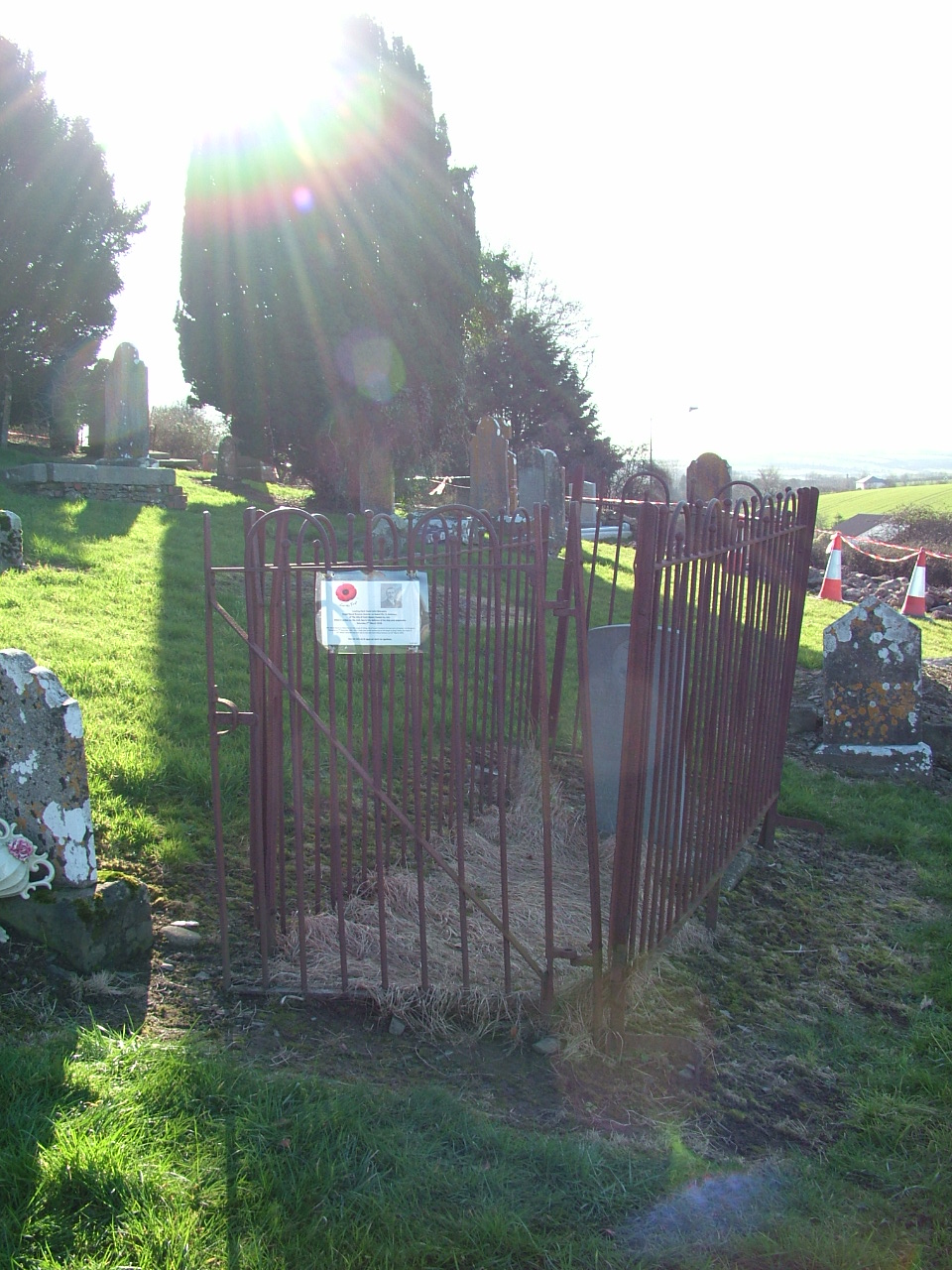
This afternoon, one of my Irish contacts held a short private ceremony to remember one of the Lewis casualties from the First World War who lies buried near Dublin. John Macaulay was torpedoed in his ship SS Kenmare on 2 March 1918. His body washed up north of Dublin and was buried with full military honours at Balrothery. Today, a commemorative poster was put on the railings around John's grave, a poem was read as well as a tribute. Photograph and account of ceremony courtesy David J. Grundy of Skerries, Dublin.

The weather was bright but with a good amount of high-level cloud about, making it a very glary day. I spent Tuesday monitoring developments in Libya, which continue to be as confusing as ever over the past fortnight. This evening, a meeting about the proposed changes in the Coastguard service turned into a lively affair, according to a report on local news website Hebrides News.
This afternoon, one of my Irish contacts held a short private ceremony to remember one of the Lewis casualties from the First World War who lies buried near Dublin. John Macaulay was torpedoed in his ship SS Kenmare on 2 March 1918. His body washed up north of Dublin and was buried with full military honours at Balrothery. Today, a commemorative poster was put on the railings around John's grave, a poem was read as well as a tribute. Photograph and account of ceremony courtesy David J. Grundy of Skerries, Dublin.
Monday, 28 February 2011
Monday 28 February
The day started very sunny, but cloud moved up at lunchtime and the wind picked up. It felt chilly in the wind, little surprise if you know that the overnight low was -2C. The daytime max stands at 9C / 48F. Whatever rain we were supposed to have is now over the west coast of northern Scotland.
I heard that heavy showers are moving over the southeastern USA with a threat of tornadoes. Looks like an early start to the tornado season, but I'm not familiar with the normal weather patterns through the year in that part of the world.
I could not believe my ears when I heard the latest interview with Col Gaddafi, in which he expressed his conviction that all his people loved him. More chilling was the threat from one of his spokesmen that 'hundreds of thousands' would die, with the legacy likely to last for decades to come. We are by now familiar with the threats of civil war, but Gaddafi is known to have stockpiles of mustard gas. It is fortunate that his support is leaching away at a rate of knots; it was surprising how quickly it dissipated under pressure. The end game is shrouded in an impregnable fog - only time will tell.
I heard that heavy showers are moving over the southeastern USA with a threat of tornadoes. Looks like an early start to the tornado season, but I'm not familiar with the normal weather patterns through the year in that part of the world.
I could not believe my ears when I heard the latest interview with Col Gaddafi, in which he expressed his conviction that all his people loved him. More chilling was the threat from one of his spokesmen that 'hundreds of thousands' would die, with the legacy likely to last for decades to come. We are by now familiar with the threats of civil war, but Gaddafi is known to have stockpiles of mustard gas. It is fortunate that his support is leaching away at a rate of knots; it was surprising how quickly it dissipated under pressure. The end game is shrouded in an impregnable fog - only time will tell.
Sunday, 27 February 2011
Sunday 27 February
A cool but very sunny day today, with only the odd shower. One or two hailshowers this morning, but nothing worthwhile since. The shower clouds were visible this earlier, but the rainfall radar tells me they are now peppering the coast of western Scotland. The northerly wind makes it feel decidedly cool, particularly noticeable when we headed across to the Braighe at Melbost, just east of the airport this morning. Although it was nice and sunny, the wind took the edge of the warmth of the sun. March is only two days away, but spring is very late in coming to this part of the Hebrides; trees do not usually come into full leaf until May.
Tunisia has seen some more very serious violence, resulting in a number of deaths and the resignation of the prime minister. Libya looks set to become the scene of a pitched battle just west of Tripoli, as Gaddafi loyalists converge on a rebel-held town. I still do not want to think how the end will come to the strife there, but the indictment to the International Criminal Court against Gaddafi, his sons and their henchmen, will be long. Not just on account of what has happened over the past fortnight, but even beforehand. Files have been recovered from a security compound in Benghazi, showing a methodical approach to torture and imprisonment.
This afternoon, reports are emerging of demonstrations in southern China, and a jumpy approach to them by the authorities. If 1300 million people decide to rebel, there is even less scope for foresight than there already is in Libya.
Tunisia has seen some more very serious violence, resulting in a number of deaths and the resignation of the prime minister. Libya looks set to become the scene of a pitched battle just west of Tripoli, as Gaddafi loyalists converge on a rebel-held town. I still do not want to think how the end will come to the strife there, but the indictment to the International Criminal Court against Gaddafi, his sons and their henchmen, will be long. Not just on account of what has happened over the past fortnight, but even beforehand. Files have been recovered from a security compound in Benghazi, showing a methodical approach to torture and imprisonment.
This afternoon, reports are emerging of demonstrations in southern China, and a jumpy approach to them by the authorities. If 1300 million people decide to rebel, there is even less scope for foresight than there already is in Libya.
Saturday, 26 February 2011
Saturday 26 February
Quite a nice, sunny day. We had a few showers, some not so light. But we now have daylight until well after 6pm, and in a month's time, the clocks go forward an hour. The bulbs are nicely coming into bloom, showing that spring is now not far off.
Got a resupply of stamps in the Post Office on Francis Street, which closes at 12.30 on Saturdays. I also popped into the appropriately named Aladdins Cave on Inaclete Road - it has all sort of little and not so little things. I needed some file folders, to organise the paperwork that has come with my research. Which, today, focused on more of the information on WW1 casualties. Watch my Pentland Road blog for updates.
I haven't got any pictures at the ready just now, but I will post a selection in a blogpost tomorrow.
The situation in Libya is something I am beginning to regard with increasing dread. Gaddafi is a man who will not accept defeat, and he will take as many with him into death as he can. By all possible means, including chemical weapons. Many of those that were close to him have advised him to step aside, but Col Gaddafi does not listen. The Arabic revolution will show its most evil face in that poor country, through that horrendous man.
Got a resupply of stamps in the Post Office on Francis Street, which closes at 12.30 on Saturdays. I also popped into the appropriately named Aladdins Cave on Inaclete Road - it has all sort of little and not so little things. I needed some file folders, to organise the paperwork that has come with my research. Which, today, focused on more of the information on WW1 casualties. Watch my Pentland Road blog for updates.
I haven't got any pictures at the ready just now, but I will post a selection in a blogpost tomorrow.
The situation in Libya is something I am beginning to regard with increasing dread. Gaddafi is a man who will not accept defeat, and he will take as many with him into death as he can. By all possible means, including chemical weapons. Many of those that were close to him have advised him to step aside, but Col Gaddafi does not listen. The Arabic revolution will show its most evil face in that poor country, through that horrendous man.
Friday, 25 February 2011
Friday 25 February
A bright and breezy start to the day, with some showers about. The wind rose to galeforce overnight, but is currently force 6 to 7. Not cold, with the mercury at 10C / 50F. We are due some colder weather in the next few days.
What made me laugh last night was the preview of the daily papers on TV. One of the papers is asking the question "Who is in charge of the country?". Apparently, the Prime Minister, David Cameron, is in the Middle East to cement some trade deals (read: flog arms for oil). The Deputy Prime Minister, Nick Clegg, has allegedly forgotten he was in charge if Dave was out. So he went on his pre-booked annual leave, irrespective of his commitments as deputy PM. The Libyan crisis is the prerogative of the Foreign Secretary, William Hague, but he didn't have a clue about organising the evacuation of British nationals from Libya. And the Defence Secretary, Dr Liam Fox, went down the pub.
Once Dave was back from the Middle East, he called Nick back from his hols, took William away from his teddybear's picnic and dragged Liam out of the Fox & Hounds for an emergency cabinet meeting. Dave himself should have flown back from the Emirates on Monday, when all this dooda began to hit the proverbial fan.
Oh well, enough sarcasm. I'm going to have a coffee and take a pic of that fishing boat which is going up the slipway across the water.
More later.
What made me laugh last night was the preview of the daily papers on TV. One of the papers is asking the question "Who is in charge of the country?". Apparently, the Prime Minister, David Cameron, is in the Middle East to cement some trade deals (read: flog arms for oil). The Deputy Prime Minister, Nick Clegg, has allegedly forgotten he was in charge if Dave was out. So he went on his pre-booked annual leave, irrespective of his commitments as deputy PM. The Libyan crisis is the prerogative of the Foreign Secretary, William Hague, but he didn't have a clue about organising the evacuation of British nationals from Libya. And the Defence Secretary, Dr Liam Fox, went down the pub.
Once Dave was back from the Middle East, he called Nick back from his hols, took William away from his teddybear's picnic and dragged Liam out of the Fox & Hounds for an emergency cabinet meeting. Dave himself should have flown back from the Emirates on Monday, when all this dooda began to hit the proverbial fan.
Oh well, enough sarcasm. I'm going to have a coffee and take a pic of that fishing boat which is going up the slipway across the water.
More later.
Thursday, 24 February 2011
Thursday 24 February
I gather that London reached 15C today (59F), but we had to make do with 11C. Still no reason at all for complaint if I'm honest. It was just very windy, with a steady force 7 and gusts to 50 mph. The overnight freight ferry is once more off tonight due to the adverse weather conditions.
I have been continuing my research into the Lewis graveyards and the WW1 casualties buried therein. And I've found quite a few errors in my files - just as well I'm finding them, let's be honest. The First World War has some dreadful statistics associated with it, some of which I've outlined in my local history blog Pentland Road.
 Sixty-five years ago today, the German city of Dresden, in the southeast of the country, was severely bombed by Allied aircraft. It generated a firestorm, and thousands perished in the inferno. There has been quite some debate about the military imperative for this bombardment. It is suggested that Dresden very little military infrastructure, and General Haig, in charge of bomber command, has been accused of committing a war crime. Today's far right in Germany, not endowed with an excess of brain cells by the sound of it, say that Hitler was not to blame for WW2 and that he who fired the first shot did not start the war. What a load of garbage. The BBC's correspondent in Saxony has written a good piece on the issue, which I recommend for your reading.
Image courtesy cityofsound.com
I have been continuing my research into the Lewis graveyards and the WW1 casualties buried therein. And I've found quite a few errors in my files - just as well I'm finding them, let's be honest. The First World War has some dreadful statistics associated with it, some of which I've outlined in my local history blog Pentland Road.

Image courtesy cityofsound.com
Wednesday 23 February
A very wet and miserable day. Although we had a bit of sun around lunchtime, it took until nearly sunset before the clouds finally broke. The wind is picking up, leading to the cancellation of our freight ferry, which departs here at 11.30pm.
I have been tallying up the number of gravestones of local servicemen who are mentioned on private gravestones, as opposed to the official CWGC stones that I have focused on in the past. The number of the former stands at 123. I also found that 600 of Lewis's 1300 wardead from the First War have no known grave; half of them perished at sea; others disappeared into the mire of France and Flanders.
The campaign to save the coastguard service in the UK is progressing, and next week there will be a meeting here in Stornoway. Representatives from the MCA will come to the Nicolson Institute to answer questions from the general public, and boy, will that be a lively session.
The situation in Libya is just plain awful, exacerbated by the apparent lassitude from the UK government to get themselves into gear to extract UK nationals. And searches continue for survivors from the NZ earthquake, with the deathtoll rising to nearly 100.
I have been tallying up the number of gravestones of local servicemen who are mentioned on private gravestones, as opposed to the official CWGC stones that I have focused on in the past. The number of the former stands at 123. I also found that 600 of Lewis's 1300 wardead from the First War have no known grave; half of them perished at sea; others disappeared into the mire of France and Flanders.
The campaign to save the coastguard service in the UK is progressing, and next week there will be a meeting here in Stornoway. Representatives from the MCA will come to the Nicolson Institute to answer questions from the general public, and boy, will that be a lively session.
The situation in Libya is just plain awful, exacerbated by the apparent lassitude from the UK government to get themselves into gear to extract UK nationals. And searches continue for survivors from the NZ earthquake, with the deathtoll rising to nearly 100.
Subscribe to:
Posts (Atom)